ToolMage
Sign in

Best 5 Meditation AI tools for Health & Wellness

Popular Meditation AI tools in Health & Wellness include Brain.fm, binauralbeatsfactory, MizanMe, TailoredMindfulness, and Cerebral AI, helping you work more efficiently.

Brain.fm
Freemium

Brain.fm

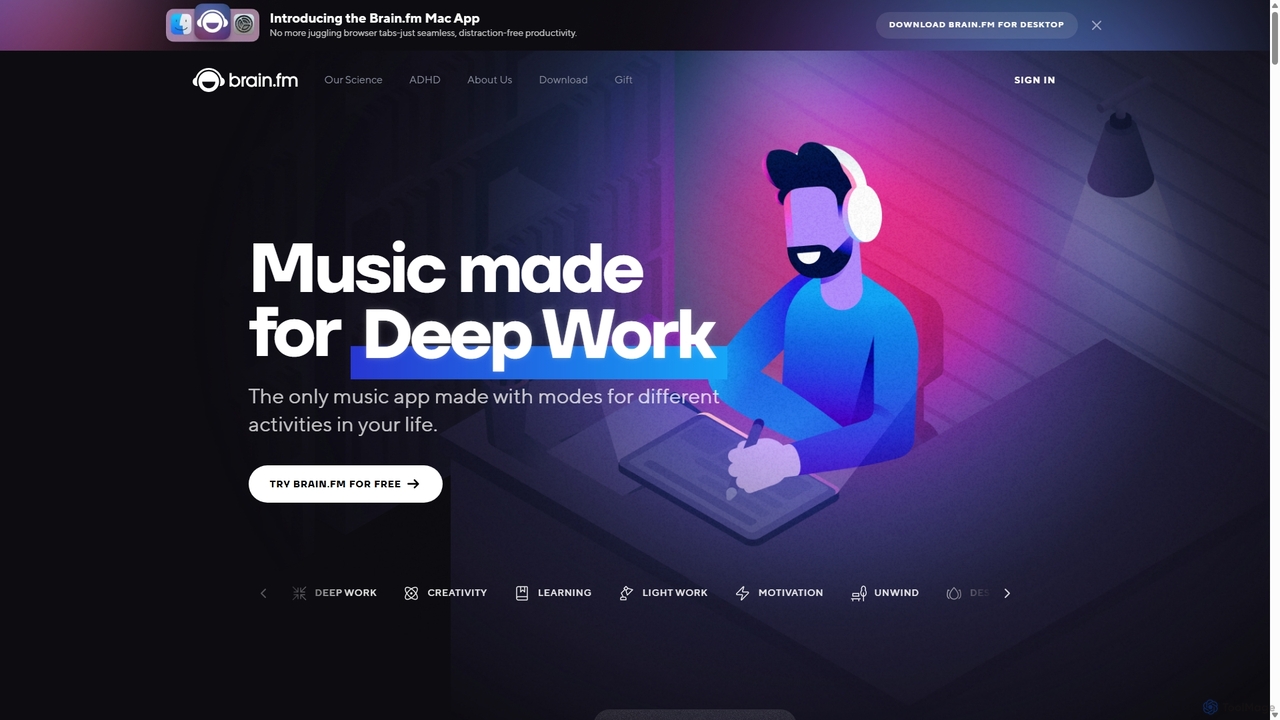
Brain.fm provides science-backed functional music designed to dramatically improve focus, sleep, and relaxation. Using patented AI technology, it creates audio that influences brainwaves, helping you enter desired mental states like deep work or restorative sleep in minutes. It's proven more effective than mainstream music playlists for productivity and is supported by the National Science Foundation.

Study
Visits 3.3MFavorites 160Likes 152
binauralbeatsfactory
Freemium

binauralbeatsfactory

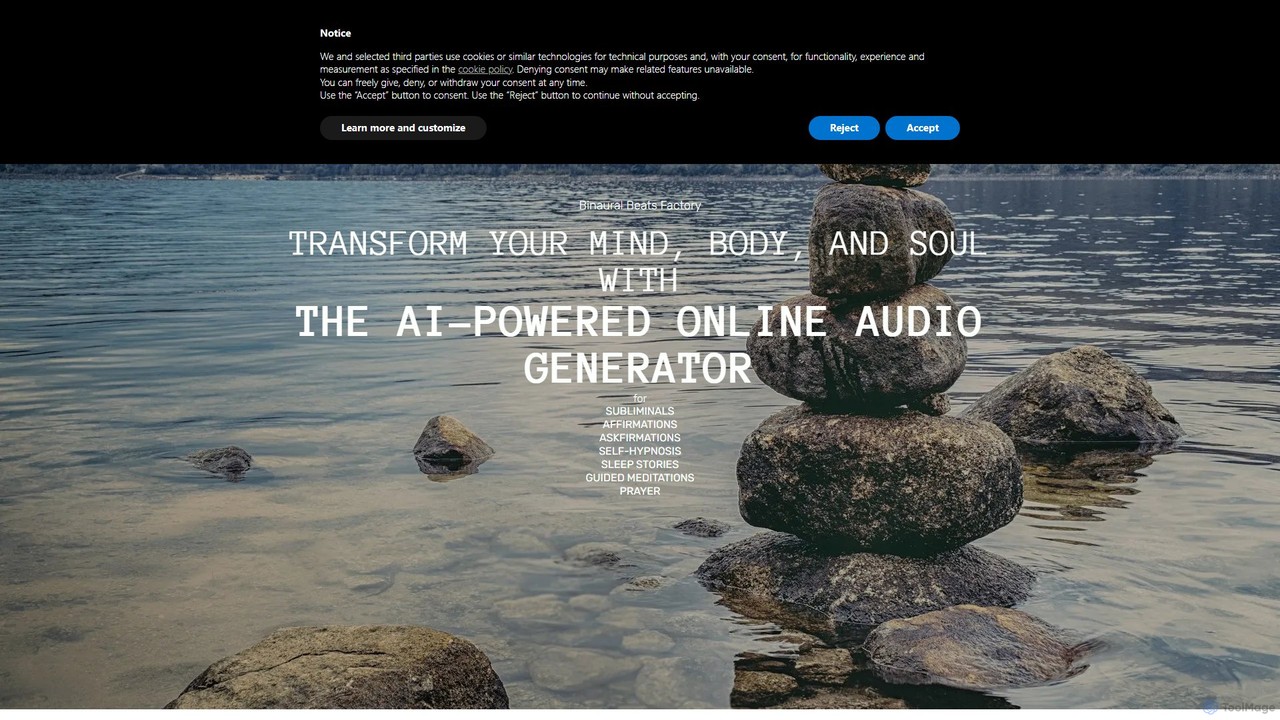
An AI-powered audio generator for creating personalized binaural beats, guided meditations, subliminal affirmations, self-hypnosis, and sleep stories. Tailor audio tracks to your specific goals for mental wellness, focus, and personal growth. Free to try.

Script Generation
Visits 56.8KFavorites 164Likes 163
MizanMe
Freemium

MizanMe

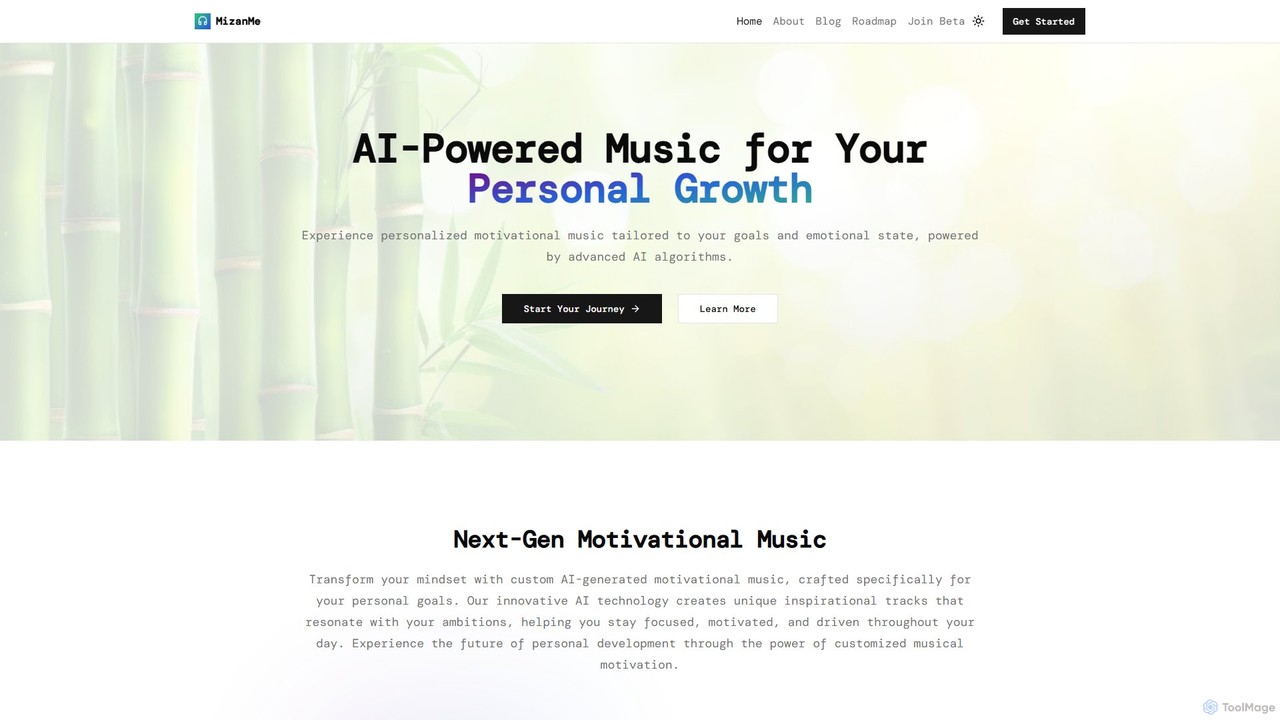
MizanMe is an AI-powered platform that generates personalized motivational music tailored to your goals and emotional state. Using advanced algorithms and neuroscience, it creates unique soundtracks for focus, meditation, relaxation, and personal growth, adapting to your journey in real-time.

Music Generation
Visits 6.1KFavorites 129Likes 154
TailoredMindfulness
Freemium

TailoredMindfulness

TailoredMindfulness is an AI-powered wellness platform that creates personalized mindfulness and meditation plans. It combines guided sessions with community-based activities like group hikes to offer a holistic approach to mental well-being, helping users reduce stress, improve focus, and connect with nature and others.

Meditation
Visits 5.9KFavorites 159Likes 151
Cerebral AI
Freemium

Cerebral AI

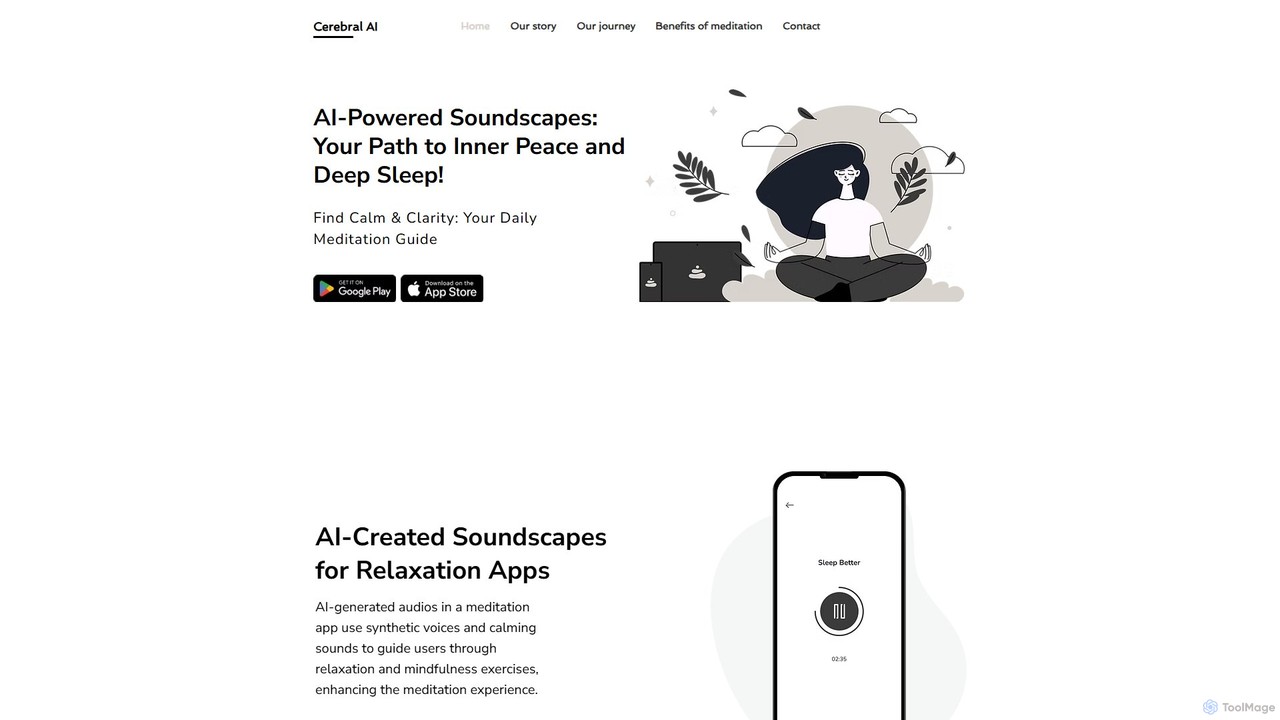
Cerebral AI is an AI-powered meditation and sleep application designed to create personalized wellness experiences. It generates unique soundscapes and tailored mindfulness recommendations to help users reduce stress, improve sleep quality, and enhance focus. With a minimalist design, it offers a calming and accessible path to inner peace.

Sound Generation
Visits 5.9KFavorites 103Likes 117

About Meditation

AI Meditation tools are applications that use artificial intelligence to deliver personalized guided meditation and mindfulness experiences. These tools often employ machine learning to analyze user inputs, mood, and even real-time biometric data to tailor sessions. They help users reduce stress, improve focus, and enhance sleep by providing adaptive guidance that evolves with their practice. Unlike static recordings, AI-powered meditation offers a responsive and dynamic journey into mindfulness.

Core Features

  • Personalized Guidance: The AI generates or selects meditation sessions based on the user's stated goals, mood, and experience level.
  • Biofeedback Integration: Connects with wearables to analyze physiological data like heart rate variability (HRV) and adapt sessions in real-time.
  • Dynamic Soundscapes: Generates adaptive ambient sounds or music that respond to the user's state to deepen immersion and focus.
  • Progress Analytics: Uses AI to track mindfulness patterns, offering insights into stress levels and focus improvements over time.
  • Conversational AI Coach: Provides an interactive chatbot for motivation, answering questions, and suggesting relevant practices.

Use Cases

These tools are ideal for individuals seeking structured stress management programs, professionals looking to improve focus during work breaks, and anyone wanting to build a consistent mindfulness habit. They are also used in corporate wellness programs to support employee mental health and by beginners who benefit from adaptive, step-by-step instruction.

How to Choose

When selecting an AI Meditation tool, consider the level of personalization—does it adapt based on simple inputs or real-time biofeedback? Evaluate the variety of meditation styles offered (e.g., for sleep, anxiety, focus). Check for compatibility with your existing wearable devices. Finally, review the privacy policy to understand how your personal and biometric data is managed.

Meditation use cases

1

Personalized Stress Reduction for Professionals

A busy project manager feels overwhelmed before a major presentation. Instead of a generic meditation, they use an AI tool that connects to their wearable. The app detects a high heart rate and elevated stress levels. It then generates a custom 5-minute guided breathing exercise with a calming voice and a soundscape that dynamically adjusts to their slowing heart rate. This real-time biofeedback helps them quickly regain composure and focus, allowing them to enter the meeting feeling centered and prepared without a long, disruptive break.

2

Improving Sleep Quality with Adaptive Soundscapes

An individual struggling with insomnia uses an AI meditation app to wind down. Based on their goal of 'better sleep', the AI initiates a guided body scan meditation. As they relax, the app uses the phone's microphone to subtly monitor breathing patterns. It then generates an adaptive soundscape of gentle rain, where the rhythm of the rainfall syncs with their slower, deeper breaths. This synchronization deepens their state of relaxation, helping them drift off to sleep more naturally. The session automatically fades out as the AI detects patterns consistent with sleep onset.

3

Building a Consistent Mindfulness Habit

A beginner finds it difficult to stay motivated with meditation. Their AI coach app sends a gentle notification in the morning, asking about their mood. After the user selects 'Anxious', the AI recommends a short, 3-minute 'Grounding' meditation specifically for anxiety. It tracks their progress and rewards them with encouraging messages for completing a 7-day streak. This interactive and personalized approach helps the user overcome the initial hurdle of forming a new habit, making the practice feel supportive and less like a chore.

4

Enhancing Athletic Focus and Recovery

An athlete uses an AI meditation tool as part of their training regimen. Before a competition, they select a 'Performance Visualization' session. The AI generates a script that guides them through visualizing success, incorporating details from their specific sport. After a strenuous workout, the app suggests a 'Body Scan for Recovery' meditation, which syncs with their fitness tracker data to focus on muscle groups that were most exerted. This targeted mental training helps improve focus under pressure and accelerates perceived recovery by enhancing the mind-body connection.

5

Managing Anxiety with Real-time Biofeedback

A user experiencing a moment of high anxiety opens their AI meditation app. The app, connected to their smartwatch, immediately detects a rapid heart rate and low Heart Rate Variability (HRV). It initiates a 'Coherent Breathing' exercise, displaying a visual guide that expands and contracts. The speed of the visual guide adjusts in real-time based on their HRV data, helping them find the optimal breathing pace to calm their nervous system. They can see their heart rate decrease on screen as they follow the guide, providing tangible proof that the technique is working and empowering them to manage their anxiety.

6

Creating Custom Meditations for Specific Needs

A therapist wants to provide a client with a meditation for a specific, uncommon scenario: 'building confidence before a job interview'. Using a generative AI meditation tool, the therapist inputs this prompt, along with desired duration (10 minutes) and tone (empowering). The AI generates a unique guided meditation script and a synthetic voiceover. The therapist can then share this highly personalized audio file with the client, providing a targeted therapeutic tool that wouldn't be available in any standard meditation library, enhancing the effectiveness of their therapy.

Meditation FAQ

What are AI Meditation tools?

AI Meditation tools are applications that use artificial intelligence to create personalized and adaptive mindfulness experiences. Unlike traditional apps with pre-recorded audio libraries, these tools can generate new meditation scripts, adapt sessions in real-time based on user feedback or biometric data (like heart rate), and provide interactive coaching. Their core purpose is to make meditation more engaging, effective, and tailored to an individual's specific needs and current emotional state.

How do I choose the right AI Meditation tool?

To choose the right tool, consider these factors:

  • Personalization Method: Determine if you want a tool that adapts based on simple mood inputs or one that uses real-time biofeedback from a wearable device for deeper personalization.
  • Content Variety: Look for a library that covers your specific goals, such as sleep, focus, anxiety reduction, or guided visualizations.
  • Hardware Compatibility: If you want to use biofeedback, ensure the app is compatible with your smartwatch or other health trackers.
  • Data Privacy: Since these apps may handle sensitive health data, review their privacy policy to understand how your information is stored and used.
What's the difference between an AI Meditation app and a standard wellness app?

The key difference lies in focus and functionality. A standard wellness app is often broad, covering fitness tracking, diet, and sleep logging alongside a library of static meditation content. An AI Meditation app, a subcategory of wellness, specializes in the meditation experience itself. It uses AI to actively personalize and adapt the guidance in real-time, generate new content, or integrate deeply with biofeedback. While a wellness app might tell you to meditate, an AI meditation app creates a dynamic, responsive meditation environment for you.

What are the main benefits of using AI for meditation?

The primary benefits of using AI in meditation tools include:

  • Deep Personalization: Sessions can adapt to your real-time mood, stress levels, and progress, making the practice more relevant and effective.
  • Increased Engagement: Dynamic content, interactive coaching, and responsive soundscapes can make the habit of meditation more engaging and easier to maintain.
  • Infinite Variety: Generative AI can create a limitless number of guided meditations for highly specific situations, going beyond a fixed library.
  • Objective Feedback: By integrating with wearables, these tools provide data-driven insights into how your practice is affecting your physiological state (e.g., lowering heart rate).
Do I need special equipment to use AI Meditation tools?

Not necessarily. Many AI meditation tools offer core features, like personalized session recommendations and generative audio, using only a smartphone. However, to access the most advanced capabilities, such as real-time biofeedback that adapts a session based on your physiological state, you will typically need a compatible wearable device. This could be a popular smartwatch (like Apple Watch or Fitbit) or a dedicated heart rate monitor that can sync with the application.