
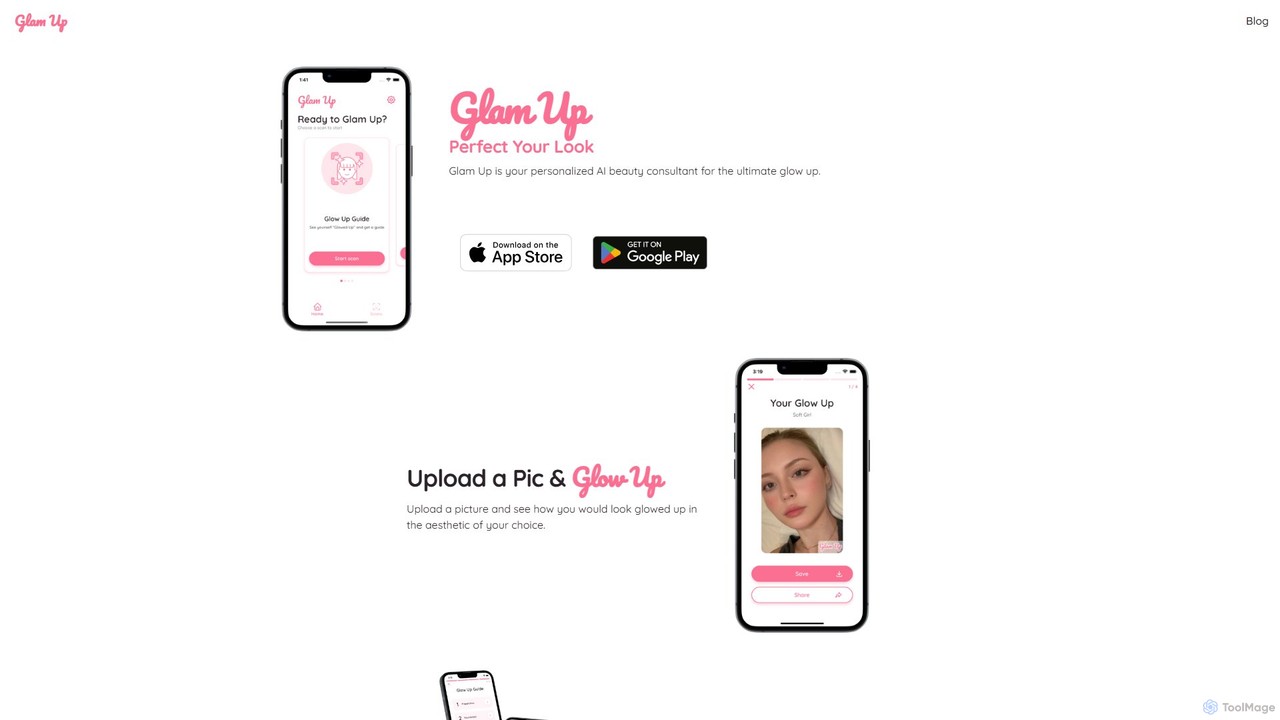
Freemium
Popular Beauty AI tools in Health & Wellness include Qoves and Glam Up, helping you work more efficiently.
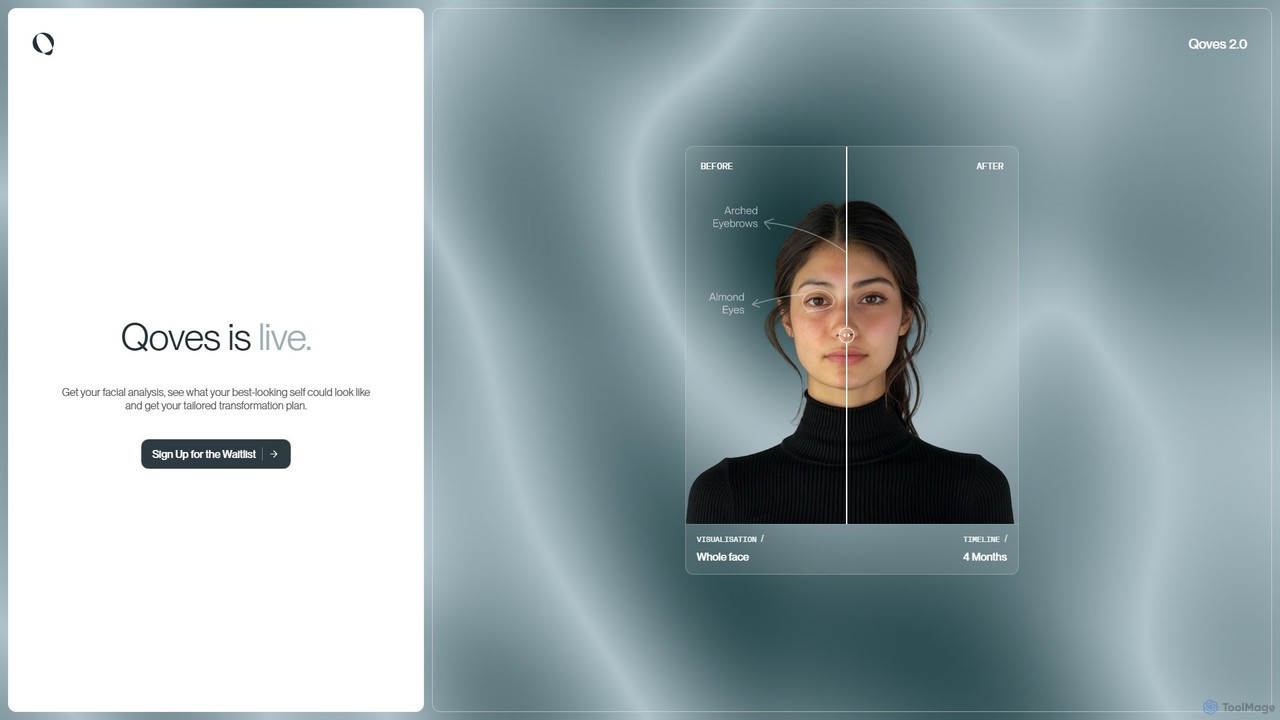
Qoves is an AI-powered platform that provides in-depth facial analysis and personalized, non-surgical transformation plans. Upload your photo to receive objective insights into your facial aesthetics, visualize your potential, and get a tailored roadmap to achieve your 'glow up'.
Face AnalysisAI Beauty tools are applications that use artificial intelligence, primarily computer vision and machine learning, to provide personalized beauty experiences. These tools analyze facial features, skin conditions, and hair characteristics to offer tailored recommendations and virtual simulations. Users can virtually try on makeup, experiment with new hairstyles, or receive a detailed skin analysis directly from their device. This technology bridges the gap between digital browsing and physical product experience, empowering users to make more informed beauty choices.
AI Beauty tools are widely used in the retail and e-commerce sectors by cosmetic brands to increase customer engagement and conversion rates. They are also integrated into standalone consumer apps for personal beauty exploration and routine management. Additionally, beauty professionals like dermatologists and estheticians use these tools for more precise client consultations and progress tracking.
When selecting an AI Beauty tool, consider the accuracy and realism of its simulations, as this directly impacts user trust. Evaluate the breadth of its features—does it cover makeup, skincare, and hair? For business use, check for easy integration with e-commerce platforms. Finally, review the data privacy policy to understand how user images and information are handled.
An online shopper visiting a cosmetics brand's website wants to buy a new lipstick but is unsure about the shade. Using the integrated AI Beauty tool, they activate their camera for a live virtual try-on. The tool accurately maps their lips and overlays various lipstick shades in real-time. The shopper can instantly switch between matte, satin, and gloss finishes, comparing dozens of colors in seconds without leaving home. This confident experience leads to a direct purchase, reducing cart abandonment and increasing customer satisfaction.
A user concerned about their skin condition uses a dedicated beauty app. They take a selfie, and the app's AI skin analysis feature scans the image. It identifies areas of concern like dehydration, fine lines, and hyperpigmentation, providing a detailed skin score. Based on this analysis, the tool generates a personalized morning and evening skincare routine. It recommends specific types of products (e.g., a hydrating serum with hyaluronic acid, a vitamin C serum) and explains the benefits of each step, empowering the user to build an effective, targeted regimen.
A hairstylist is consulting with a client who is considering a drastic change but is hesitant. The stylist uses a tablet with an AI hairstyle simulation tool. They take a photo of the client, and the tool allows them to apply various haircuts—from a bob to long layers—and a wide spectrum of colors, including fantasy shades and balayage effects. The client can see a realistic preview of how each style would look with their own face shape and skin tone. This visualization removes uncertainty, facilitates a clear decision, and ensures the client leaves the salon happy with their new look.
Finding the right foundation shade online is a common challenge. A beauty brand integrates an AI shade-matching tool into its product pages. A user, shopping from home, allows the tool to access their phone's camera. The AI analyzes their skin tone under ambient lighting conditions, accounting for undertones (cool, warm, or neutral). Within seconds, it recommends the top 1-2 foundation shades from the brand's collection that are a perfect match. This eliminates guesswork, significantly reduces product returns due to incorrect shade selection, and builds brand loyalty through a helpful, personalized service.
A beauty brand is launching a new, vibrant eyeshadow palette. To create buzz, their marketing team uses an AI tool to develop a branded AR filter for Instagram and TikTok. The filter allows users to virtually try on the key shades from the palette. The AI ensures the eyeshadow application looks realistic, conforming to the user's eye shape. Users can record videos of themselves with the new look and share them with friends. This interactive campaign generates massive user-generated content, increases brand visibility, and drives traffic to the product page, all while providing a fun experience.
A nail art enthusiast wants to try a complex design but isn't sure how it will look on their own hands. They use an AI beauty app that specializes in nail art. By pointing their phone's camera at their hand, the tool's computer vision recognizes their nails and overlays intricate designs, from geometric patterns to detailed floral art. They can adjust colors, patterns, and even the nail shape (e.g., square, almond) in real-time. This allows them to finalize a design they love before visiting a nail technician, ensuring they get exactly the look they envisioned.
AI Beauty tools are software applications that use artificial intelligence technologies like computer vision and machine learning to offer personalized beauty analysis and virtual experiences. Their primary function is to analyze a user's unique features—such as skin texture, face shape, and hair color—to provide tailored recommendations or realistic simulations. Common examples include virtual makeup try-on, AI-powered skin diagnostics, hairstyle simulators, and foundation shade finders. These tools help users make more confident purchasing decisions and explore new looks without physical products.
Choosing the right AI Beauty tool depends on your specific needs. Consider the following factors:
The key difference lies in analysis and personalization. A standard photo editor applies generic filters or requires manual adjustments (like smoothing skin or changing colors) without understanding the underlying facial structure. An AI Beauty tool, however, uses computer vision to identify specific features like lips, eyes, and skin texture. This allows it to apply effects realistically and provide personalized analysis. For example, instead of just applying a red overlay, an AI tool simulates how a specific lipstick texture would look on your unique lip shape. It provides diagnostics and recommendations, whereas a photo editor is purely for aesthetic manipulation.
The accuracy of AI skin analysis has improved significantly and can be quite reliable for identifying common cosmetic concerns like wrinkles, hydration levels, pore size, and hyperpigmentation. However, it's important to view these tools as a guide for skincare and product recommendations, not as a medical diagnostic tool. Their accuracy depends on factors like the quality of the user's camera, lighting conditions, and the sophistication of the underlying algorithm. For any medical skin concerns, such as identifying moles or diagnosing conditions like rosacea or eczema, consulting a professional dermatologist is essential.
A wide range of users can benefit from AI Beauty tools: