Qoves
Qoves is an AI-powered platform that provides in-depth facial analysis and personalized, non-surgical transformation plans. Upload your photo …
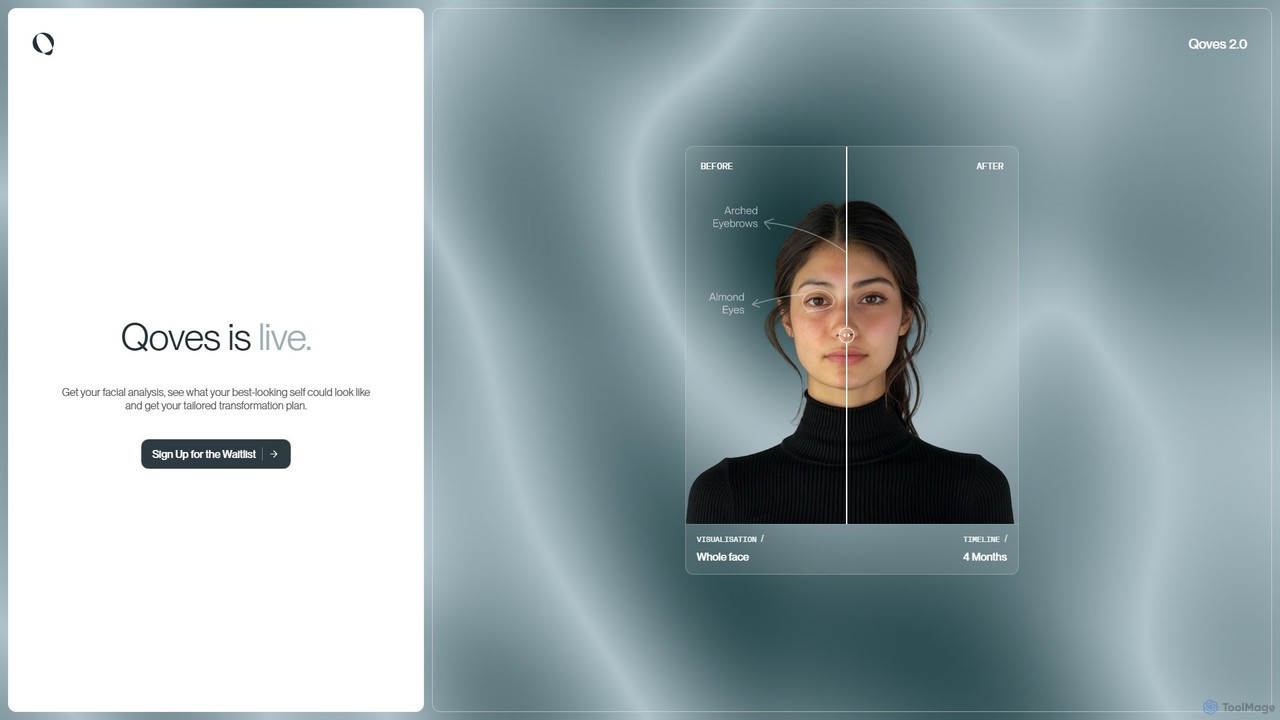
Qoves is an AI-powered platform that provides in-depth facial analysis and personalized, non-surgical transformation plans. Upload your photo to receive objective insights into your facial aesthetics, visualize your potential, and get a tailored roadmap to achieve your 'glow up'.
About Face Analysis
Face Analysis tools are AI-powered applications that detect, analyze, and interpret human facial features from images or videos. Leveraging computer vision and deep learning, these tools identify key facial landmarks, estimate demographics like age and gender, and recognize emotions. They provide valuable, quantifiable data for understanding human reactions and identity, which is crucial for market research, security systems, and interactive applications. Unlike general image recognition, face analysis focuses on extracting nuanced biometric and affective data for deeper insights.
Core Features
- Emotion Recognition: Identifies primary emotions such as happiness, sadness, anger, and surprise from facial expressions.
- Demographic Estimation: Provides estimates of age, gender, and sometimes other attributes based on facial characteristics.
- Facial Landmark Detection: Pinpoints key facial features (e.g., eyes, nose, mouth corners) for precise tracking and analysis.
- Head Pose & Gaze Tracking: Determines the orientation of the head and the direction of eye gaze in 3D space.
- Liveness Detection: Verifies that the face being analyzed is a real, live person, preventing spoofing attacks with photos or videos.
Use Cases
Face Analysis tools are widely used in market research to gauge audience reactions to advertisements, in retail to analyze customer satisfaction at kiosks, and in security for biometric access control. They are also integral to automotive safety for monitoring driver drowsiness and in healthcare for observing patient conditions remotely.
How to Choose
When selecting a Face Analysis tool, evaluate the accuracy rates for the specific attributes you need to measure (e.g., emotion, age). Consider the API's processing speed for real-time applications and its scalability. Crucially, verify the provider's compliance with privacy regulations like GDPR and CCPA, and assess their commitment to ethical AI practices.

Face AnalysisUse Cases
Gauging Audience Reaction to Media Content
Market researchers and advertising agencies use Face Analysis to measure the effectiveness of media content like commercials or movie trailers. During a focus group screening, a camera captures viewers' facial expressions. The AI tool then analyzes this data in real-time, tracking emotional responses such as joy, surprise, or confusion frame-by-frame. This provides objective, granular feedback, helping creators identify the most impactful scenes and optimize the final edit to maximize audience engagement and emotional connection.
Enhancing In-Store Customer Experience
Retail managers and CX analysts deploy Face Analysis in physical stores via smart kiosks or digital signage. As customers interact with a display, an integrated camera anonymously analyzes their facial expressions to gauge satisfaction or frustration. If the system detects negative emotions, it can trigger an automated response, such as offering a discount, displaying alternative products, or sending an alert for a staff member to assist. This proactive approach helps resolve issues in real-time, improving the overall shopping experience and increasing customer loyalty.
Monitoring Driver Drowsiness and Attention
Automotive engineers integrate Face Analysis into Advanced Driver-Assistance Systems (ADAS). An in-car camera continuously monitors the driver's face, tracking metrics like eye-blink frequency, head position, and gaze direction. The AI system can accurately detect signs of drowsiness or distraction. If the driver's attention drifts from the road for too long, the system issues an audible or haptic alert, prompting them to refocus or take a break. This application is critical for improving road safety and preventing accidents caused by driver fatigue.
Personalizing Digital Learning Experiences
EdTech developers use Face Analysis to create more adaptive and engaging online learning platforms. With user consent, a webcam can monitor a student's facial expressions during a video lesson. The system analyzes these cues to infer levels of engagement, confusion, or understanding. If a student appears confused, the platform could automatically pause the video and suggest a supplementary resource or flag the timestamp for a teacher to review. This creates a personalized learning path that adapts to the student's real-time cognitive and emotional state, potentially improving learning outcomes.
Secure Identity Verification for Access Control
Security managers and app developers implement Face Analysis for frictionless authentication. Instead of passwords or key cards, users can access secure buildings, log into applications, or authorize payments simply by looking at a camera. The system captures the user's face, analyzes its unique biometric features, and often performs a liveness check to prevent spoofing with photos. It then compares this data to a stored, encrypted template for verification. This provides a high level of security that is both convenient and difficult to compromise.
Creating Emotion-Aware AI Avatars
Game developers and virtual reality creators use Face Analysis to build more immersive and expressive digital experiences. By integrating a face analysis API, a user's real-time facial expressions can be captured via a webcam and mapped directly onto their digital avatar. This allows the avatar to smile, frown, or show surprise in sync with the user. This technology is transforming virtual meetings, social VR platforms, and gaming by enabling more natural and emotionally nuanced communication between users in a virtual environment.