ToolMage
Sign in

Best 1 Personal Assistant for Health & Wellness

Popular Personal Assistant in Health & Wellness include TalkPDF, helping you work more efficiently.

TalkPDF

TalkPDF

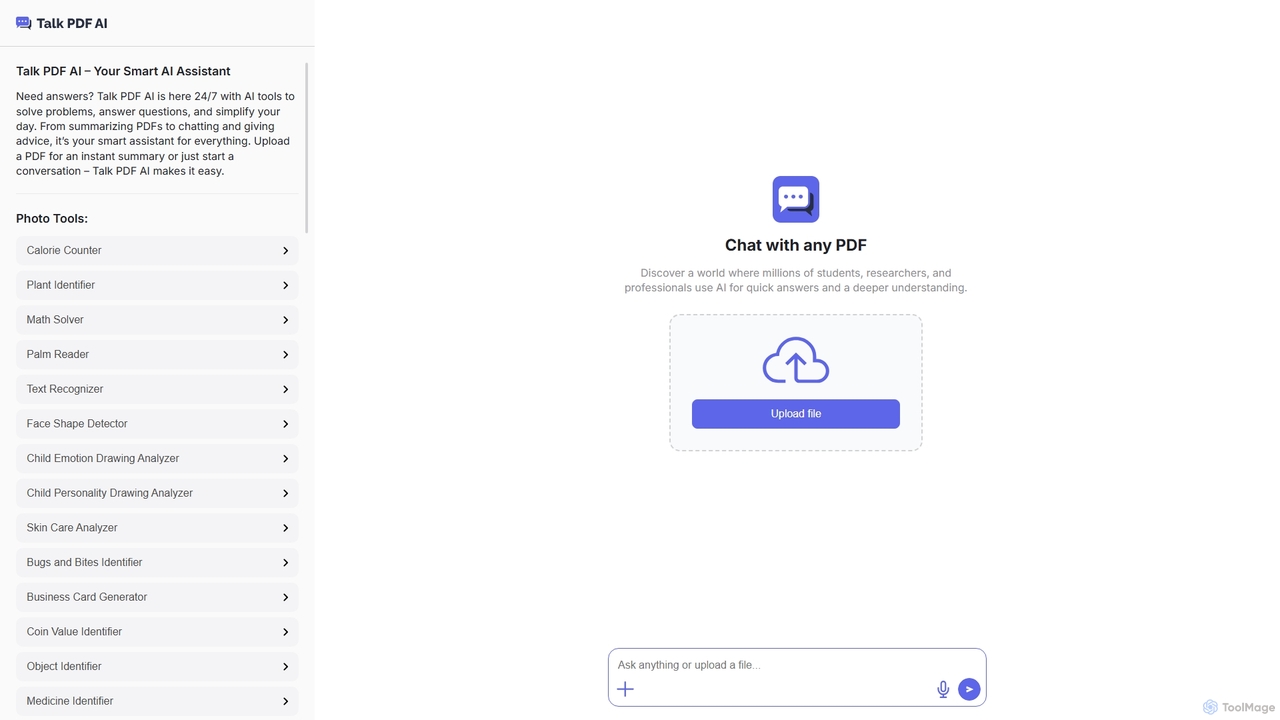
TalkPDF is an intelligent AI assistant designed to simplify daily tasks by offering a wide array of tools. It excels at interacting with PDFs, providing instant summaries, answering questions, and facilitating conversations. Beyond PDF capabilities, it integrates numerous AI-powered photo, text, and audio tools for diverse needs.

Writing Assistant
Visits 7.5KFavorites 116Likes 120

About Personal Assistant

Personal Assistant AI tools are intelligent software designed to automate and streamline daily tasks, manage schedules, and provide personalized support, significantly contributing to individual productivity and well-being. Leveraging advanced natural language processing (NLP) and machine learning, these tools understand user commands, learn preferences, and proactively offer assistance. Within the Health & Wellness context, they help users maintain organization, manage information, and optimize routines, fostering a more balanced and efficient lifestyle. They act as a digital extension for personal management, from scheduling appointments to reminding about health goals.

Core Features

  • Smart Schedule Management: Automatically arrange meetings, remind about appointments, and optimize time allocation.
  • Task Automation: Automatically reply to emails, organize files, and handle repetitive administrative work.
  • Personalized Information Retrieval: Provide customized news, reports, or data based on user preferences.
  • Health and Habit Tracking: Monitor daily activities, dietary intake, and offer personalized health advice.
  • Communication Assistance: Draft emails, summarize meeting minutes, and assist in daily communications.

Use Cases

These tools are invaluable for busy professionals, entrepreneurs, and individuals seeking to optimize their personal and professional lives. They are particularly useful in scenarios requiring meticulous scheduling, information synthesis, and proactive task management, freeing up mental bandwidth for more critical activities. For instance, a project manager can automate meeting setups, or an individual can track their fitness goals effortlessly.

How to Choose

When selecting a Personal Assistant AI tool, consider its integration capabilities with existing calendars and apps, the breadth of tasks it can automate, its natural language understanding accuracy, and the level of personalization it offers. Data privacy and security features are also paramount, especially when handling sensitive personal information, ensuring your personal data remains protected.

Personal Assistant use cases

1

Optimize Daily Schedule and Meeting Arrangements

Busy executives or freelancers often need to coordinate multiple meetings and appointments. An AI personal assistant can automatically analyze calendar availability, prioritize and schedule meetings, and send invitations and reminders. This not only reduces the time spent on manual scheduling but also prevents scheduling conflicts, ensuring important matters are not overlooked, significantly boosting time management efficiency.

2

Automating Daily Task Reminders

A busy professional uses an AI personal assistant to automatically generate and prioritize daily task lists based on calendar events and project deadlines. The assistant sends timely reminders for meetings, follow-ups, and personal errands, ensuring no critical item is missed and freeing up mental bandwidth for more strategic work.

3

Automate Email Classification and Responses

Customer service managers or sales professionals receive a large volume of emails daily. An AI personal assistant can automatically identify email subjects, categorize them into appropriate folders, and draft replies to common inquiries using predefined templates. This significantly reduces the email processing burden, ensures timely responses, and allows teams to focus on more complex customer needs, improving customer satisfaction.

4

Optimizing Travel Itineraries

A frequent traveler inputs their destination and preferences into an AI personal assistant, which then generates optimized flight and accommodation options, suggests local attractions, and manages booking confirmations. It also provides real-time updates on gate changes or delays, making travel planning seamless and stress-free.

5

Managing Personal Finance & Budgeting

An individual connects their banking apps to an AI personal assistant, which tracks spending, categorizes transactions, and provides insights into financial habits. It can set budget alerts, identify potential savings, and even suggest investment opportunities, helping users achieve financial goals.

6

Personal Health and Fitness Goal Tracking

Health-conscious individuals aim to better manage their diet and exercise habits. An AI personal assistant can connect with smart wearables, record steps, sleep quality, and calorie intake, and provide personalized health reports and habit-forming reminders based on preset goals. This helps users adhere to a healthy lifestyle, achieve fitness goals, and improve overall quality of life.

7

Streamlining Content Curation for Social Media

A content creator leverages an AI personal assistant to monitor industry news, identify trending topics, and curate relevant articles or media. The assistant can then draft social media posts, schedule them for optimal engagement times, and even suggest relevant hashtags, significantly reducing content management time.

8

Business Travel Planning and Management

Frequent business travelers need to efficiently plan complex itineraries. An AI personal assistant can automatically search and book flights, hotels, and car rental services based on destination, budget, and preferences. It can also provide real-time flight updates, local weather forecasts, and transportation advice, ensuring smooth and worry-free business trips, saving significant planning time.

9

Facilitating Language Learning Practice

A language learner uses an AI personal assistant for daily conversational practice. The assistant engages in natural dialogue, corrects grammar and pronunciation, and provides vocabulary suggestions. It can also schedule study sessions and track progress, offering a personalized and interactive learning experience.

10

Organize Learning Materials and Knowledge Management

Students or researchers need to process vast amounts of learning materials and research papers. An AI personal assistant can automatically crawl web content, organize notes, summarize key points of documents, and categorize them by topic for storage. This makes knowledge retrieval more efficient, helping users quickly find needed information, and improving learning and research efficiency.

11

Social Media Content Publishing Assistance

Social media managers or content creators need to regularly publish high-quality content. An AI personal assistant can generate social media post drafts based on preset themes and keywords, and suggest optimal posting times. It can also monitor trending topics and provide content inspiration, helping users maintain activity and enhance brand influence.

12

Personalized Health & Wellness Scheduling

An individual focused on health and wellness utilizes an AI personal assistant to schedule workout routines, meal preparation times, and meditation sessions. The assistant integrates with fitness trackers to monitor progress, sends motivational reminders, and helps maintain a balanced lifestyle by ensuring consistency in healthy habits.

Personal Assistant FAQ

What are AI Personal Assistants?

AI Personal Assistants are software applications that use artificial intelligence, primarily natural language processing and machine learning, to help individuals manage tasks, schedules, and information. They act as digital helpers, automating routine activities, providing proactive support, and offering personalized recommendations to enhance productivity and organization.

What are AI Personal Assistant tools?

AI Personal Assistant tools are software that leverage artificial intelligence to help users automate daily tasks, manage schedules, and provide personalized information and support. They understand user needs through natural language processing and machine learning, aiming to enhance personal productivity, optimize time management, and offer assistance within the Health & Wellness domain.

How do AI Personal Assistants differ from traditional digital assistants?

Unlike traditional digital assistants that rely on predefined commands and rule-based responses, AI Personal Assistants leverage advanced machine learning to understand context, learn user preferences, and adapt over time. This allows them to handle more complex queries, offer proactive suggestions, and perform tasks with greater autonomy and personalization, moving beyond simple command execution.

How do AI Personal Assistants differ from traditional scheduling apps?

The main difference between AI Personal Assistants and traditional scheduling apps lies in their intelligence and automation level. Traditional apps rely on manual user input and settings, whereas AI assistants can proactively learn user habits, understand natural language commands, and automate scheduling, reminders, and task execution, even offering personalized suggestions without frequent intervention.

How to choose the right AI Personal Assistant tool for me?

When selecting an AI Personal Assistant, consider whether its core functions align with your primary needs (e.g., schedule management, task automation, information retrieval, or health tracking). Also, evaluate its integration capabilities with existing tools (like calendars, email clients), user interface friendliness, data privacy protection measures, and pricing model.

What are the key benefits of using an AI Personal Assistant?

The primary benefits include significant time savings by automating repetitive tasks, improved organization through intelligent scheduling and task management, and enhanced productivity by minimizing distractions and providing timely information. They also offer personalized support, adapting to individual habits and preferences to create a more efficient and tailored user experience.

Can AI Personal Assistants integrate with other applications?

Yes, most modern AI Personal Assistants are designed with robust integration capabilities. They can connect with popular calendar apps, email clients, project management tools, communication platforms, and even smart home devices. This allows for a centralized management hub, enabling seamless data flow and cross-application automation to streamline various aspects of daily life.

What kind of help can AI Personal Assistants offer in Health & Wellness?

In the realm of Health & Wellness, AI Personal Assistants can provide multifaceted support. For instance, they can remind users to take medication on time, record exercise data, track dietary habits, monitor sleep quality, and offer personalized health reports and habit-forming suggestions based on data, helping users better manage their personal health goals.

How is data security ensured with AI Personal Assistant tools?

Most AI Personal Assistant tools prioritize data security. They typically employ advanced encryption technologies to protect user data and adhere to strict privacy policies. When choosing, users should carefully review the service provider's privacy statement to understand how data is collected, stored, and used, and select tools that offer security features like data encryption and two-factor authentication.

How do AI Personal Assistants contribute to Health & Wellness?

Within the Health & Wellness domain, AI Personal Assistants can play a crucial role by helping users schedule fitness routines, plan healthy meals, set reminders for medication or hydration, and track progress towards wellness goals. They can integrate with health apps and wearables, providing personalized insights and nudges to maintain a balanced and healthy lifestyle, acting as a consistent digital coach.