
ToolMage
Sign in

Best 1 Fitness AI tools for Health & Wellness

Popular Fitness AI tools in Health & Wellness include SuperEgo, helping you work more efficiently.

SuperEgo
Freemium

SuperEgo

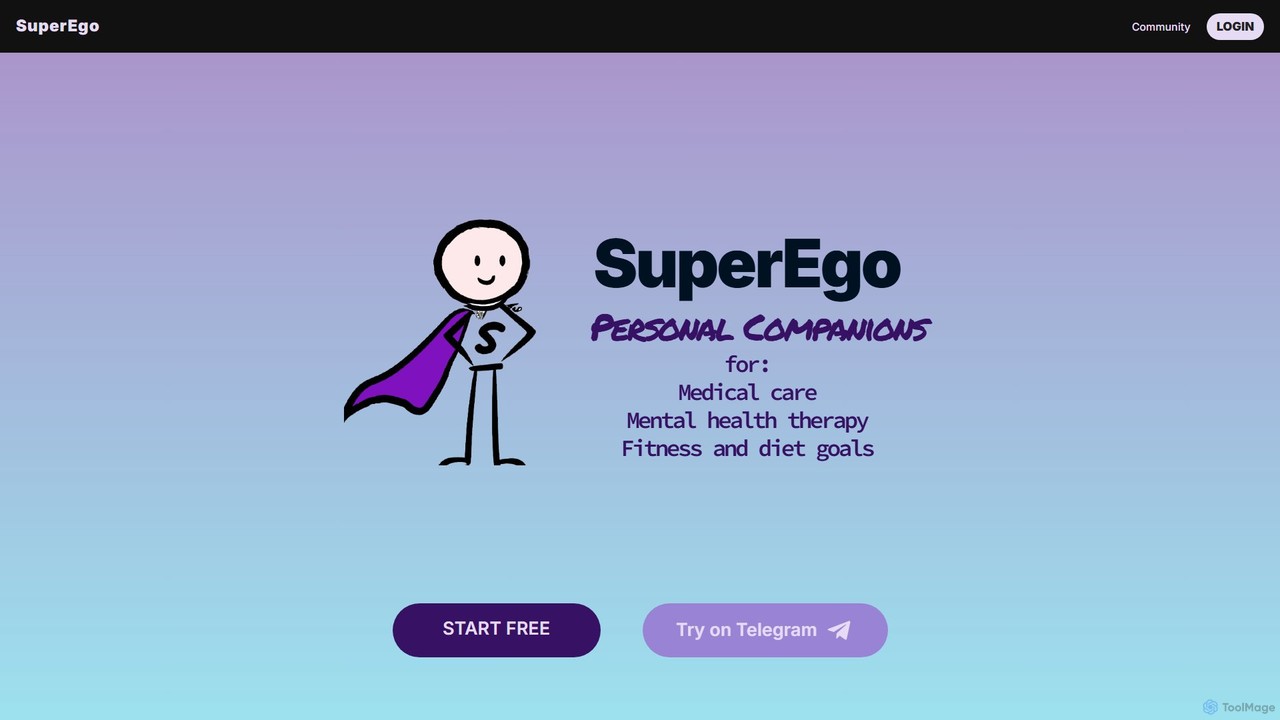
SuperEgo is an AI-powered wellness platform offering specialized chatbot companions for medical advice, mental health therapy, fitness coaching, and social support. Get instant, personalized, and 24/7 access to expert-level guidance to enhance your overall wellbeing.

Fitness
Visits 6KFavorites 104Likes 124

About Fitness

AI Fitness tools are applications that use artificial intelligence to provide personalized workout plans, real-time form correction, and performance tracking. These tools often leverage a device's camera and computer vision to analyze a user's movements, comparing them to ideal exercise models. This enables them to deliver instant, actionable feedback to improve technique and prevent injury, making expert-level coaching accessible anywhere. They effectively act as a virtual personal trainer, adapting to an individual's progress and goals over time.

Core Features

  • Personalized Workout Generation: Creates custom training plans based on individual fitness levels, goals, and available equipment.
  • Real-time Form Correction: Uses computer vision to analyze exercise form and provides immediate audio or visual feedback.
  • Performance Analytics: Tracks metrics like reps, sets, weight, and movement quality to show progress and identify areas for improvement.
  • Adaptive Difficulty: Automatically adjusts workout intensity and complexity based on user performance and feedback.
  • Nutritional Guidance: Offers meal suggestions and macro tracking that align with fitness objectives.

Use Cases

These tools are ideal for home fitness enthusiasts seeking guided workouts without a personal trainer, athletes aiming to optimize their technique and performance, and individuals undergoing physical rehabilitation who need to ensure correct exercise execution. They are also valuable for busy professionals who require flexible, on-demand training sessions that fit their schedule.

How to Choose

When selecting an AI Fitness tool, consider the quality of its form-tracking technology (e.g., camera-based vs. wearable sensors). Evaluate the variety and specialization of workouts offered to ensure they match your interests. Check for compatibility with other health apps or wearable devices for holistic data tracking. Finally, assess the subscription model and whether it offers a trial period to test its coaching style and effectiveness.

Fitness use cases

1

Correcting Exercise Form at Home

A beginner starting their fitness journey wants to perform squats and lunges correctly to avoid knee injuries. Using an AI Fitness app, they position their phone's camera to capture their movement. The AI uses computer vision to track key joints like hips, knees, and ankles in real-time. If their knees go past their toes during a squat, the app provides immediate audio feedback like 'Shift your weight back'. This instant correction helps them build proper muscle memory, ensuring safer and more effective workouts without the cost of a personal trainer.

2

Creating an Adaptive Marathon Training Plan

An amateur runner is preparing for their first marathon. They input their goal finish time, current weekly mileage, and personal bests into an AI Fitness tool. The AI generates a comprehensive 16-week training schedule, including long runs, tempo runs, and recovery days. As the runner logs their workouts, the AI analyzes their pace, heart rate data from a connected watch, and subjective feedback on effort. If they consistently exceed targets, the plan adapts by slightly increasing the intensity. If they report fatigue, it might suggest an extra rest day, ensuring optimal training progression and reducing the risk of overtraining.

3

Analyzing Weightlifting Performance

A weightlifter uses an AI fitness app to improve their deadlift technique. They record their sets from the side. After the session, the AI analyzes the video, tracking the barbell's path, the lifter's back angle, and hip hinge timing. It generates a report showing that the bar path is drifting away from their body, indicating a need to engage their lats more. It also measures bar velocity for each rep, highlighting that power drops significantly on the final reps. This data-driven feedback allows the lifter to make specific, technical adjustments in their next session for better performance and safety.

4

Gamified Fitness Challenges for Motivation

A user who struggles with workout consistency joins a gamified AI fitness program. The app sets daily and weekly challenges, such as 'Complete 3 workouts this week' or 'Hold a plank for 60 seconds'. As they complete challenges, they earn points, unlock badges, and advance levels. The AI also creates personalized 'boss battles', where the user has to beat their previous personal best in a specific exercise. This gamification layer turns exercise from a chore into an engaging game, providing consistent motivation and a clear sense of progression, which helps in building a long-term fitness habit.

5

AI-Powered Nutrition Planning

A user aims to build muscle while minimizing fat gain. Their AI Fitness app, integrated with a calorie tracking feature, analyzes their workout data, including exercise type, duration, and intensity. Based on this, it calculates their daily caloric and macronutrient (protein, carbs, fat) needs. The AI then suggests meal plans and recipes that meet these targets. For example, after an intense leg day, it recommends a higher-carb, high-protein meal for recovery. This integration removes the guesswork from nutrition, ensuring the user's diet optimally supports their specific training goals.

6

Guided Rehabilitation Exercises

A patient recovering from shoulder surgery is prescribed a set of range-of-motion exercises by their physical therapist. To ensure they perform them correctly at home, they use an AI fitness app. The app guides them through each movement, using the phone's camera to monitor their arm's angle and movement path. It provides real-time feedback, ensuring they don't push past the safe range and perform the exercise with the correct form. The app can also generate progress reports, tracking improvements in mobility over time, which can be shared with the therapist to adjust the recovery plan accordingly.

Fitness FAQ

What are AI Fitness tools?

AI Fitness tools are applications that use artificial intelligence to act as a virtual personal trainer. Their primary function is to create personalized workout plans, analyze a user's exercise form in real-time using computer vision, and track performance data to adapt future workouts. Unlike simple workout trackers, they provide interactive feedback and progressive plans tailored to an individual's goals, abilities, and progress, making guided fitness more accessible and data-driven.

How do AI Fitness tools analyze my exercise form?

Most AI Fitness tools use a technology called computer vision. By accessing your device's camera, the AI can identify key points on your body (like your joints and limbs) to create a skeletal model. It then compares the angles and movements of this model against a pre-programmed database of correct exercise forms. If it detects a significant deviation—such as your back rounding during a deadlift or your knees caving inward during a squat—it provides immediate corrective feedback. Some advanced tools may also use data from wearable sensors for greater accuracy.

What's the difference between an AI Fitness app and a standard workout logger?

The key difference is intelligence and interactivity. A standard workout logger is a passive tool; you manually enter your exercises, sets, and reps. An AI Fitness app is an active coach. It not only logs your workouts (often automatically via rep counting) but also:

  • Provides real-time feedback: It corrects your form as you exercise.
  • Personalizes plans: It creates and adjusts your workout schedule based on your performance.
  • Analyzes data: It offers deeper insights into your progress, such as movement quality or power output, beyond just logging numbers.
In short, a logger records what you did, while an AI coach guides what you do and how you do it.

Who can benefit most from AI Fitness tools?

AI Fitness tools are versatile and can benefit a wide range of users. However, they are particularly valuable for:

  • Beginners: Who need guidance on proper form to build a safe and effective foundation.
  • Home Exercisers: Who lack access to in-person trainers and gym equipment but want structured, guided workouts.
  • Data-Driven Athletes: Who want to analyze performance metrics beyond simple tracking to optimize their training.
  • Individuals in Rehabilitation: Who need to perform specific exercises with precise form as part of their recovery program.
Essentially, anyone looking for affordable, accessible, and personalized fitness guidance can find value in these tools.

How should I choose the right AI Fitness tool for my needs?

To choose the right tool, consider these factors:

  • Primary Goal: Are you focused on strength training, cardio, yoga, or rehabilitation? Choose a tool that specializes in your area of interest.
  • Technology: Check reviews on the accuracy of its form tracking. Does it require specific phone placement or wearable sensors?
  • Content Variety: Look for a large library of exercises and programs to keep your routine engaging and prevent plateaus.
  • Integration: Does it connect with your smartwatch or other health apps (like Apple Health or Google Fit) to consolidate your data?
  • Cost and Trial Period: Compare subscription prices and see if there's a free trial to test whether the coaching style and user interface work for you.