Boomer
Boomer is an intelligent AI trading copilot designed for cryptocurrency markets. It automates trade execution, analyzes market patterns …
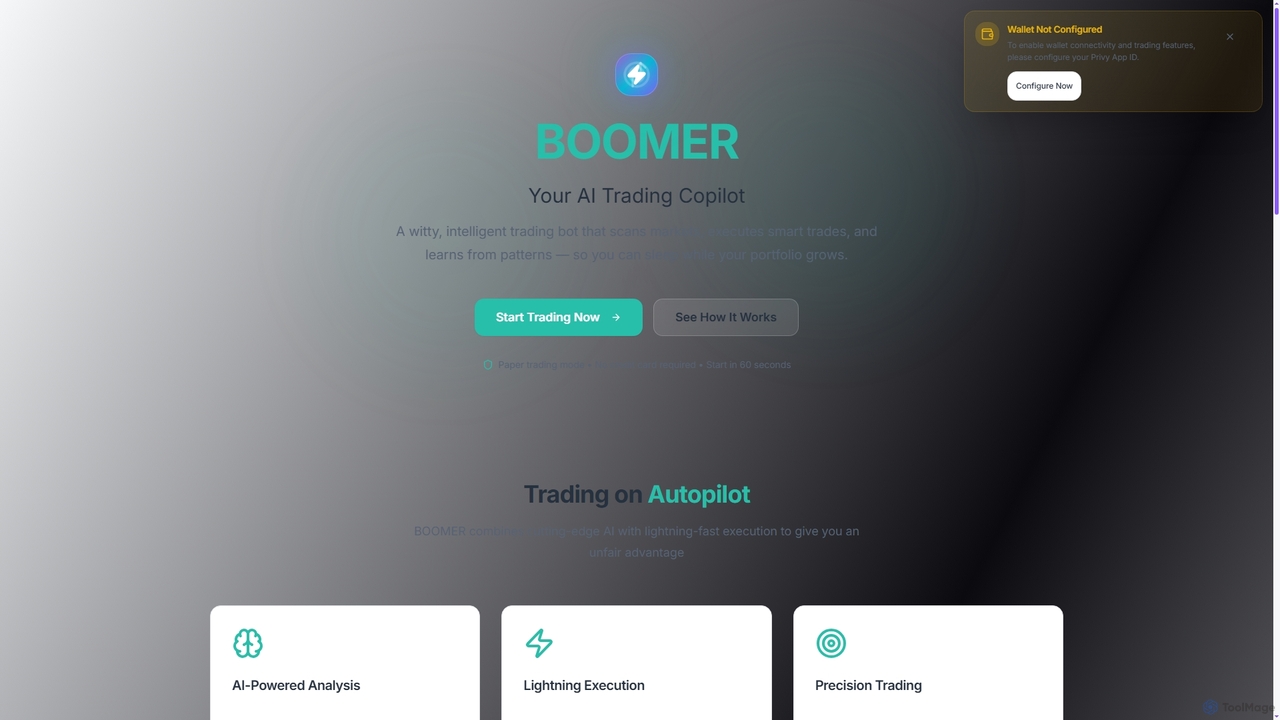
Boomer is an intelligent AI trading copilot designed for cryptocurrency markets. It automates trade execution, analyzes market patterns 24/7, and learns from performance to optimize your portfolio. With features like paper trading and natural language interaction, Boomer offers an unfair advantage for traders seeking automated success and growth.
About Market Analysis
Market Analysis tools are AI-powered solutions designed to collect, process, and interpret vast amounts of market data to uncover actionable insights. These tools leverage advanced machine learning algorithms and natural language processing to identify trends, understand consumer behavior, and monitor competitive landscapes. They empower businesses to make data-driven strategic decisions, optimize marketing efforts, and identify new growth opportunities with greater accuracy and speed.
Core Features
- Trend Prediction: Forecasts future market shifts and emerging opportunities based on historical data.
- Competitor Monitoring: Tracks competitor strategies, product launches, and market positioning in real-time.
- Consumer Segmentation: Divides target audiences into distinct groups based on demographics, behavior, and preferences.
- Sentiment Analysis: Gauges public opinion and brand perception from social media and customer reviews.
- Data Visualization: Presents complex market data in intuitive charts and dashboards for easier interpretation.
Applicable Scenarios
These tools are invaluable for strategic planning, product development, and marketing optimization across various industries. Businesses use them to assess the viability of new products, refine their target audience strategies, and anticipate market disruptions. They are crucial for staying competitive and responsive in dynamic markets.
How to Choose
When selecting an AI market analysis tool, consider its data sources (e.g., social media, news, proprietary databases), the depth of its analytical capabilities (e.g., predictive modeling, sentiment scoring), integration with existing business intelligence platforms, and the level of customization offered for specific industry needs. Evaluate the user interface for ease of use and the pricing model to ensure it aligns with your budget and scale of operations.

Market AnalysisUse Cases
Identifying Emerging Market Trends
Market strategists and business development teams utilize AI market analysis tools to proactively identify nascent trends and shifts in consumer preferences. By analyzing vast datasets from social media, news, and search queries, these tools can detect early signals of market changes, allowing companies to adapt their product roadmaps or marketing campaigns ahead of competitors. This enables timely innovation and strategic positioning.
Competitive Landscape Monitoring
Business intelligence analysts and sales teams employ these AI tools to continuously monitor competitor activities. The tools track new product launches, pricing strategies, marketing campaigns, and customer feedback for rival companies. This provides a comprehensive overview of the competitive landscape, helping businesses identify competitive advantages, potential threats, and areas for differentiation in their own offerings.
Predicting Consumer Behavior
Marketing and product development teams leverage AI market analysis to predict future consumer behavior and purchasing patterns. By analyzing historical transaction data, demographic information, and online interactions, the tools can forecast demand for specific products or services, identify key drivers of customer loyalty, and personalize marketing messages. This leads to more effective campaigns and product offerings.
Assessing New Product Launch Feasibility
Product managers and R&D departments use AI market analysis to evaluate the potential success of new product concepts before significant investment. The tools analyze market demand, competitive saturation, and target audience interest by processing survey data, focus group transcripts, and online discussions. This helps in refining product features, optimizing positioning, and minimizing risks associated with new launches.
Optimizing Marketing Campaign Performance
Digital marketing specialists and brand managers utilize AI market analysis to enhance the effectiveness of their campaigns. By analyzing campaign performance data, audience engagement metrics, and market sentiment, these tools identify which messages resonate most with specific segments. This allows for real-time adjustments to ad creatives, targeting parameters, and channel selection, maximizing ROI and brand impact.
Geographic Market Expansion Strategy
International business development teams and executives use AI market analysis to identify and evaluate potential new markets for expansion. The tools analyze economic indicators, regulatory environments, cultural nuances, and local consumer preferences across different regions. This data-driven approach helps in making informed decisions about market entry strategies, resource allocation, and localized product adaptations.