Marketing Best in category 2 results Customer Communication AI Tool

Popular AI tools in the Customer Communication field of Marketing include Twilio、Termii, etc., helping you quickly improve efficiency.

Termii

Termii

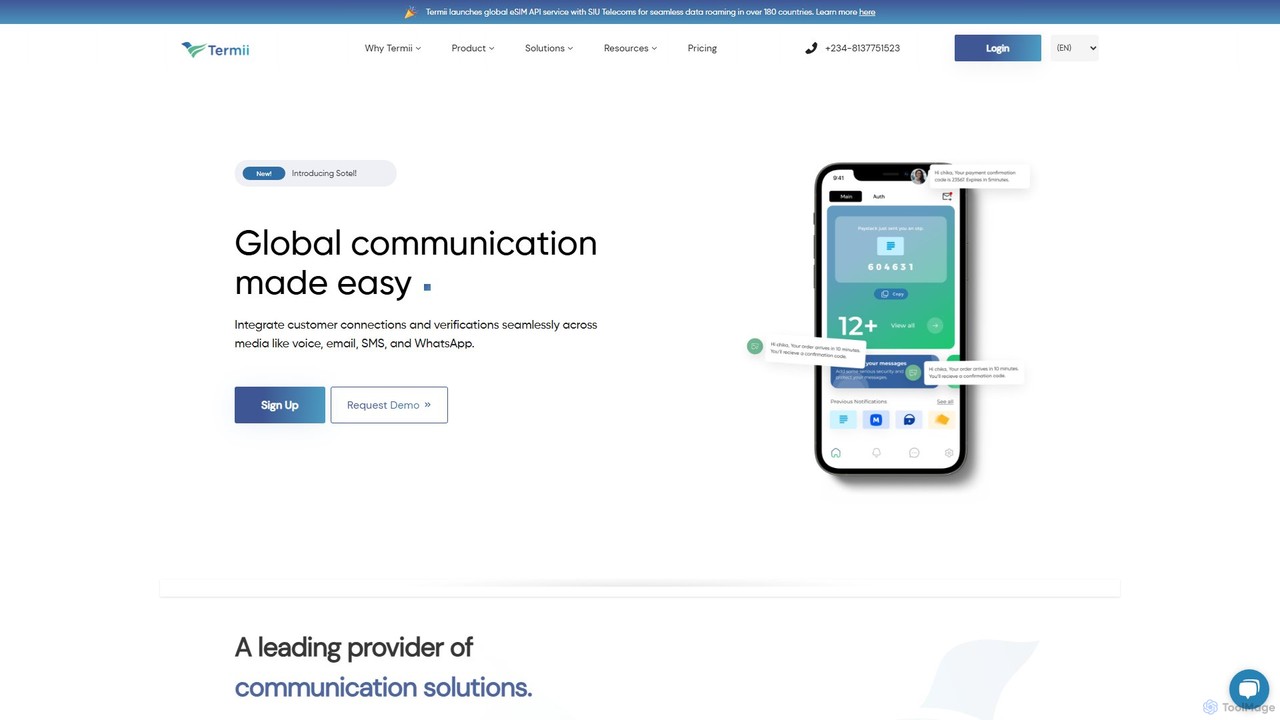
Termii is a cross-channel messaging and customer engagement platform that enables businesses to verify, authenticate, and communicate with …

44.3K
Twilio

Twilio

Twilio is a leading customer engagement platform that provides developers with powerful APIs for SMS, voice, email, and …

5.9M

About Customer Communication

AI Customer Communication tools are a specialized category of marketing software that uses artificial intelligence to manage, automate, and personalize interactions with customers. These tools leverage technologies like Natural Language Processing (NLP) and machine learning to understand and respond to customer inquiries across various channels. They enable businesses to provide instant, 24/7 support, deliver targeted messages, and gain deep insights from conversational data. This enhances customer satisfaction, improves efficiency, and fosters stronger relationships.

Core Features

  • AI-Powered Chatbots: Automate responses to frequently asked questions and handle initial customer queries on websites or messaging apps.
  • Omnichannel Inbox: Consolidate messages from email, social media, live chat, and SMS into a single, unified dashboard for agents.
  • Sentiment Analysis: Automatically analyze the emotional tone of customer messages to prioritize urgent issues and gauge overall satisfaction.
  • Automated Ticketing & Routing: Categorize incoming support requests and assign them to the appropriate team or agent based on predefined rules.
  • Proactive Messaging: Send automated, behavior-triggered messages to onboard new users, prevent churn, or announce updates.

Use Cases

These tools are widely used in sectors like e-commerce, SaaS, and hospitality. Customer support teams use them to manage high volumes of inquiries, while marketing teams leverage them for lead qualification and personalized engagement. Product teams can also analyze communication data to gather user feedback and identify pain points.

How to Choose

When selecting a tool, consider the channels it supports (e.g., website chat, Facebook Messenger, WhatsApp). Evaluate its integration capabilities with your existing CRM or helpdesk software. Assess the sophistication of its AI features, such as the chatbot's conversational ability and the accuracy of its sentiment analysis. Finally, consider its scalability and pricing model to ensure it aligns with your business growth.

Customer CommunicationUse Cases

1

Automate 24/7 E-commerce Customer Support

An e-commerce store manager uses an AI customer communication tool to deploy a chatbot on their website and Facebook Messenger. The chatbot is trained on order data and FAQs to instantly handle common inquiries like 'Where is my order?', process return requests, and answer product questions. This frees up human agents to focus on complex issues, reduces response times from hours to seconds, and provides consistent support even outside of business hours, improving overall customer satisfaction.

2

Personalize Onboarding for SaaS Users

A customer success manager at a SaaS company sets up automated, behavior-triggered email and in-app message sequences. When a new user signs up, they receive a welcome message. As they use the product, the tool sends targeted tips on features they haven't used yet or congratulates them on reaching a milestone. This proactive, personalized communication guides users through the platform, increases feature adoption, and reduces early-stage churn by helping users find value faster.

3

Analyze Customer Sentiment from Support Tickets

A product manager wants to understand common user frustrations. They connect their AI communication tool to their helpdesk system (like Zendesk or Jira). The tool automatically analyzes thousands of support tickets, using sentiment analysis to flag conversations with negative tones and NLP to identify recurring keywords and topics like 'bug', 'slow loading', or 'confusing interface'. This provides quantifiable data on customer pain points, helping the product team prioritize fixes and improvements without manually reading every ticket.

4

Qualify Leads on a B2B Website

A marketing team for a B2B software company implements a conversational AI chatbot on their pricing page. Instead of a static form, the chatbot engages visitors with questions like 'What is your company size?' and 'What problem are you trying to solve?'. Based on the answers, it qualifies the lead, provides relevant resources, and for high-value prospects, it directly offers to book a demo on a sales representative's calendar. This automates the top of the sales funnel, ensuring the sales team only spends time on qualified leads.

5

Manage Social Media Customer Service at Scale

A community manager for a large consumer brand is overwhelmed by DMs and comments across Instagram, Twitter, and Facebook. They use an omnichannel communication tool that pulls all these interactions into one inbox. The AI automatically tags messages by topic (e.g., 'complaint', 'shipping question', 'positive feedback') and routes urgent complaints to a senior agent. This creates an organized workflow, ensures no customer message is missed, and allows the brand to maintain a responsive presence on social media.

6

Proactively Reduce Customer Churn

A subscription box service integrates its AI communication tool with its user analytics platform. The system identifies customers with declining engagement (e.g., fewer logins, unopened emails). It then triggers a proactive, personalized outreach campaign. An automated email might ask, 'We miss you! Here's a 15% discount on your next box.' This targeted intervention re-engages at-risk customers before they decide to cancel, directly impacting retention rates and customer lifetime value.

Customer CommunicationFrequently Asked Questions