Marketing Best in category 1 results Customer Journey Orchestration AI Tool

Popular AI tools in the Customer Journey Orchestration field of Marketing include roojoom, etc., helping you quickly improve efficiency.

roojoom

roojoom

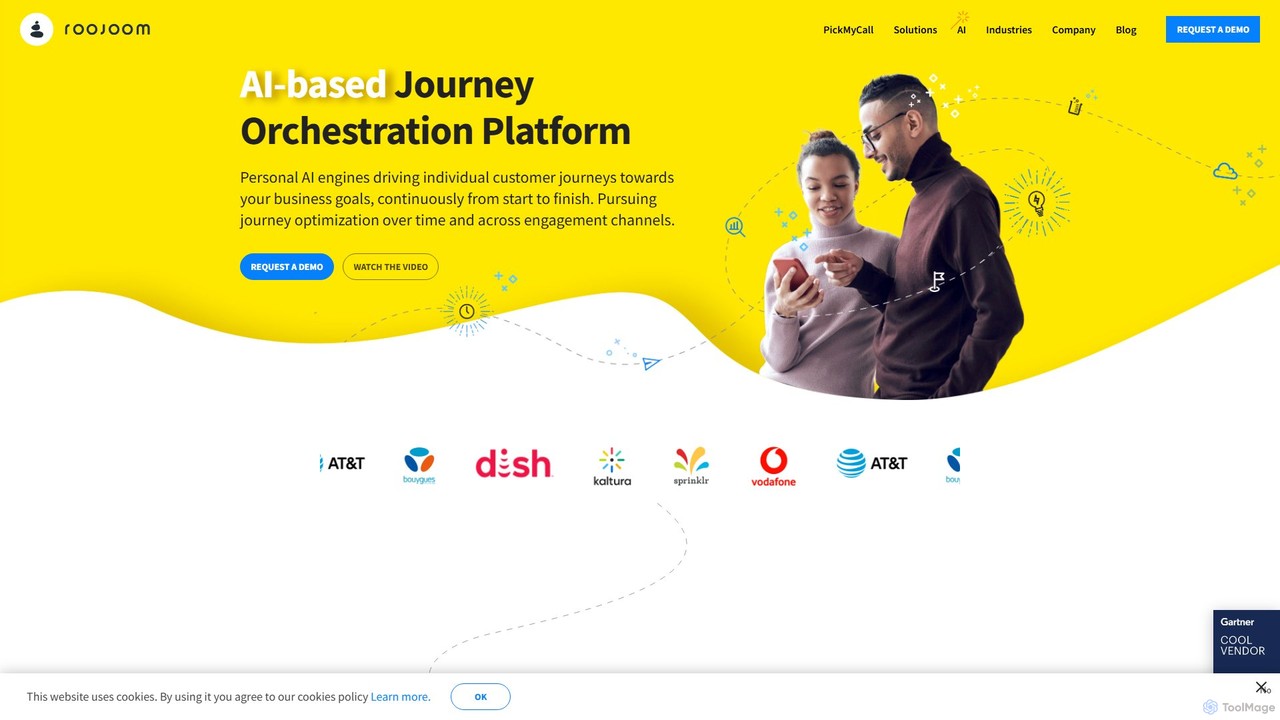
roojoom is an AI-powered journey orchestration platform that automates and personalizes customer journeys from start to finish. It …

6.4K

About Customer Journey Orchestration

Customer Journey Orchestration tools are AI-powered platforms that connect and coordinate customer interactions across all touchpoints in real-time. They utilize data and AI to understand individual customer behavior, triggering personalized actions on channels like email, web, mobile apps, and social media. This enables businesses to deliver seamless, context-aware experiences that adapt dynamically to each user's unique path. Unlike traditional marketing automation, which follows predefined paths, orchestration manages the entire, non-linear customer lifecycle to build deeper relationships and drive loyalty.

Core Features

  • Cross-Channel Coordination: Unifies communication across email, SMS, push notifications, web, and in-app messages for a consistent experience.
  • Real-Time Event Triggering: Initiates automated actions based on live customer behaviors, such as cart abandonment or feature usage.
  • AI-Powered Decisioning: Uses machine learning to predict customer needs and determine the next best action or message for each individual.
  • Visual Journey Builder: Provides an intuitive drag-and-drop interface for marketers to design, visualize, and manage complex customer journeys.
  • Journey Analytics & Optimization: Offers detailed insights into how customers move through journeys, identifying bottlenecks and opportunities for improvement.

Use Cases

These tools are essential for roles like digital experience managers, CRM specialists, and lifecycle marketers in data-driven industries such as e-commerce, SaaS, finance, and travel. For example, an e-commerce brand can orchestrate a cart abandonment flow that starts with a browser notification, followed by an email, and then a targeted ad on social media, all based on the user's real-time actions and inaction.

How to Choose

When selecting a Customer Journey Orchestration tool, evaluate its integration capabilities with your existing tech stack (CDP, CRM). Assess the sophistication of its AI for real-time decisioning and personalization. Consider the breadth of supported channels and the intuitiveness of its journey builder for non-technical users. Finally, ensure the platform can scale to handle your customer volume and data complexity.

Customer Journey OrchestrationUse Cases

1

Automating the SaaS User Onboarding Journey

A product marketing manager at a SaaS company designs a multi-channel onboarding sequence for new trial users. The journey begins with a personalized welcome email. Based on initial feature usage tracked in real-time, the system triggers in-app messages guiding them to key activation points. If a user becomes inactive for 48 hours, an automated SMS is sent with an offer to book a demo. This orchestrated approach ensures users discover value quickly, significantly increasing trial-to-paid conversion rates.

2

Cross-Channel Cart Abandonment Recovery

An e-commerce manager orchestrates a recovery flow for abandoned carts. Thirty minutes after abandonment, a browser push notification is sent with a reminder. If there's no action within two hours, a personalized email is triggered, showcasing the items left behind and similar products. The next day, if the user visits a social media platform, they see a targeted ad for the exact product. This multi-touchpoint strategy significantly improves recovery rates compared to a single-channel email reminder.

3

Proactive Churn Prevention for Subscription Services

A customer success team at a subscription-based service uses journey orchestration to identify at-risk customers. The system monitors product usage data. If a previously active user's engagement drops by 50% over a week, it automatically triggers a journey. This starts with a friendly check-in email asking for feedback. If there's no response, a task is created in the CRM for an account manager to personally call the customer. This proactive, personalized outreach helps resolve issues before they lead to cancellation.

4

Delivering Personalized Banking Offers

A digital marketing lead at a bank orchestrates journeys for financial products. When a customer spends time on the mortgage calculator page of the website, the system identifies them as a high-intent lead. It then triggers an email with a guide to first-time home buying. If the customer downloads the guide, they are added to a segment that receives targeted social media ads about current mortgage rates. This contextual nurturing provides value and positions the bank as a helpful advisor, increasing loan applications.

5

Enhancing Loyalty Program Engagement

A loyalty program manager for a retail brand designs a journey to boost member activity. After a member makes a purchase, the system sends a push notification showing the points they've just earned. If a member is within 100 points of the next reward tier, it triggers a targeted email with special offers on products they've previously viewed. This creates a timely and relevant incentive to make another purchase, increasing both engagement and repeat sales.

6

Orchestrating a Webinar Promotion Journey

A marketing events coordinator uses an orchestration tool to manage a webinar journey. The journey starts with targeted ads on professional networks. Once a user registers, they receive a confirmation email and are added to a reminder sequence. A day before the event, an SMS reminder is sent. After the webinar, attendees receive a thank-you email with the recording, while non-attendees get a 'sorry we missed you' message with a link to watch on-demand. This ensures maximum attendance and extends the value of the content post-event.

Customer Journey OrchestrationFrequently Asked Questions