Marketing Best in category 1 results Experimentation AI Tool

Popular AI tools in the Experimentation field of Marketing include Optimizely, etc., helping you quickly improve efficiency.

Optimizely

Optimizely

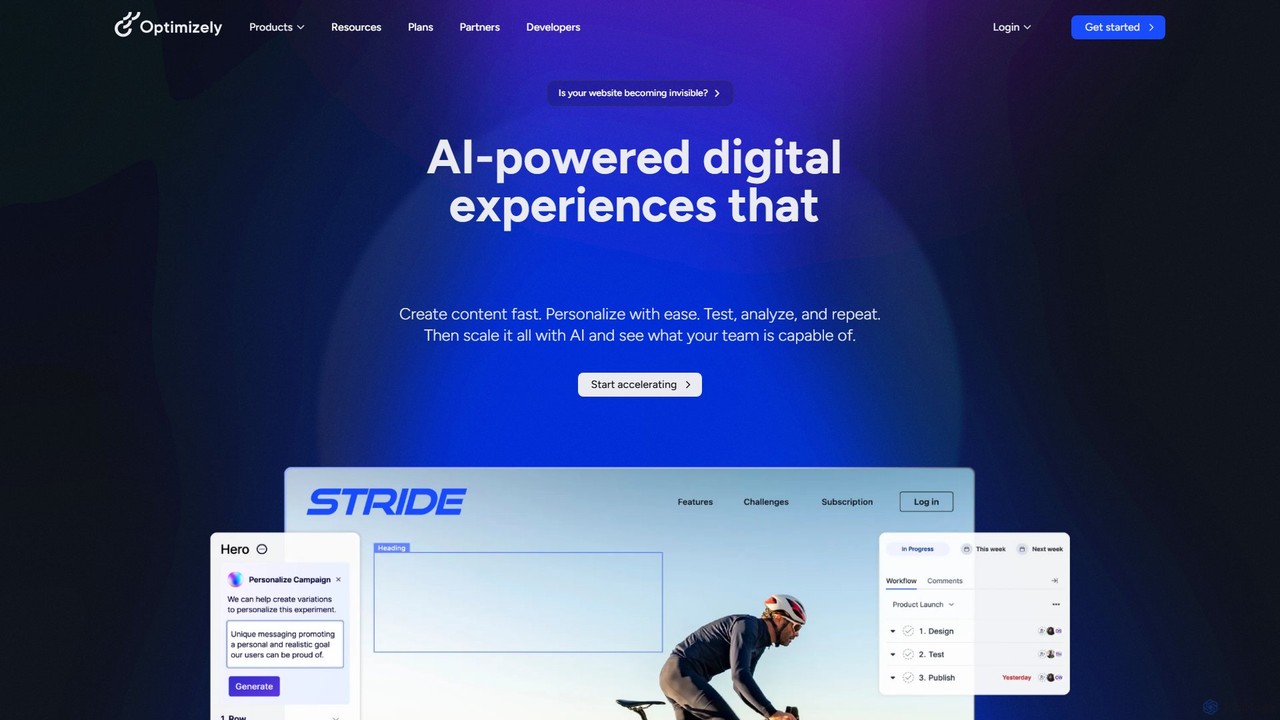
Optimizely is a leading AI-powered Digital Experience Platform (DXP) that enables marketers, developers, and e-commerce leaders to create, …

690.3K

About Experimentation

AI Experimentation tools are platforms designed to systematically test and optimize marketing elements to improve performance. They utilize statistical methods to compare variations of webpages, emails, or app interfaces, identifying which version best achieves a specific goal. By enabling data-driven decision-making, these tools help marketers move beyond guesswork and continuously enhance user experiences and conversion rates. AI capabilities often automate test analysis, suggest hypotheses, and personalize experiences at scale.

Core Features

  • A/B/n Testing: Compare two or more versions of a single element, like a headline or button color, to see which performs better.
  • Multivariate Testing (MVT): Test multiple changes on a page simultaneously to understand the impact of each element combination.
  • Personalization Engine: Deliver tailored content, offers, and experiences to different audience segments based on their behavior and attributes.
  • Statistical Analysis & Reporting: Provide robust analytics, confidence levels, and clear reports to determine statistically significant winners.
  • Visual & Code Editors: Offer user-friendly visual editors for simple changes and code editors for more complex, dynamic tests.

Use Cases

These tools are essential for digital marketers, product managers, conversion rate optimization (CRO) specialists, and UX/UI designers. They are commonly used to optimize landing page layouts, test email marketing subject lines, refine ad creatives, improve user onboarding flows in apps, and validate new website features before a full rollout.

How to Choose

When selecting an Experimentation tool, evaluate its testing capabilities (client-side vs. server-side), integration with your analytics and marketing platforms, and the ease of use of its editor. Also, consider the sophistication of its statistical engine, audience segmentation features, and whether its pricing model aligns with your traffic volume and testing frequency.

ExperimentationUse Cases

1

Optimize Landing Page Conversion Rates

A digital marketing manager for an e-commerce brand needs to increase sign-ups for a new product launch. Using an AI Experimentation tool, they set up an A/B test on the landing page. Variant A uses the original headline "Discover Our New Collection," while Variant B tests "Get Early Access to the Future of Tech." The tool automatically splits traffic between the two versions and tracks the sign-up conversion rate for each. After reaching statistical significance, the data shows Variant B increases conversions by 18%, providing a clear, data-backed decision to update the page.

2

Personalize Email Campaign Engagement

An email marketer at a SaaS company wants to improve the click-through rate (CTR) of their weekly newsletter. They use an Experimentation tool's personalization features to target different user segments. For new users, the email highlights introductory tutorials. For power users, it showcases advanced features. The tool's engine dynamically inserts the relevant content block for each recipient. This targeted approach results in a 40% higher CTR compared to the previous one-size-fits-all newsletter, fostering better user engagement.

3

A/B Test Mobile App Onboarding

A product manager for a mobile fitness app aims to reduce user drop-off during the initial onboarding process. They devise two different onboarding flows. Flow A is a three-step tutorial, while Flow B is a more interactive, gamified setup process. Using a server-side experimentation tool, they randomly assign new users to one of the two flows. The tool measures the completion rate and day-1 retention for each cohort. The results reveal that Flow B has a 25% higher completion rate, guiding the product team's development roadmap.

4

Refine Ad Creative for Higher ROI

A performance marketer running social media ad campaigns wants to maximize their return on ad spend (ROAS). They use a multivariate testing feature to experiment with different combinations of ad elements: three different images, two headlines, and two call-to-action buttons. The Experimentation tool runs all 12 possible combinations and analyzes which one generates the most clicks and conversions. The winning combination is then allocated the majority of the ad budget, improving the overall campaign ROAS by 15%.

5

Validate New Feature Impact with Phased Rollouts

A development team at an online marketplace has built a new "Wishlist" feature. To avoid potential negative impacts on site performance or user behavior, they use an Experimentation tool with feature flagging capabilities. They initially roll out the feature to just 5% of users. They monitor key metrics like session duration, add-to-cart rate, and overall revenue for this group compared to the 95% who don't see the feature. The positive data confirms the feature's value, allowing the team to confidently roll it out to 100% of users.

6

Test Dynamic Pricing and Promotions

An e-commerce strategist for a travel booking site wants to find the optimal discount to offer first-time visitors without eroding margins. They set up an experiment to test three different promotions: a 10% discount, a $20 flat discount, and free cancellation. The tool segments incoming new visitors and presents one of the three offers. It then tracks the booking rate and average order value for each segment. The data helps identify the promotion that delivers the highest overall revenue, not just the highest conversion rate.

ExperimentationFrequently Asked Questions