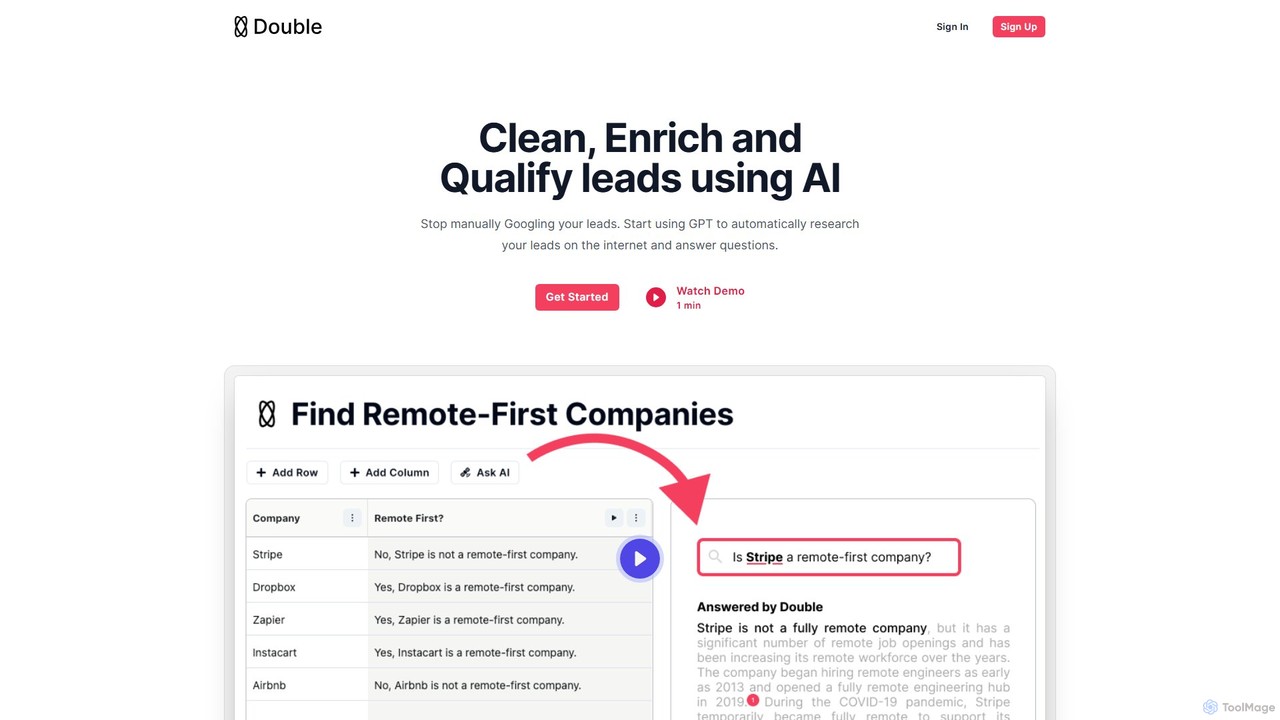
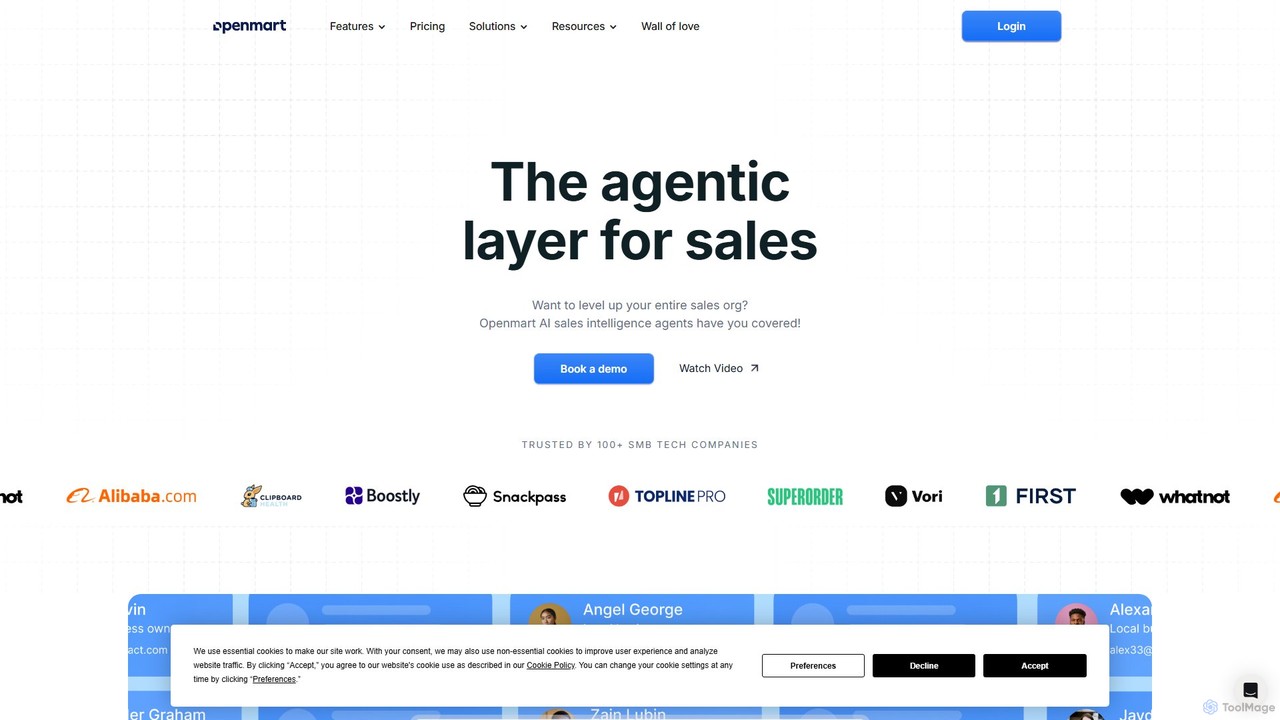
Lead Enrichment tools are AI-powered platforms designed to automatically augment incomplete lead data with valuable, contextual information. These tools access vast public and proprietary databases to find and append missing details like job titles, company size, industry, contact information, and even the technology stack a company uses. This process transforms basic contact lists into detailed, actionable profiles, enabling sales and marketing teams to better understand and qualify their prospects. The primary value lies in improving lead scoring accuracy, enabling highly personalized outreach, and increasing overall conversion rates.
Core Features
- Data Append & Verification: Automatically adds missing data points (e.g., phone number, job title, location) and verifies the accuracy of existing information.
- Firmographic Data: Provides company-level details such as industry, annual revenue, employee count, and corporate hierarchy.
- Technographic Data: Identifies the specific software, web technologies, and hardware a prospect's company uses.
- Contact Data Discovery: Uncovers direct email addresses, phone numbers, and social media profiles for key decision-makers within a target account.
- Real-time Enrichment: Instantly enriches new leads as they enter your system through web forms or CRM integrations.
Use Cases
Lead Enrichment tools are essential for B2B sales and marketing teams. Sales Development Representatives (SDRs) use them to prioritize leads and personalize outreach. Marketing operations specialists leverage them to improve lead scoring models and segment audiences for targeted campaigns like Account-Based Marketing (ABM). They are also crucial for maintaining CRM data hygiene by regularly updating and correcting contact records.
How to Choose
When selecting a Lead Enrichment tool, first evaluate the quality, accuracy, and refresh rate of its data sources. Second, confirm it offers seamless integrations with your existing CRM and marketing automation platforms (e.g., Salesforce, HubSpot). Third, analyze the pricing model—whether it's based on credits per lead, a flat subscription, or API usage—to ensure it aligns with your budget and scale. Finally, verify the provider's compliance with data privacy regulations like GDPR and CCPA.