
Queryinside
Queryinside is an AI-powered data search and monitoring platform that transforms chaotic log data into actionable insights. It …
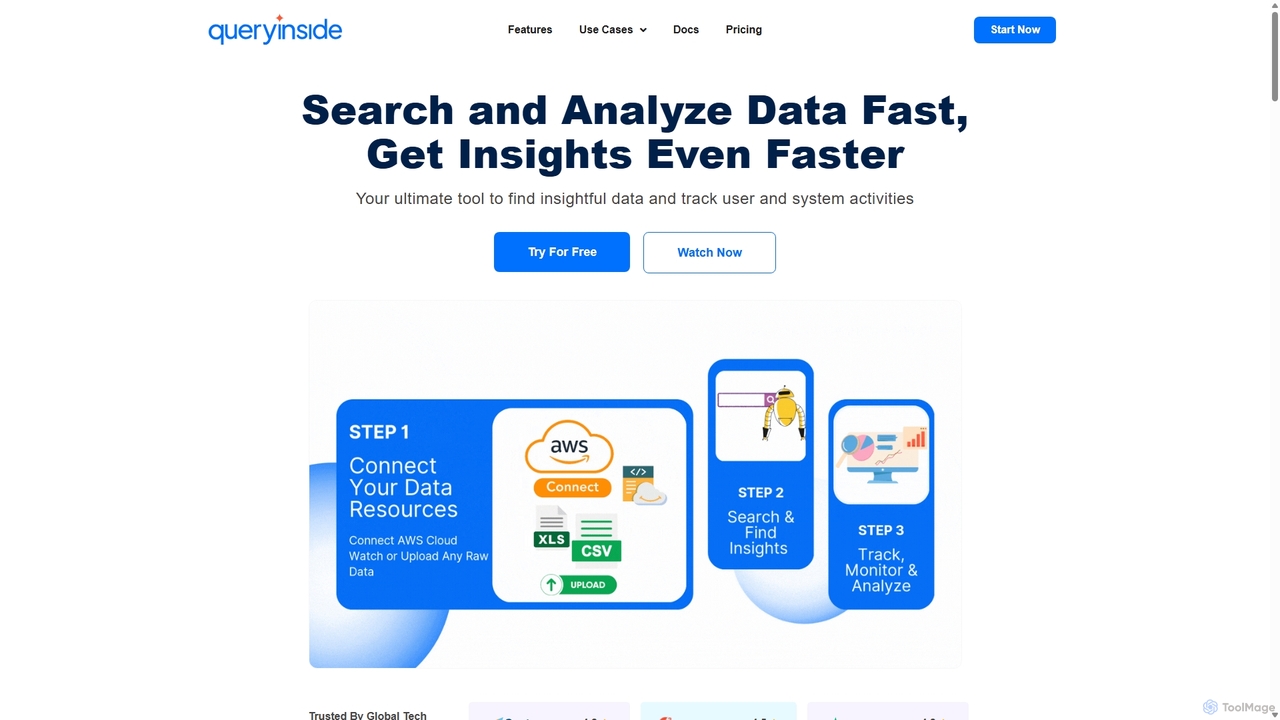
Queryinside is an AI-powered data search and monitoring platform that transforms chaotic log data into actionable insights. It offers advanced search (keyword, semantic, hybrid), real-time system and web analytics, and seamless integrations with cloud services like AWS, helping teams reduce log monitoring time and accelerate root cause detection.
About Web Analytics
AI Web Analytics tools are a class of software that uses artificial intelligence to analyze website traffic and user behavior. They go beyond traditional metrics by employing machine learning to automatically uncover insights, predict trends, and identify conversion opportunities. These tools help marketers and product managers understand the 'why' behind user actions, enabling them to optimize the customer journey and improve website performance. Key capabilities often include predictive forecasting, automated anomaly detection, and natural language querying for data exploration.
Core Features
- Predictive Analytics: Forecasts future traffic, user behavior, and conversion rates based on historical data patterns.
- Automated Anomaly Detection: Automatically identifies and alerts users to significant, unexpected changes in key metrics.
- Behavioral Pattern Recognition: Uncovers complex user segments and journey paths that lead to conversion or drop-off.
- Natural Language Querying: Allows users to ask complex data questions in plain language, without needing to write code.
- AI-Powered Session Replays: Intelligently surfaces the most critical or problematic user sessions for review and analysis.
Use Cases
These tools are widely used in e-commerce to optimize checkout funnels, by SaaS companies to improve user onboarding and feature adoption, and by content publishers to understand which topics drive the highest engagement and subscriptions. They are essential for any data-driven business looking to move from reactive reporting to proactive optimization.
How to Choose
When selecting an AI Web Analytics tool, consider its integration capabilities with your existing marketing stack (e.g., CRM, ad platforms). Evaluate the depth of its automated insights and predictive features. Also, assess its scalability to handle your traffic volume and ensure it complies with privacy regulations like GDPR and CCPA. Finally, consider the user interface and whether it's designed for marketers or requires a dedicated data analyst.
Web AnalyticsUse Cases
Optimizing E-commerce Conversion Funnels
An e-commerce manager notices a high cart abandonment rate but is unsure of the cause. By using an AI Web Analytics tool, they can automatically identify the exact step in the checkout process where most users drop off. The tool's AI-powered session replay feature highlights user frustration signals, such as 'rage clicks' on a non-responsive payment button or excessive time spent on the shipping address form. This pinpoints a specific usability issue or technical bug, allowing the development team to address the problem directly. As a result, the friction is removed, leading to a measurable decrease in cart abandonment and an increase in completed sales.
Improving User Onboarding in a SaaS Application
A product manager for a SaaS company wants to increase the user activation rate. The AI analytics tool is configured to track the entire onboarding funnel. The system automatically identifies patterns among users who fail to complete the setup. It might discover that users from non-technical backgrounds consistently drop off when asked to configure an API integration. Instead of just providing numbers, the tool provides a qualitative insight: 'Users who watch the tutorial video for less than 30 seconds are 80% more likely to churn.' Based on this, the team can redesign the onboarding flow, perhaps making the video more engaging or offering a simpler, non-API setup option, thereby improving activation rates.
Detecting Critical Website Performance Issues
An IT operations team is responsible for maintaining a high-traffic news website. A sudden, unexplained drop in user engagement is reported. Instead of manually sifting through server logs, the team consults their AI Web Analytics tool. Its anomaly detection feature has already flagged a critical issue: 'Page load time for users on mobile devices in Southeast Asia has increased by 300% in the last hour.' This immediately narrows down the problem. Further investigation reveals a misconfigured Content Delivery Network (CDN) node affecting that specific region. The team can fix the issue proactively, restoring performance before it impacts a wider audience and preventing significant ad revenue loss.
Identifying High-Value Content for Publishers
A content strategist for a digital media outlet needs to decide which topics to invest in for the next quarter. Traditional analytics show page views, but not which content leads to valuable actions like newsletter sign-ups. Using an AI Web Analytics tool, they can analyze the full user journey. The AI identifies that articles about 'sustainable finance' have a lower view count but a 5x higher conversion rate to paid subscriptions compared to viral 'celebrity news'. The tool's predictive feature also suggests that a related topic, 'impact investing', is trending and likely to perform well. This allows the strategist to build a data-driven content plan focused on ROI, not just traffic volume.
Personalizing User Experience in Real-Time
A marketer for an online travel agency wants to increase bookings by showing more relevant offers. Their AI Web Analytics tool analyzes a visitor's real-time behavior, such as pages viewed (family resorts vs. business hotels) and searches performed ('cheap flights to Orlando'). The AI creates a dynamic user profile and predicts their travel intent, for example, 'family vacation planner'. This data is instantly fed to the website's personalization engine. As a result, the visitor is shown tailored banners for 'Family Vacation Packages' and kid-friendly hotel deals instead of generic offers, significantly increasing the click-through rate and likelihood of a booking.
Answering Complex Business Questions with NLQ
A chief marketing officer (CMO) needs a quick answer for a board meeting: 'Which marketing channel brought in the most users who converted within their first week last quarter?' Traditionally, this would require a data analyst to write a complex SQL query and join multiple data tables, taking hours or days. With an AI Web Analytics tool featuring Natural Language Querying (NLQ), the CMO can simply type this question into a search bar. The AI parses the request, queries the underlying data, and returns a clear chart and summary in seconds. This empowers non-technical executives to self-serve their data needs and make faster, more informed decisions without creating a bottleneck for the analytics team.