Medical Best in category 1 results Diagnosis Aid AI Tool

Popular AI tools in the Diagnosis Aid field of Medical include Aii, etc., helping you quickly improve efficiency.

Aii

Aii

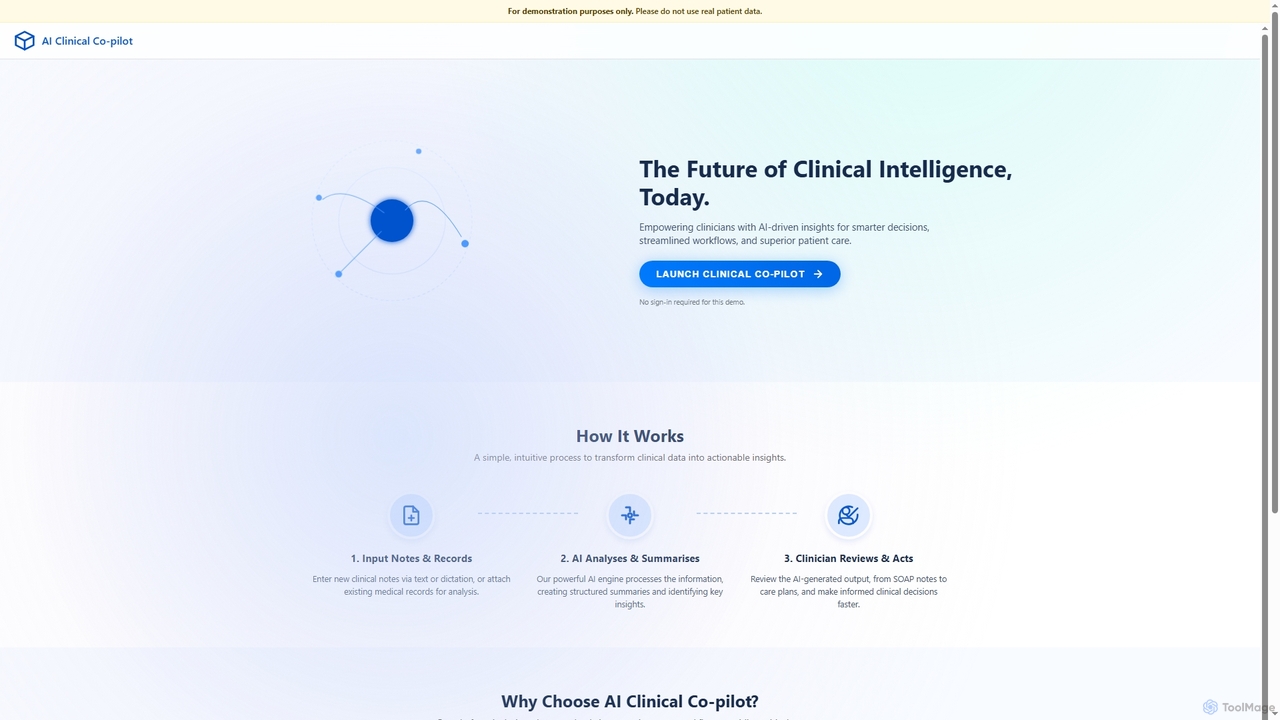
Aii is an AI Clinical Co-pilot designed to empower healthcare professionals with intelligent insights, streamline workflows, and enhance …

3.3K

About Diagnosis Aid

Diagnosis Aid are AI-powered tools designed to assist healthcare professionals in identifying diseases and conditions. These tools leverage machine learning and deep learning algorithms to analyze complex medical data, such as imaging, lab results, and patient histories. They enhance diagnostic accuracy, speed up the diagnostic process, and support clinical decision-making by identifying patterns and anomalies often missed by human observation alone.

Core Features

  • Medical Image Analysis: Automated detection of anomalies in X-rays, MRIs, CT scans, and other imaging modalities.
  • Symptom & Differential Diagnosis: Suggesting possible conditions based on reported symptoms, medical history, and clinical findings.
  • Predictive Analytics for Disease Risk: Assessing patient risk for specific diseases using genetic, lifestyle, and historical health data.
  • Lab Result Interpretation: Highlighting critical values and potential implications from blood tests, pathology reports, and other laboratory analyses.
  • Electronic Health Record (EHR) Data Mining: Extracting insights from vast patient records to identify trends and aid in diagnosis.

Use Cases

Radiologists utilize AI to flag suspicious lesions in mammograms or CT scans, improving the efficiency and accuracy of screening. General practitioners employ AI systems to cross-reference patient symptoms with extensive medical knowledge bases, aiding in the diagnosis of complex or rare conditions. Oncologists leverage AI to predict cancer recurrence based on tumor characteristics and treatment responses, guiding personalized therapy.

How to Choose

When selecting a Diagnosis Aid tool, prioritize its clinical validation and regulatory approvals (e.g., FDA, CE Mark) to ensure reliability. Evaluate its integration capabilities with existing EHR and PACS systems for seamless workflow. Consider the tool's interpretability and explainability, allowing clinicians to understand the AI's reasoning. Assess data privacy and security compliance (e.g., HIPAA, GDPR) to protect sensitive patient information.

Diagnosis AidUse Cases

1

Early Detection of Retinopathy in Diabetics

Ophthalmologists use AI to analyze retinal scans, identifying early signs of diabetic retinopathy before human eyes might, enabling timely intervention. This helps prevent vision loss in diabetic patients by automatically flagging microaneurysms, hemorrhages, and exudates, significantly reducing the workload for specialists and improving screening throughput.

2

Automated Lung Nodule Detection in CT Scans

Radiologists deploy AI tools to automatically highlight potential lung nodules in chest CT scans, reducing missed diagnoses and improving screening efficiency. The AI can analyze hundreds of slices in seconds, providing a second opinion that helps prioritize cases for further review and ensures comprehensive examination, especially in high-volume screening programs.

3

Differential Diagnosis for Rare Diseases

Clinicians input a patient's complex symptom profile and medical history into an AI system, which suggests a list of potential rare diseases, aiding in challenging diagnostic cases. This is particularly valuable when symptoms are vague or overlap with common conditions, allowing the AI to cross-reference against vast databases of rare disease knowledge and genetic information.

4

Predicting Sepsis Risk in ICU Patients

Intensive care units utilize AI to continuously monitor patient vital signs and lab results, predicting the onset of sepsis hours in advance, allowing for proactive treatment. By analyzing real-time data streams and identifying subtle physiological changes, AI can alert medical staff to high-risk patients, significantly improving outcomes and reducing mortality rates associated with sepsis.

5

Assessing Skin Lesion Malignancy

Dermatologists use AI-powered image analysis to evaluate dermoscopic images of skin lesions, providing a malignancy score to assist in the early detection of skin cancer. This technology helps differentiate between benign moles and potentially cancerous lesions with high accuracy, supporting clinicians in making informed decisions about biopsies and further investigations.

6

Genetic Predisposition Screening for Hereditary Conditions

Genetic counselors employ AI to analyze patient genomic data, identifying markers associated with hereditary conditions and informing personalized risk assessments. This allows for proactive counseling and management strategies for individuals at high risk of developing genetic disorders, enabling early interventions or lifestyle adjustments to mitigate potential health impacts.

Diagnosis AidFrequently Asked Questions