Medical Best in category 1 results Patient Visualization AI Tool

Popular AI tools in the Patient Visualization field of Medical include Aihairtransplant, etc., helping you quickly improve efficiency.

Aihairtransplant

Aihairtransplant

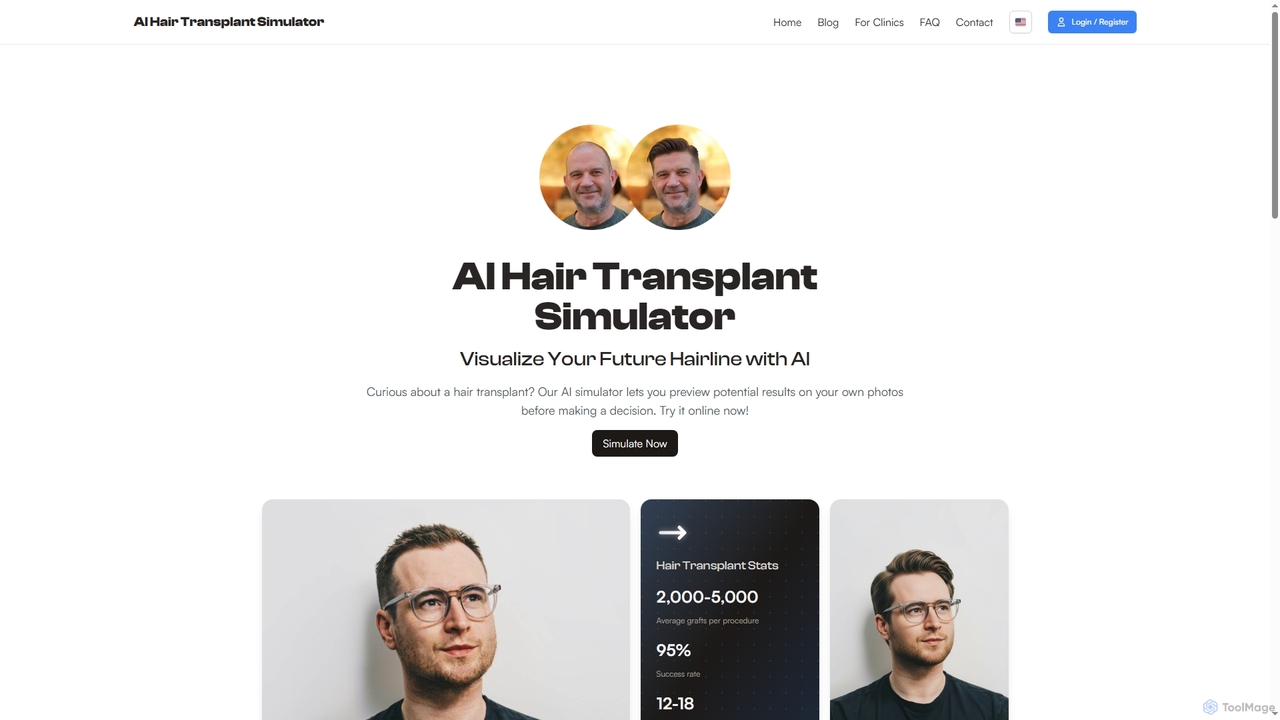
Aihairtransplant is an AI-powered simulator that allows individuals to visualize potential hair transplant results on their own photos. …

3.1K

About Patient Visualization

Patient Visualization tools are AI-powered solutions designed to create detailed, interactive visual representations of patient medical data. These tools leverage advanced AI algorithms, including computer vision and 3D reconstruction, to transform complex imaging, physiological, and anatomical information into intuitive visual models. Their primary value lies in enhancing diagnostic accuracy, optimizing treatment planning, and significantly improving patient education and understanding of their conditions.

Core Features

  • 3D Reconstruction: Generates accurate, interactive 3D models of organs, tumors, or anatomical structures from 2D medical scans (CT, MRI).
  • Pathology Mapping: Visualizes the precise location, extent, and progression of diseases or anomalies within the patient's body.
  • Surgical Simulation & Planning: Allows surgeons to virtually plan and simulate complex procedures on patient-specific anatomical models before actual surgery.
  • Physiological Data Overlay: Integrates and overlays real-time physiological data (e.g., blood flow, nerve pathways) onto anatomical visualizations for comprehensive insights.
  • Personalized Anatomy Models: Creates unique digital twins of a patient's anatomy, enabling highly individualized diagnostic and therapeutic approaches.

Applicable Scenarios

These tools are indispensable for medical professionals in various high-stakes scenarios. They are widely used in pre-surgical planning for intricate operations, where visualizing complex anatomy helps minimize risks. Furthermore, they play a crucial role in patient education, allowing clinicians to explain diagnoses and treatment options using personalized, easy-to-understand visual aids. Medical training and research also benefit significantly from realistic simulations and detailed anatomical explorations.

How to Choose

When selecting Patient Visualization tools, prioritize solutions that offer high visualization fidelity and accuracy, ensuring precise representation of medical data. Evaluate their compatibility with existing medical imaging formats (e.g., DICOM) and seamless integration capabilities with Picture Archiving and Communication Systems (PACS) or Electronic Health Records (EHR). Consider the interactivity features, such as real-time rotation, slicing, and annotation, which are vital for comprehensive analysis. Finally, verify regulatory compliance and data security protocols to meet healthcare standards.

Patient VisualizationUse Cases

1

Pre-surgical Planning for Complex Procedures

Surgeons and surgical teams utilize patient visualization tools to create highly accurate 3D models of a patient's anatomy and pathology from CT or MRI scans. This allows for virtual dissection, precise identification of critical structures like blood vessels and nerves, and meticulous planning of incision points and tumor resection margins. The result is reduced surgical time, improved precision, and lower complication rates, especially in neurosurgery or complex oncological cases.

2

Pre-surgical Planning for Complex Procedures

Surgeons utilize patient visualization tools to create highly accurate 3D models of a patient's specific anatomy, including tumors, organs, and vascular structures. This allows them to meticulously plan complex surgeries, such as tumor resections or reconstructive procedures, by virtually navigating the anatomy, identifying critical structures, and simulating different surgical approaches. This process significantly reduces intraoperative risks, shortens operating times, and improves patient outcomes by enabling precise execution.

3

Enhanced Patient Education and Informed Consent

Physicians and patient educators leverage interactive 3D patient models to explain complex medical conditions, diagnoses, and proposed treatment plans to patients and their families. By visualizing the specific pathology within the patient's own anatomy, patients can better understand their condition, the rationale behind treatment, and potential outcomes. This leads to improved patient comprehension, reduced anxiety, and facilitates truly informed consent, strengthening the doctor-patient relationship.

4

Personalized Patient Education and Consent

Clinicians leverage interactive 3D visualizations to educate patients about their specific medical conditions, such as the exact location of a tumor, the extent of a fracture, or the details of a proposed surgical intervention. By allowing patients to rotate, zoom, and even 'walk through' their own anatomy, these tools demystify complex medical information, foster a deeper understanding, and empower patients to make more informed decisions about their treatment plans. This enhances communication and facilitates the informed consent process.

5

Multidisciplinary Tumor Board Discussions

Oncologists, radiologists, pathologists, and surgeons collaborate in tumor board meetings to review complex cancer cases. Patient visualization tools provide a unified, interactive 3D view of the tumor, surrounding tissues, and potential metastases, integrating data from various imaging modalities and pathology reports. This comprehensive visual context enables all specialists to discuss the case from multiple perspectives simultaneously, leading to more informed and collaborative treatment decisions.

6

Medical Training and Simulation for Students

Medical students and residents benefit immensely from patient visualization tools by gaining access to realistic, interactive anatomical models derived from actual patient data. These tools enable them to practice identifying complex anatomical structures, understand pathological changes, and even simulate surgical procedures in a risk-free environment. This hands-on virtual experience significantly enhances their learning, improves diagnostic skills, and prepares them for real-world clinical challenges more effectively than traditional methods.

7

Medical Training and Surgical Simulation

Medical students, residents, and fellows use patient visualization tools for advanced anatomical learning and surgical skill development. By interacting with realistic 3D models derived from actual patient data, trainees can explore complex anatomies, understand pathological changes, and practice surgical approaches in a risk-free virtual environment. This significantly enhances their understanding, improves procedural proficiency, and prepares them better for real-world clinical scenarios.

8

Visualizing Disease Progression Over Time

Radiologists and oncologists use patient visualization tools to track and compare changes in disease progression, such as tumor growth or lesion regression, across multiple time points. By overlaying or side-by-side comparing 3D models from different scans, they can precisely quantify volumetric changes and spatial shifts. This capability is crucial for evaluating the effectiveness of ongoing treatments, adjusting therapeutic strategies, and providing a clearer prognosis, leading to more personalized and adaptive patient care.

9

Personalized Prosthetic and Implant Design

Orthopedic surgeons and biomedical engineers employ patient visualization to design custom prosthetics and implants. By generating precise 3D models of a patient's bone structure, including deformities or unique anatomical features, they can create perfectly fitting implants that integrate seamlessly. This personalized approach minimizes the risk of complications, improves functional outcomes, and reduces the need for revision surgeries, particularly in complex joint replacements or reconstructive procedures.

10

Drug Discovery and Development Research

In pharmaceutical research, patient visualization tools are instrumental in understanding the impact of new drugs at a cellular or organ level. Researchers can visualize how a drug interacts with specific disease markers or anatomical structures in 3D, often using patient-derived data or simulated models. This helps in identifying potential drug targets, assessing efficacy, and predicting side effects more accurately during preclinical and clinical trials, thereby accelerating the drug discovery and development process and reducing costs.

11

Monitoring Disease Progression and Treatment Response

Radiologists and specialists use patient visualization tools to track changes in disease over time and assess treatment efficacy. By overlaying and comparing sequential 3D visualizations of organs or lesions from different time points, clinicians can identify subtle changes in size, volume, or morphology that might be missed in 2D views. This enables earlier detection of treatment success or failure, allowing for timely adjustments to therapy and improved patient outcomes.

12

Remote Consultation and Collaborative Diagnosis

Specialists in different geographical locations can use patient visualization tools to share and collaboratively analyze complex patient cases. Interactive 3D models can be securely transmitted and viewed simultaneously by multiple experts, allowing for real-time discussions, annotations, and shared insights. This facilitates more accurate remote diagnoses, enhances interdisciplinary collaboration, and ensures that patients in underserved areas can benefit from expert opinions without needing to travel, improving access to specialized medical care.

Patient VisualizationFrequently Asked Questions