Trigma
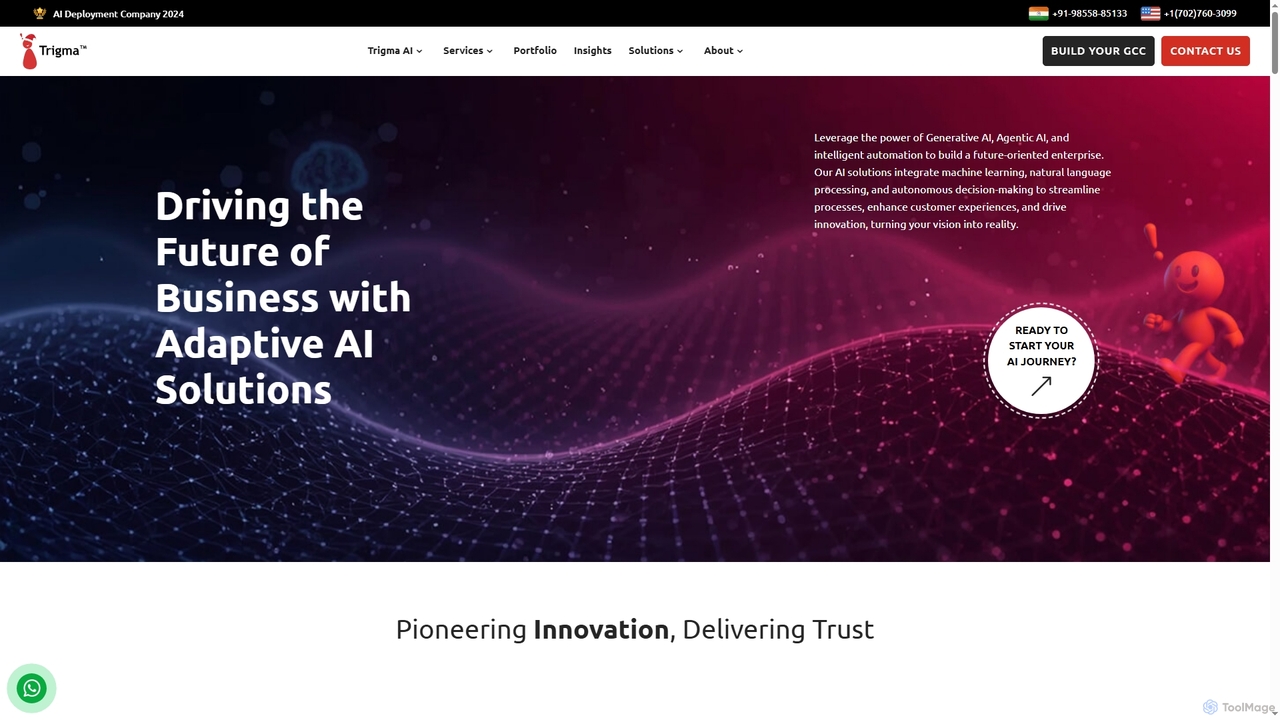
Trigma is a global AI development company specializing in custom AI and tech solutions for businesses. They leverage …
Trigma is a global AI development company specializing in custom AI and tech solutions for businesses. They leverage Generative AI, Agentic AI, machine learning, and natural language processing to create adaptive solutions that streamline processes, enhance customer experiences, and drive innovation across various industries, from healthcare to real estate.
AugurVista
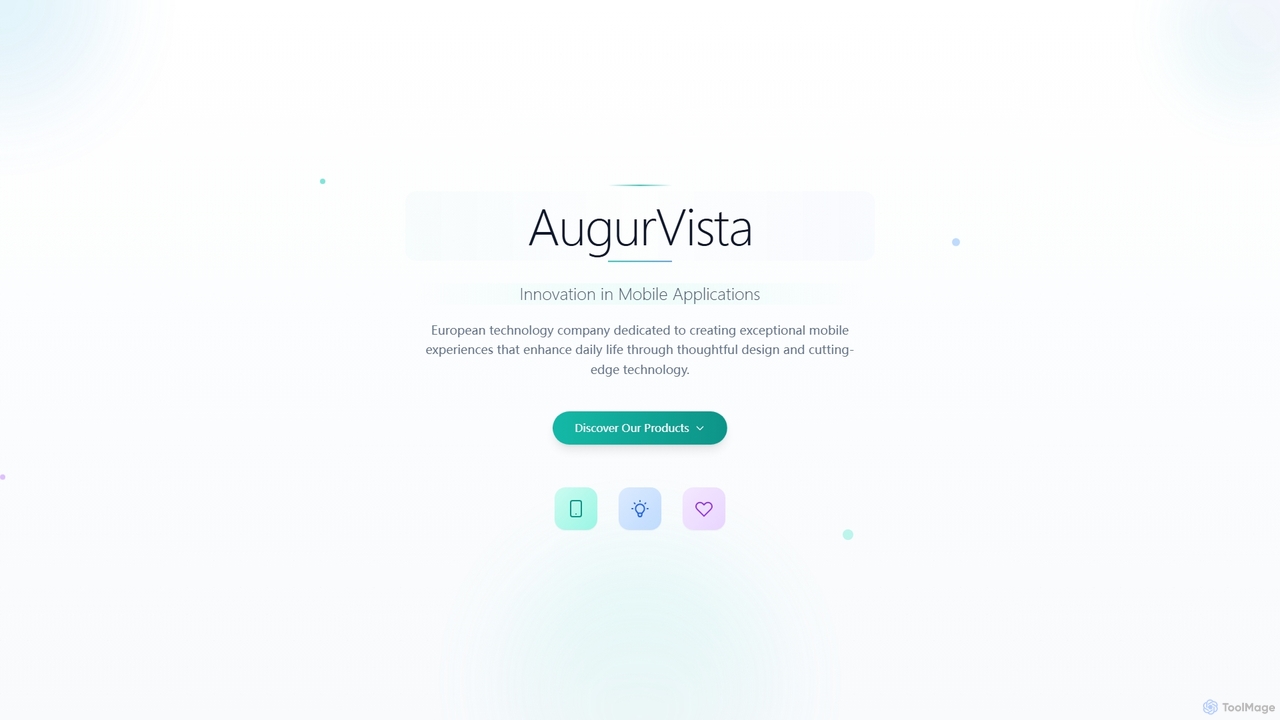
AugurVista is an Estonian technology company dedicated to crafting innovative mobile applications that enhance daily life through thoughtful …
AugurVista is an Estonian technology company dedicated to crafting innovative mobile applications that enhance daily life through thoughtful design and cutting-edge technology. Specializing in user-centered experiences, their products, like the smart alarm app RoosterMe, leverage advanced algorithms to deliver exceptional value and foster healthy habits.
About Application Development
AI-powered Application Development tools are designed to streamline and accelerate the creation of software applications, including those for mobile platforms. These tools leverage artificial intelligence to automate various stages of the development lifecycle, from code generation and testing to UI/UX design and deployment. By integrating AI, developers can enhance productivity, reduce manual errors, and build more sophisticated, intelligent applications with greater efficiency. They empower both seasoned developers and citizen developers to bring their ideas to life faster, often with less coding effort.
Core Features
- AI Code Generation: Automatically generates code snippets, functions, or even entire application modules based on natural language descriptions or design inputs.
- Intelligent Debugging & Testing: Utilizes AI to identify bugs, suggest fixes, and automate the creation and execution of test cases, improving application reliability.
- Automated UI/UX Design: Assists in designing user interfaces and experiences by suggesting layouts, components, and optimizing for user engagement based on data.
- Low-Code/No-Code AI Integration: Provides visual interfaces and pre-built AI components, enabling users to integrate complex AI functionalities without extensive coding.
- Predictive Analytics for Performance: Employs AI to analyze application performance data, predict potential bottlenecks, and recommend optimizations for scalability and user experience.
Applicable Scenarios
These tools are invaluable for startups rapidly prototyping new mobile apps, enterprises accelerating digital transformation initiatives, and individual developers seeking to enhance their productivity. They are used in scenarios ranging from building custom business applications and intelligent chatbots to developing sophisticated data analysis tools and interactive mobile games, significantly reducing time-to-market.
How to Choose
When selecting an AI Application Development tool, consider its compatibility with your existing tech stack, the breadth of AI capabilities offered (e.g., code generation, testing, design), the ease of integration with other development tools, and the level of customization allowed. Evaluate the learning curve, community support, and pricing model to ensure it aligns with your team's expertise and budget, especially if focusing on mobile application development.
Application DevelopmentUse Cases
Accelerating Mobile App Prototyping
Mobile app development teams can leverage AI Application Development tools to rapidly generate initial prototypes. By inputting design specifications or functional requirements in natural language, the AI can automatically create basic UI layouts, integrate core functionalities, and even suggest database schemas. This significantly reduces the time spent on initial setup and allows developers to quickly iterate on concepts, gather early feedback, and move faster from idea to a testable version of a mobile application.
Automating Code Generation for Web Services
Backend developers often spend considerable time writing boilerplate code for APIs and microservices. AI Application Development tools can automate this process by generating secure and efficient code based on defined data models and endpoint specifications. This allows developers to focus on complex business logic rather than repetitive coding tasks, ensuring consistency across services and accelerating the deployment of new features for various applications, including those supporting mobile frontends.
Enhancing Application Testing and Debugging
Quality Assurance (QA) engineers can utilize AI-powered development tools to create comprehensive test suites and identify potential bugs more efficiently. The AI can analyze existing codebases, predict common failure points, and automatically generate relevant test cases, including edge scenarios. Furthermore, it can suggest optimal debugging strategies and even propose code fixes, drastically reducing the time and effort required to ensure the stability and reliability of both web and mobile applications before release.
AI-Driven UI/UX Optimization for Cross-Platform Apps
UI/UX designers can employ AI Application Development tools to optimize user interfaces and experiences across different platforms, including mobile and web. These tools analyze user interaction data, identify pain points, and suggest design improvements such as layout adjustments, color scheme optimizations, and component placements. This ensures a more intuitive and engaging user experience, leading to higher user satisfaction and better conversion rates for applications.
Building Intelligent Chatbots and Virtual Assistants
Businesses aiming to integrate conversational AI into their applications can use these tools to build and deploy intelligent chatbots or virtual assistants. The AI assists in designing conversation flows, generating natural language responses, and integrating with backend systems. This enables the creation of sophisticated customer service bots, internal support assistants, or interactive features within mobile applications, providing instant and personalized user engagement without extensive coding expertise.
Migrating Legacy Applications to Modern Stacks
Enterprises facing the challenge of modernizing outdated legacy applications can leverage AI Application Development tools. These tools can analyze existing code, identify dependencies, and suggest refactoring strategies or even automatically translate portions of the code to modern programming languages or frameworks. This significantly reduces the manual effort and risks associated with migrating complex systems, allowing for smoother transitions to cloud-native or mobile-first architectures.