Best of the Year 4 results Monetization AI Tools

Popular AI tools in the Monetization field include Dappier、Koah、AdsOn、AdIntelli, etc., helping you quickly improve efficiency.

AdIntelli

AdIntelli

AdIntelli is a monetization platform for AI Agent creators. It enables developers to effortlessly integrate conversational, AI-powered ads …

3.0K
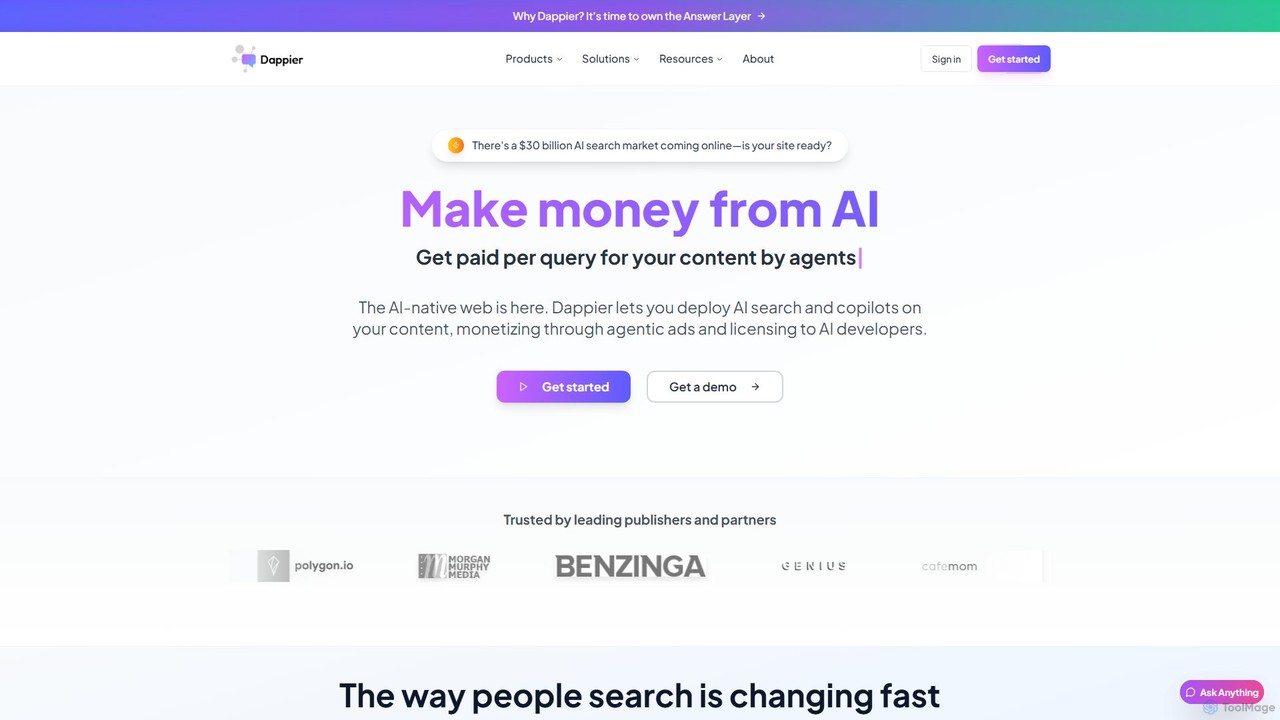
Dappier

Dappier

Dappier is a full-stack monetization platform for the AI era, enabling publishers and website owners to deploy AI …

25.3K
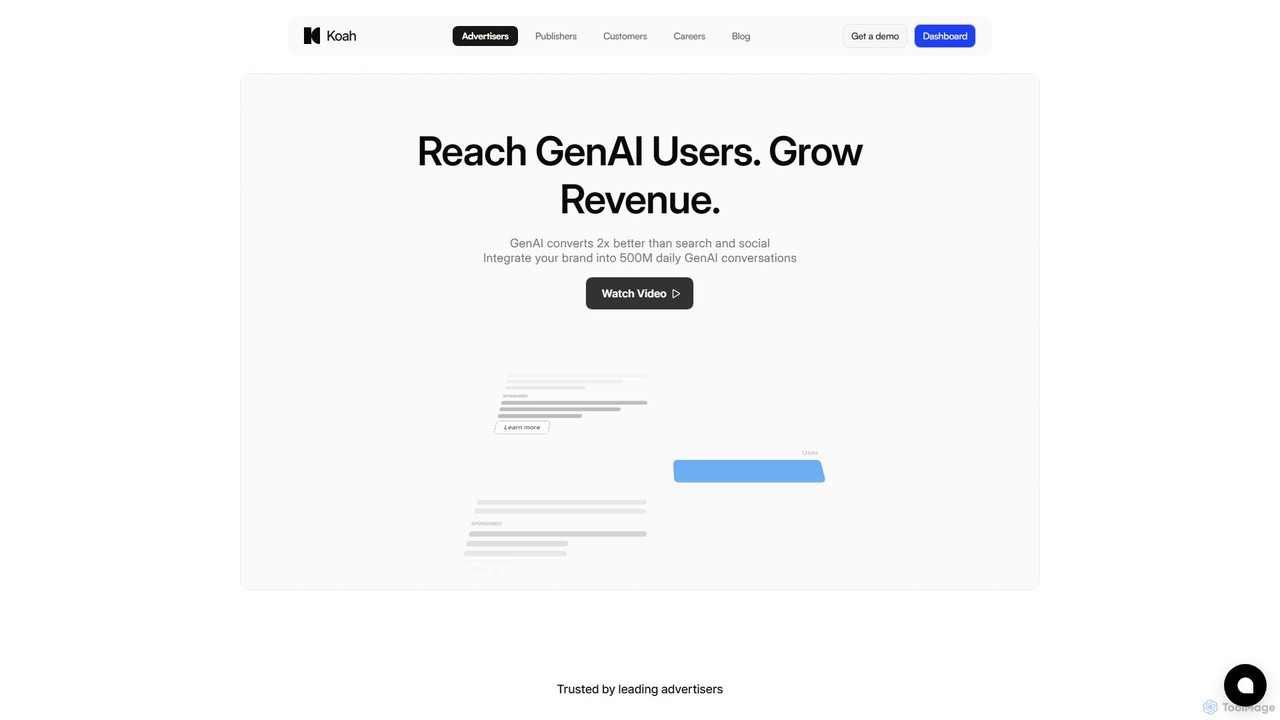
Koah

Koah

Koah is a pioneering advertising network designed for the Generative AI era. It connects advertisers with high-intent users …

10.2K
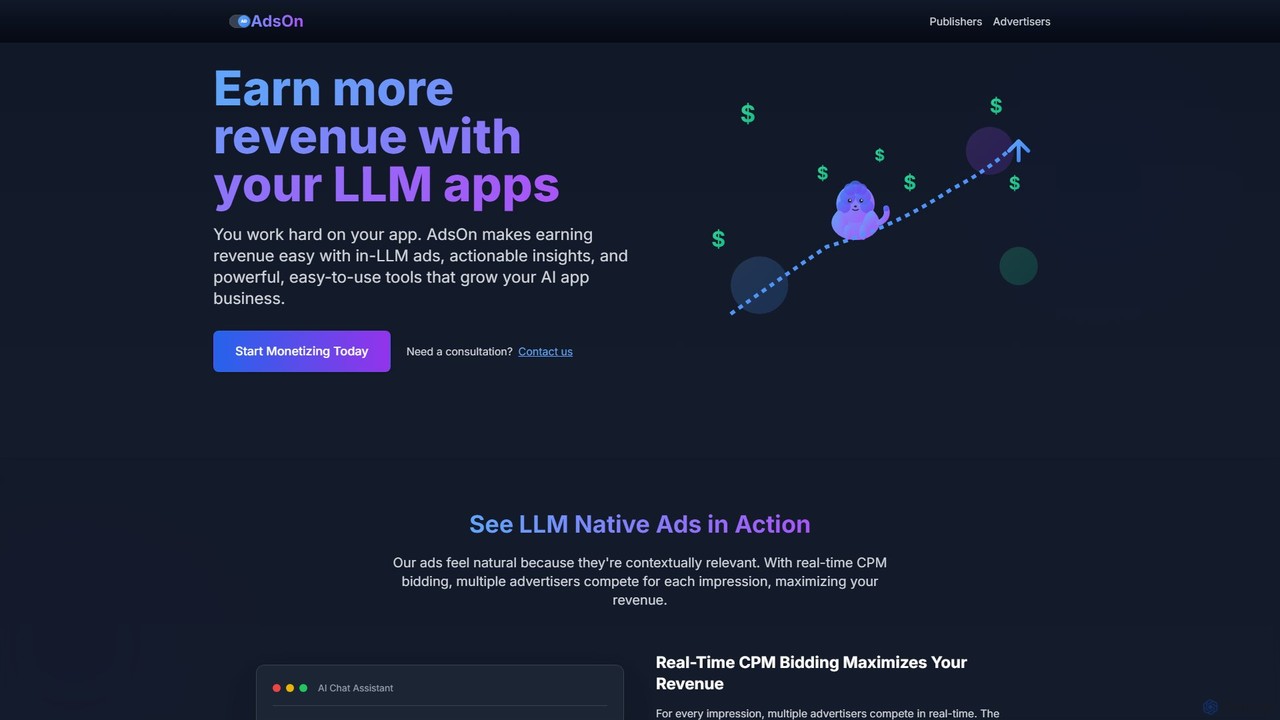
AdsOn

AdsOn

AdsOn is a monetization platform designed for LLM applications. It enables developers to easily integrate context-aware, native ads …

4.2K

About Monetization

AI Monetization tools are a class of software that leverages artificial intelligence to optimize and automate revenue generation from digital products, content, or services. These tools utilize machine learning models to analyze user behavior, market trends, and engagement data to make intelligent decisions about pricing, subscriptions, and advertising. They enable creators and businesses to move beyond static payment models by implementing dynamic strategies that maximize customer lifetime value and conversion rates. This data-driven approach helps identify new revenue opportunities and enhance existing income streams with high precision.

Core Features

  • Dynamic Pricing: Automatically adjusts prices based on real-time demand, user segmentation, and competitor analysis.
  • Subscription Optimization: Predicts churn risk and suggests personalized offers to improve retention and upgrade rates.
  • Ad Revenue Maximization: Intelligently places and targets ads to maximize click-through rates (CTR) and revenue per mille (RPM).
  • Smart Paywalls: Determines the optimal content and timing to present a paywall to users to increase subscription conversions.
  • Affiliate Intelligence: Identifies high-performing affiliate partners and automates performance tracking and commission payouts.

Applicable Scenarios

These tools are widely used by digital publishers, SaaS companies, mobile app developers, and content creators. For instance, a news website can use a smart paywall to convert casual readers into subscribers, while a SaaS business can implement dynamic pricing to optimize its subscription tiers for different customer segments and geographies.

Selection Criteria

When choosing an AI monetization tool, consider its compatibility with your primary monetization model (e.g., subscriptions, ads, one-time sales). Evaluate its integration capabilities with your existing platforms like CMS or CRM. Also, assess the depth of its analytics for tracking key metrics like LTV and churn, and ensure its pricing structure aligns with your business growth.

MonetizationUse Cases

1

Automating Paid Newsletter Subscriptions

A content creator running a popular blog and free newsletter wants to introduce a paid tier. They use an AI monetization tool to analyze reader engagement data, such as open rates, click-through rates, and time spent on articles. The AI identifies the most engaged free subscribers and automatically triggers a personalized email campaign offering them a limited-time discount on a premium subscription. This targeted approach significantly increases the conversion rate from free to paid subscribers compared to a generic, mass-email campaign, maximizing revenue without alienating the broader audience.

2

Dynamic Pricing for SaaS Plans

A SaaS company offers its software globally but uses a single pricing structure, leading to underperformance in certain markets. By implementing an AI monetization platform, they can introduce dynamic pricing. The AI analyzes factors like local purchasing power, competitor pricing in each region, and feature usage data. It then automatically adjusts the subscription prices for new customers in different countries. For example, it might offer a lower price in emerging markets while maintaining a premium price in North America. This strategy helps the company maximize its global revenue and increase market penetration in price-sensitive regions.

3

Optimizing In-App Ad Revenue for Mobile Games

A mobile game developer relies on in-app advertising for revenue but struggles with balancing ad frequency and user experience. They integrate an AI monetization SDK that automates ad mediation. The AI analyzes user session data in real-time to predict the best moment to show an ad (e.g., after a level completion) and selects the ad format (rewarded video vs. interstitial) most likely to be engaged with. It also runs continuous A/B tests on different ad networks to allocate traffic to the one offering the highest eCPM. This results in increased ad revenue while minimizing negative impact on player retention.

4

Implementing an Intelligent Content Paywall

A digital news publisher wants to increase subscriptions without driving away traffic. They replace their static "3 free articles per month" rule with an AI-powered dynamic paywall. This system analyzes each visitor's behavior, including frequency of visits, topics of interest, and referral source. Based on this profile, the AI calculates a propensity-to-subscribe score and adjusts the paywall accordingly. A loyal, frequent reader might see the paywall after one article, while a new visitor from social media might be allowed five free articles. This personalized approach effectively converts high-intent users while nurturing potential future subscribers.

5

Personalized Upsell Offers in E-commerce

An online electronics store aims to increase its average order value (AOV). They integrate an AI monetization tool with their e-commerce platform. As a customer adds a laptop to their cart, the AI instantly analyzes the product and the customer's browsing history. Instead of showing generic accessories, it presents a personalized upsell offer: a bundle including a higher-spec laptop model that other customers with similar profiles frequently purchased, along with a compatible mouse at a slight discount. This highly relevant, data-backed recommendation is more effective than static suggestions, leading to a measurable increase in AOV and customer satisfaction.

6

Predicting and Preventing Subscription Churn

A subscription box service is experiencing a high customer churn rate. They deploy an AI monetization tool that connects to their customer data. The AI builds a predictive model that identifies subscribers at high risk of churning by analyzing patterns like declining usage, skipped payments, or negative support interactions. For each at-risk customer, the system automatically triggers a retention campaign, such as offering a personalized discount on their next box, suggesting a different product plan, or proactively reaching out with customer support. This proactive approach helps reduce churn and increases overall customer lifetime value (LTV).

MonetizationFrequently Asked Questions