Navigation Best in category 1 results Marine AI Tool

Popular AI tools in the Marine field of Navigation include Samudra Sahayak, etc., helping you quickly improve efficiency.

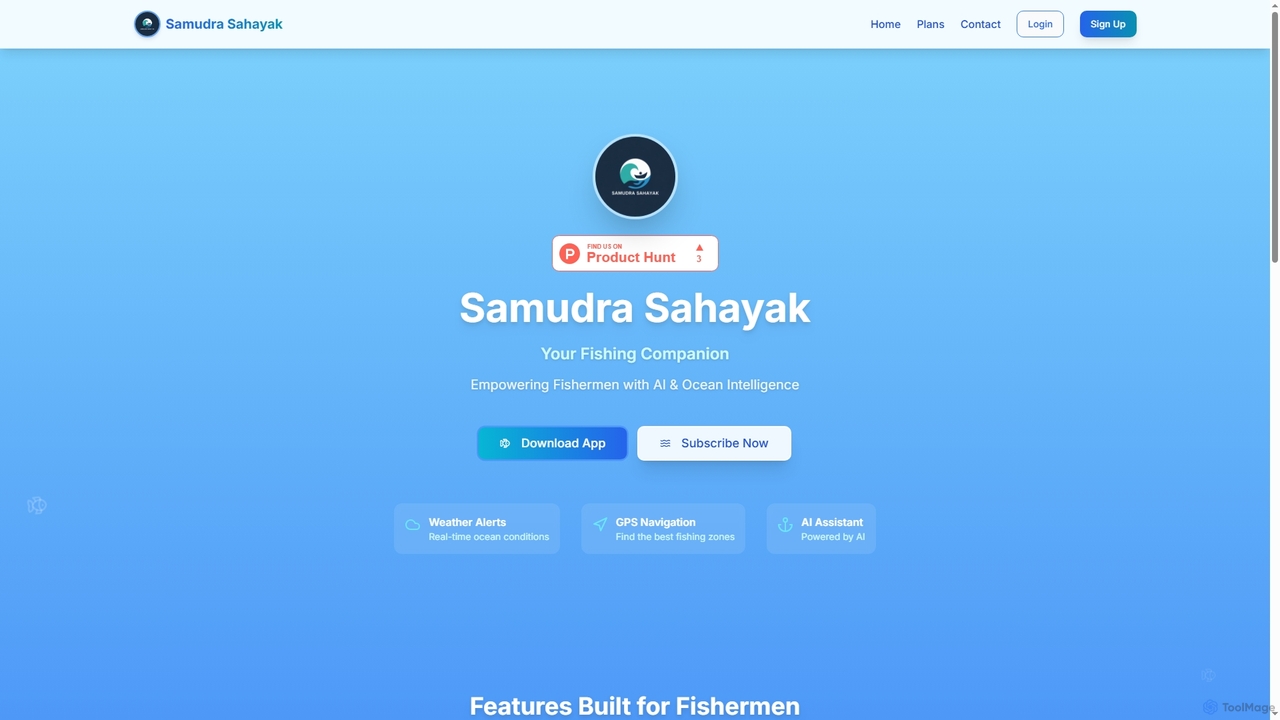
Samudra Sahayak

Samudra Sahayak

An AI-powered smart fishing assistant for Indian fishermen. It provides AI-predicted potential fishing zones, real-time weather alerts, GPS …

3.0K

About Marine

Marine AI tools are specialized artificial intelligence applications designed to enhance operations, safety, and efficiency across the maritime industry. Leveraging advanced algorithms, sensor data fusion, and machine learning, these tools provide intelligent solutions for navigation, environmental monitoring, autonomous vessel control, and resource management. They offer unprecedented capabilities for real-time decision-making, predictive analysis, and automation in complex marine environments, transforming traditional maritime practices.

Core Features

  • Autonomous Navigation: Enables vessels to plan routes, avoid obstacles, and operate without constant human intervention using AI-driven pathfinding and sensor data.
  • Predictive Maintenance: Analyzes operational data from marine equipment to forecast potential failures, optimizing maintenance schedules and reducing downtime.
  • Environmental Monitoring: Utilizes AI to process data from sensors, satellites, and underwater drones for detecting pollution, tracking marine life, and assessing ocean health.
  • Optimized Route Planning: Calculates the most efficient and safest routes considering weather conditions, currents, traffic, and regulatory zones to minimize fuel consumption and transit time.
  • Resource Management: Applies AI to manage fisheries, aquaculture, and offshore energy resources, improving sustainability and operational yield.

Applicable Scenarios

Marine AI tools are crucial for shipping companies seeking to optimize logistics and reduce costs, environmental agencies monitoring ocean health, and naval forces enhancing surveillance and operational capabilities. They are also vital for research institutions conducting oceanographic studies and for companies developing next-generation autonomous underwater vehicles (AUVs) and surface vessels (ASVs).

How to Choose

When selecting Marine AI tools, consider the specific application (e.g., navigation, environmental, logistics), the level of autonomy required, and compatibility with existing maritime systems. Evaluate the accuracy and reliability of its data processing, its ability to integrate with various sensor types, and the robustness of its predictive models. User interface, regulatory compliance, and vendor support are also critical factors for long-term operational success.

MarineUse Cases

1

Enhancing Autonomous Vessel Navigation and Safety

Shipping companies and autonomous vessel developers utilize Marine AI for advanced navigation. AI systems process real-time data from radar, sonar, cameras, and GPS to detect obstacles, predict collision risks, and dynamically adjust routes. This enables safer, more efficient autonomous operations, reducing human error and enhancing situational awareness in congested waterways or challenging weather conditions.

2

Real-time Marine Environmental Monitoring

Environmental organizations and coastal authorities deploy Marine AI tools for comprehensive ocean monitoring. AI analyzes data from buoys, underwater sensors, and satellite imagery to detect oil spills, track plastic pollution, monitor harmful algal blooms, and observe marine wildlife migration patterns. This provides critical insights for conservation efforts, rapid response to environmental threats, and sustainable resource management.

3

Optimizing Global Shipping Routes for Efficiency

Logistics managers in the commercial shipping industry leverage Marine AI for dynamic route optimization. These tools integrate real-time weather forecasts, ocean currents, port congestion data, and vessel performance metrics to calculate the most fuel-efficient and time-saving routes. This minimizes operational costs, reduces carbon emissions, and ensures timely delivery of goods across global supply chains.

4

Advanced Fisheries Management and Stock Assessment

Fisheries scientists and management bodies use Marine AI to improve sustainable fishing practices. AI algorithms analyze sonar data, satellite imagery, and historical catch records to estimate fish populations, predict migration patterns, and identify optimal fishing zones. This helps prevent overfishing, ensures compliance with quotas, and supports the long-term health and productivity of marine ecosystems.

5

Underwater Infrastructure Inspection and Mapping

Offshore energy companies and marine construction firms employ Marine AI with AUVs for detailed underwater inspections. AI-powered vision systems and sonar interpret complex data to identify structural damage in pipelines, cables, and platforms, or to create high-resolution seabed maps. This reduces the need for dangerous human dives, improves inspection accuracy, and extends the lifespan of critical subsea assets.

6

Enhancing Port Operations and Vessel Traffic Management

Port authorities and terminal operators utilize Marine AI to streamline vessel traffic and optimize port logistics. AI systems predict vessel arrival times, manage berth allocation, and guide tugboats, reducing waiting times and congestion. This improves overall port efficiency, enhances safety within busy harbor areas, and facilitates faster turnaround for cargo ships.

MarineFrequently Asked Questions