Ripplica
Ripplica is an AI-powered automation platform that turns simple screen recordings into executable workflows. It enables users to …
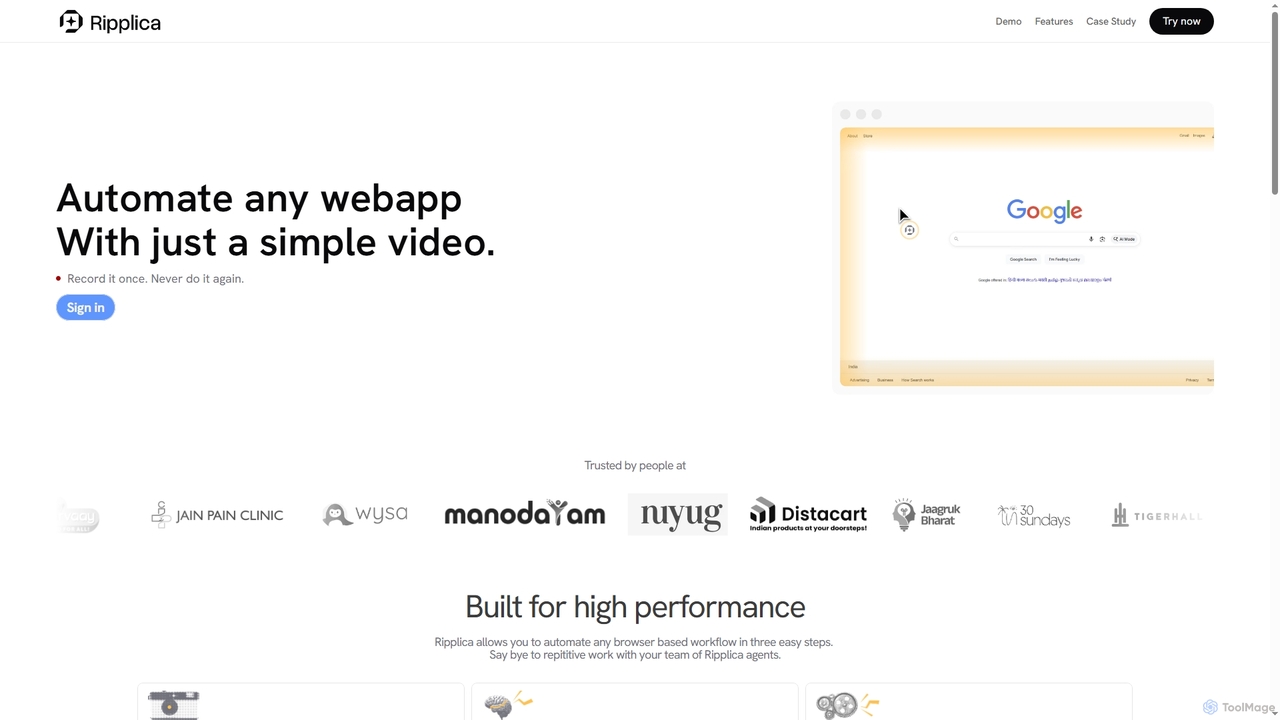
Ripplica is an AI-powered automation platform that turns simple screen recordings into executable workflows. It enables users to automate any browser-based task without needing APIs, compatible with both modern and legacy systems. By intelligently interpreting on-screen context, Ripplica handles repetitive work, allowing teams to boost productivity and focus on high-value activities.
About Data Entry
Data Entry AI tools are specialized software solutions designed to automate the process of extracting, validating, and inputting information into digital systems. Leveraging advanced AI technologies like Optical Character Recognition (OCR) and Natural Language Processing (NLP), these tools significantly reduce manual effort, enhance accuracy, and accelerate data processing for various business operations. They are a critical component within the broader Operations category, streamlining foundational tasks.
Core Features
- Automated Data Extraction: Automatically identifies and pulls relevant information from diverse document types, including invoices, forms, and receipts.
- Intelligent Document Processing (IDP): Understands the context and structure of both structured and unstructured documents, enabling smart data capture.
- Data Validation & Cleansing: Checks extracted data for accuracy, consistency, and completeness, automatically flagging or correcting errors.
- Integration Capabilities: Seamlessly connects with existing enterprise systems such as CRM, ERP, and accounting software for direct data flow.
- Scalability & Speed: Processes large volumes of data rapidly, adapting to fluctuating demands without compromising performance.
Applicable Scenarios
Data Entry AI tools are invaluable for organizations dealing with high volumes of repetitive data input. Finance departments utilize them for automated invoice processing and expense report management. HR teams deploy them for efficient employee onboarding, capturing data from resumes and application forms. E-commerce businesses use these tools to quickly update product catalogs from supplier data sheets, ensuring real-time inventory and pricing accuracy.
How to Choose
When selecting a Data Entry AI tool, consider its accuracy rates for your specific document types, the range of data sources it supports (scanned documents, PDFs, web forms), and its integration capabilities with your existing software ecosystem. Evaluate its scalability to handle future data volumes, the level of human oversight required, and its security features to protect sensitive information. User-friendliness and customizability are also key factors for successful adoption.
Data EntryUse Cases
Automate Invoice Processing for Finance Departments
Finance teams often spend countless hours manually entering data from invoices into accounting systems. Data Entry AI tools can automatically extract vendor details, line items, amounts, and dates from scanned or digital invoices. This data is then validated against existing records and posted directly to ERP or accounting software, significantly reducing processing time, minimizing human error, and ensuring timely payments.
Streamline Customer Onboarding with Form Data Capture
Businesses in banking, insurance, or healthcare often require customers to fill out extensive application forms. Data Entry AI tools can digitize these forms, extracting all relevant customer information such as names, addresses, contact details, and identification numbers. This automated capture populates CRM or internal databases, accelerating the onboarding process, improving data accuracy, and enhancing the customer experience by reducing manual data entry delays.
Update E-commerce Product Catalogs Efficiently
E-commerce businesses constantly need to update product information, including descriptions, specifications, pricing, and inventory levels, often sourced from various suppliers. Data Entry AI tools can process supplier data sheets, PDFs, or web pages to automatically extract and standardize product details. This enables rapid catalog updates, ensures consistent product listings, and helps maintain accurate stock information, crucial for preventing overselling and improving customer satisfaction.
Digitize and Process Healthcare Patient Records
Healthcare providers face the challenge of managing vast amounts of patient data from various sources like referrals, lab results, and medical histories. Data Entry AI tools can extract critical information from these diverse documents, converting it into structured data for Electronic Health Records (EHRs). This automation improves data accessibility, reduces administrative burden on medical staff, and enhances patient care by ensuring accurate and up-to-date records.
Automate HR Employee Data Management
Human Resources departments handle extensive paperwork during recruitment and employee lifecycle management, including resumes, application forms, and personal details. Data Entry AI tools can automatically extract key information from these documents, such as contact details, educational background, work experience, and emergency contacts. This data is then used to populate HRIS (Human Resources Information System) or payroll systems, streamlining HR operations and ensuring compliance with data privacy regulations.
Extract Data for Market Research and Analysis
Market researchers often need to gather specific data points from a vast array of sources, including reports, articles, financial statements, and web content. Data Entry AI tools can be configured to identify and extract relevant figures, trends, company names, or product mentions from these unstructured texts. This capability significantly speeds up data collection for competitive analysis, trend identification, and strategic planning, providing researchers with actionable insights much faster than manual methods.