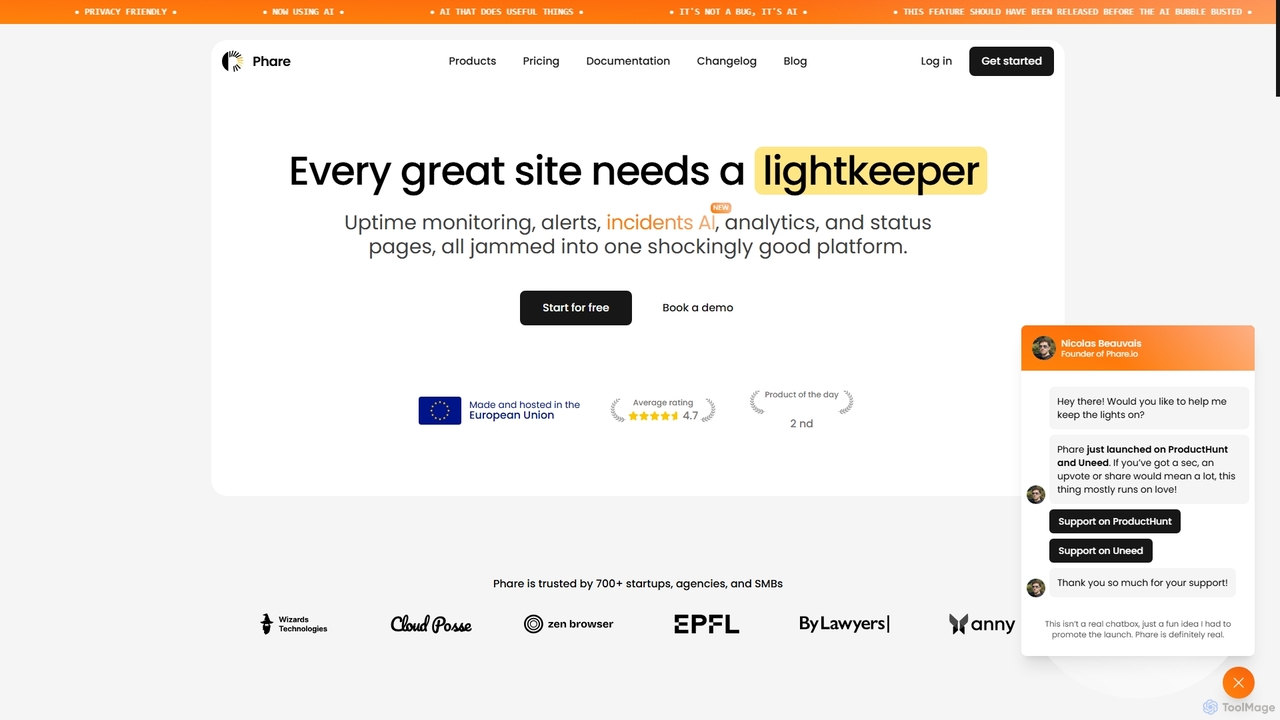
Incident Management AI tools are specialized platforms that leverage artificial intelligence to detect, analyze, respond to, and resolve operational incidents efficiently and proactively. These cutting-edge tools utilize machine learning, natural language processing, and predictive analytics to automate alert correlation, intelligently route critical issues to the right teams, and accelerate root cause analysis. By doing so, they significantly minimize downtime, reduce the impact of service disruptions, and enhance overall system reliability. As a critical component within the broader Operations category, AI-powered incident management empowers IT, DevOps, and Site Reliability Engineering (SRE) teams to maintain robust system health, ensure business continuity, and improve their operational posture.
Core Features
- Automated Incident Detection & Alerting: Proactively identifies anomalies, performance degradations, and potential issues across complex IT environments, often before they impact users.
- Intelligent Alert Triage & Routing: Consolidates, prioritizes, and enriches alerts with contextual data from various sources, then automatically routes critical events to the most appropriate on-call personnel or teams.
- AI-Powered Root Cause Analysis: Leverages machine learning to analyze vast amounts of log data, metrics, and event streams, suggesting potential causes and accelerating the diagnosis of complex incidents.
- Automated Remediation Workflows: Triggers predefined actions, runbooks, or scripts to automatically resolve common, repetitive incidents, freeing up human responders for more complex tasks.
- Enhanced Communication & Collaboration: Facilitates real-time, context-rich communication and updates among incident responders, stakeholders, and affected users, ensuring everyone is informed.
- Post-Incident Analysis & Reporting: Provides comprehensive tools for reviewing incident timelines, identifying recurring patterns, and generating detailed reports to drive continuous improvement and prevent future occurrences.
Applicable Scenarios
These tools are indispensable for organizations across various sectors aiming to enhance operational resilience and service uptime. IT operations teams heavily rely on them to manage system outages, network failures, and performance degradation, ensuring critical business services remain available around the clock. DevOps teams integrate AI incident management into their continuous integration and continuous delivery (CI/CD) pipelines for proactive issue detection, faster resolution in production environments, and maintaining high application availability. Furthermore, Security Operations Centers (SOCs) leverage AI capabilities for rapid response to sophisticated security breaches, intelligent threat intelligence correlation, and minimizing the impact of cyberattacks, making them a cornerstone of modern operational excellence.
How to Choose
When selecting an AI Incident Management tool, several key factors should guide your decision. Firstly, evaluate its integration capabilities with your existing monitoring, logging, observability, and communication platforms (e.g., Slack, Microsoft Teams). Secondly, assess the sophistication and breadth of its AI features, such as advanced anomaly detection, intelligent alert correlation, predictive analytics for potential issues, and automated remediation suggestions. Thirdly, consider its scalability to effectively handle your current and future incident volume, along with its customization options for incident workflows, alert rules, and reporting dashboards. Finally, review its post-incident analysis and reporting functionalities, which are crucial for identifying recurring problems, measuring operational performance, and fostering a culture of continuous improvement within your organization.