MyBabyGuide
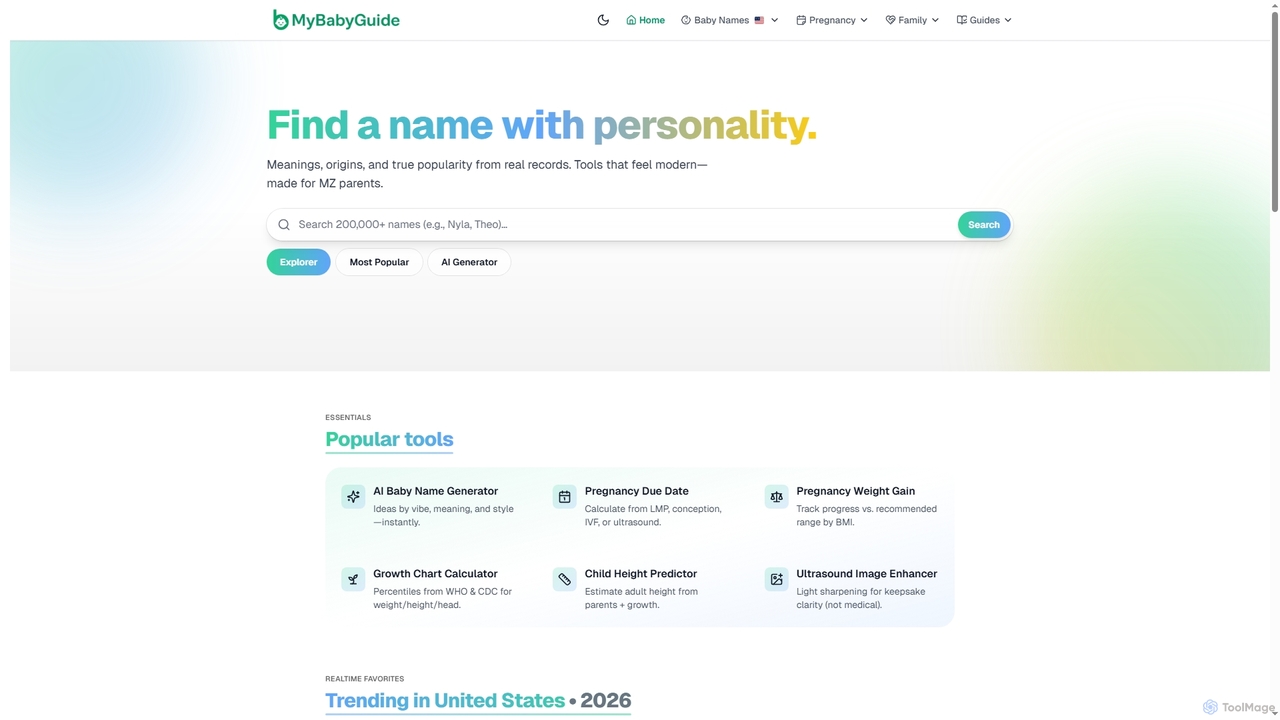
MyBabyGuide is an AI-powered platform offering comprehensive baby naming tools, including an AI name generator, popularity rankings, and …
MyBabyGuide is an AI-powered platform offering comprehensive baby naming tools, including an AI name generator, popularity rankings, and detailed name insights. It also provides essential pregnancy and parenting calculators like due date, weight gain, and growth charts, designed for modern parents seeking data-driven guidance.
About Pregnancy Tools
AI Pregnancy Tools are specialized applications that use artificial intelligence to support expectant parents through conception, pregnancy, and birth. These tools analyze user-input data, such as cycle dates and symptoms, to provide personalized insights, predictions, and developmental tracking. Their primary value lies in offering data-driven guidance, tracking crucial milestones, and empowering users with accessible information throughout their pregnancy journey. They transform personal health data into actionable advice and progress reports.
Core Features
- Personalized Fertility Prediction: Analyzes menstrual cycles and biometric data to accurately predict ovulation and fertile windows.
- Fetal Development Tracking: Provides weekly updates on fetal growth, size comparisons, and key developmental milestones.
- Symptom Analysis & Insights: Logs and interprets pregnancy symptoms, offering personalized tips and identifying patterns.
- Contraction Timing & Analysis: Measures the frequency and duration of contractions to help identify the stages of labor.
- AI-Powered Content Delivery: Delivers relevant articles, videos, and advice tailored to the user's specific stage of pregnancy.
Use Cases
These tools are primarily used by individuals or couples who are trying to conceive or are currently pregnant. They serve as a daily digital companion for tracking health metrics, understanding bodily changes, and preparing for the baby's arrival. Scenarios range from planning conception by identifying peak fertility to monitoring fetal movement and timing contractions during labor.
How to Choose
When selecting an AI Pregnancy Tool, consider the following: First, evaluate its data privacy and security policies to protect sensitive health information. Second, assess the range of features—ensure it covers your specific needs, whether for fertility, pregnancy, or postpartum. Third, verify that the health information provided is evidence-based and reviewed by medical experts. Finally, consider the user interface and its ease of integration with other health apps or wearables.

Pregnancy ToolsUse Cases
Predicting Optimal Conception Windows
A couple planning to start a family uses an AI pregnancy tool to improve their chances of conception. They consistently log data such as the start date of menstrual cycles, basal body temperature, and other physical signs. The tool's AI algorithm analyzes these historical and real-time data points to identify patterns unique to the user's body. It then generates a highly accurate prediction of the fertile window and peak ovulation day, sending timely notifications. This data-driven approach removes guesswork and helps the couple focus their efforts effectively, increasing the likelihood of successful conception compared to traditional calendar methods.
Tracking Weekly Fetal Development
An expectant mother uses an AI-powered pregnancy app to stay connected with her baby's development. Each week, based on her due date, the app provides a personalized update. It uses AI to generate realistic 3D renderings of the fetus at its current stage and offers size comparisons to familiar objects like fruits or vegetables. The content feed also delivers curated articles and videos relevant to that specific week of pregnancy, covering topics from nutritional needs to preparing for upcoming check-ups. This creates an engaging and educational experience, helping her visualize and understand the milestones of her pregnancy journey.
Discovering Unique Baby Names with AI
Parents-to-be are looking for a unique name for their child that reflects their heritage and preferences. Instead of scrolling through endless lists, they use an AI baby name generator. They input specific criteria such as 'starts with A', 'has a Latin origin', 'means strength', and 'sounds good with the last name Smith'. The AI processes these parameters and cross-references a vast database of names, generating a curated list of suggestions that fit all criteria. It can even create novel name variations, providing creative options the parents might not have considered, simplifying a traditionally overwhelming task.
Intelligent Management of Pregnancy Symptoms
A first-time mother is experiencing various new symptoms like morning sickness and fatigue. She uses an AI pregnancy tool to log these symptoms daily, noting their severity and time of day. The AI analyzes this data to identify her personal symptom patterns. Based on this analysis, the app provides personalized, evidence-based suggestions, such as recommending small, frequent meals to manage nausea or suggesting optimal times for a nap based on her fatigue patterns. It also visualizes the symptom trends over time, providing a clear report she can share with her doctor during check-ups, facilitating a more informed conversation about her well-being.
Analyzing Contraction Patterns for Labor
As a pregnant woman nears her due date, she begins to experience contractions. She uses an AI-powered contraction timer to track them. With a simple tap, she records the start and end of each contraction. The tool automatically calculates the duration and frequency. The AI component goes further by analyzing the pattern of these contractions over time. It can identify if they are becoming stronger, longer, and closer together, which are key indicators of active labor. The app provides clear visual feedback and guidance, such as 'It might be time to contact your doctor,' based on established medical guidelines, reducing anxiety and helping her make an informed decision.
Creating a Personalized Birth Plan
A couple wants to clearly communicate their preferences for labor and delivery to their medical team. They use an AI-powered birth plan tool that guides them through a comprehensive questionnaire. The AI asks questions about pain management options, desired atmosphere, preferences for medical interventions, and postpartum care. Based on their answers, the tool generates a well-structured, easy-to-read birth plan document. The AI ensures all critical aspects are covered and uses clear, standard medical terminology, making the document professional and easily understandable for healthcare providers. This process empowers the parents and facilitates better communication and collaboration with their care team.