Payments Best in category 1 results Billing AI Tool

Popular AI tools in the Billing field of Payments include Dodo Payments, etc., helping you quickly improve efficiency.

Dodo Payments

Dodo Payments

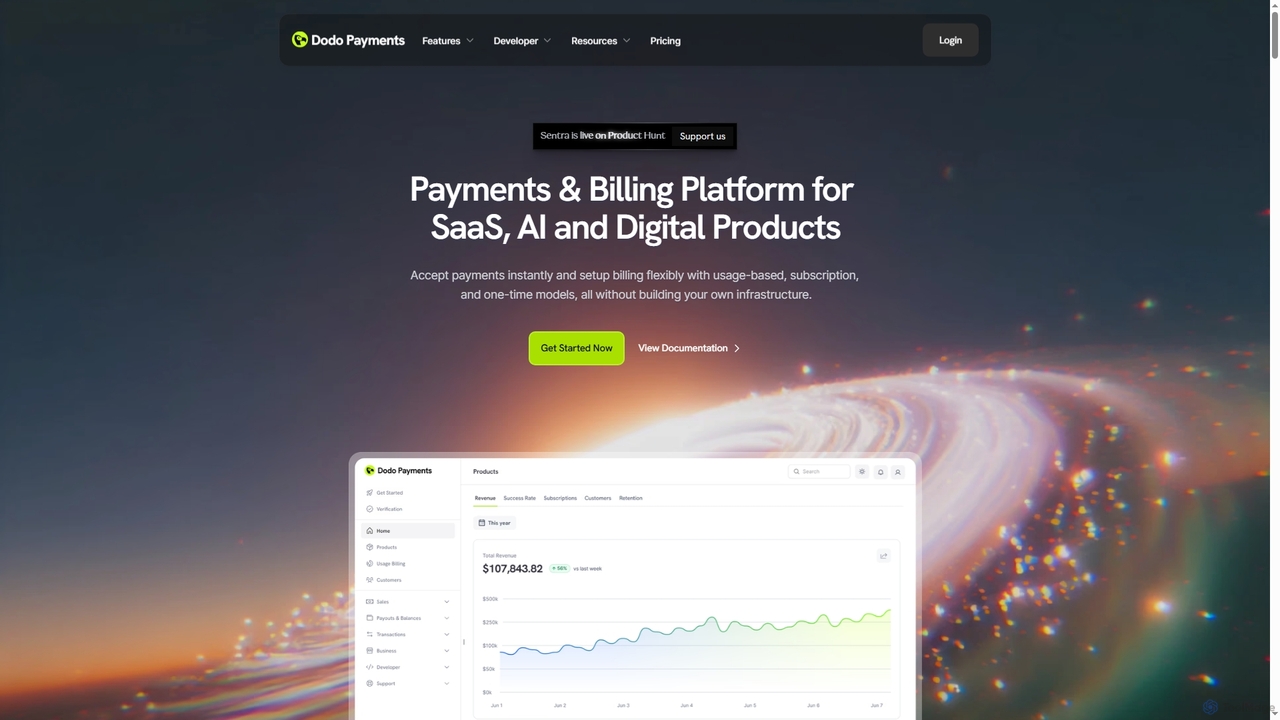
Dodo Payments is an all-in-one payment and billing platform designed for SaaS, AI, and digital products. It enables …

607.9K

About Billing

AI Billing tools are specialized platforms that automate and optimize the entire customer billing lifecycle, from invoicing to revenue recognition. These tools leverage machine learning to handle complex subscription models, predict payment failures, and personalize collection efforts. They primarily serve to reduce manual accounting work, minimize revenue leakage, and improve cash flow for businesses with recurring revenue streams. By automating these processes, they allow companies to scale their pricing strategies and customer base efficiently.

Core Features

  • Subscription Management: Automates the entire lifecycle of recurring billing, including trials, upgrades, downgrades, and prorations.
  • Intelligent Dunning: Uses AI to predict failed payments and automatically executes customized retry and communication strategies to recover revenue.
  • Revenue Recognition: Automates complex accounting standards (like ASC 606) for accurate financial reporting and compliance.
  • Usage-Based Billing: Accurately tracks and invoices customers based on their consumption of services, such as API calls or data storage.
  • Automated Invoicing: Generates and delivers professional, customized invoices automatically based on billing cycles and customer data.

Use Cases

AI Billing tools are essential for SaaS companies, subscription-based services, telecommunication providers, and any business with complex, recurring revenue models. For instance, a SaaS platform can use these tools to manage thousands of different subscription plans and usage tiers, while a utility company can automate metered billing for millions of customers, ensuring accuracy and timeliness.

How to Choose

When selecting an AI Billing tool, consider its ability to support your specific pricing models (e.g., tiered, usage-based, hybrid). Evaluate its integration capabilities with your existing CRM and accounting software. Assess the sophistication of its dunning management and analytics features for reducing churn. Finally, review its compliance and security certifications to ensure it meets industry standards for handling financial data.

BillingUse Cases

1

Automating Subscription Management for SaaS Companies

A finance manager at a growing SaaS company uses an AI Billing platform to manage thousands of customer subscriptions. The tool automatically handles new sign-ups, applies discounts for annual plans, processes monthly recurring payments, and calculates prorated charges for mid-cycle upgrades or downgrades. This eliminates hours of manual spreadsheet work, reduces billing errors by over 95%, and provides a clear, real-time view of key metrics like Monthly Recurring Revenue (MRR) and customer churn rate, enabling more strategic financial planning.

2

Implementing Usage-Based Billing for IaaS Platforms

An Infrastructure-as-a-Service (IaaS) provider needs to bill customers based on precise consumption of resources like CPU hours, data storage, and network bandwidth. An AI Billing tool integrates with their monitoring systems to automatically collect usage data. It then calculates complex, multi-tiered invoices for each customer at the end of the billing cycle. This automation ensures billing accuracy, provides customers with transparent usage reports, and allows the provider to easily introduce new metered services without overhauling their billing infrastructure.

3

Reducing Involuntary Churn with Intelligent Dunning

An online media subscription service is experiencing high involuntary churn due to failed credit card payments. They implement an AI Billing tool with intelligent dunning. The system analyzes historical data to determine the optimal time and frequency to retry failed transactions. It also automates sending customized email reminders to customers before their card expires and provides a self-service portal for them to update payment information. This proactive approach reduces payment failures by 40% and significantly lowers the involuntary churn rate, preserving valuable customer relationships.

4

Streamlining B2B Invoicing and Accounts Receivable

A B2B enterprise deals with complex contracts, custom pricing, and net payment terms (e.g., Net 30, Net 60). An AI Billing platform automates the generation of detailed invoices from contract data stored in their CRM. It tracks invoice statuses in real-time, sends automated payment reminders for overdue accounts, and simplifies the reconciliation process by matching payments to invoices. This reduces the average Days Sales Outstanding (DSO), improves cash flow, and frees up the finance team to focus on strategic analysis rather than manual collections.

5

Automating Revenue Recognition for Financial Compliance

A publicly-traded software company must adhere to strict revenue recognition standards like ASC 606. An AI Billing tool automates this complex process. It correctly allocates revenue from multi-element contracts (e.g., software license + support + training) over the appropriate service periods. The platform generates audit-ready reports, deferred revenue waterfalls, and journal entries, ensuring compliance and saving the accounting team hundreds of hours during month-end and quarter-end closing periods. This reduces the risk of non-compliance and provides accurate financial statements for investors.

6

Managing Complex Promotions and Discount Codes

An e-commerce subscription box service frequently runs marketing campaigns with various discount codes, free trials, and promotional offers. Their AI Billing platform allows the marketing team to easily create and manage these promotions. The system automatically applies the correct discounts to new subscriptions, tracks the usage and expiration of codes, and ensures that billing reverts to the standard price after the promotional period ends. This provides flexibility for marketing initiatives while maintaining billing accuracy and preventing revenue loss from improperly applied discounts.

BillingFrequently Asked Questions