Ascento
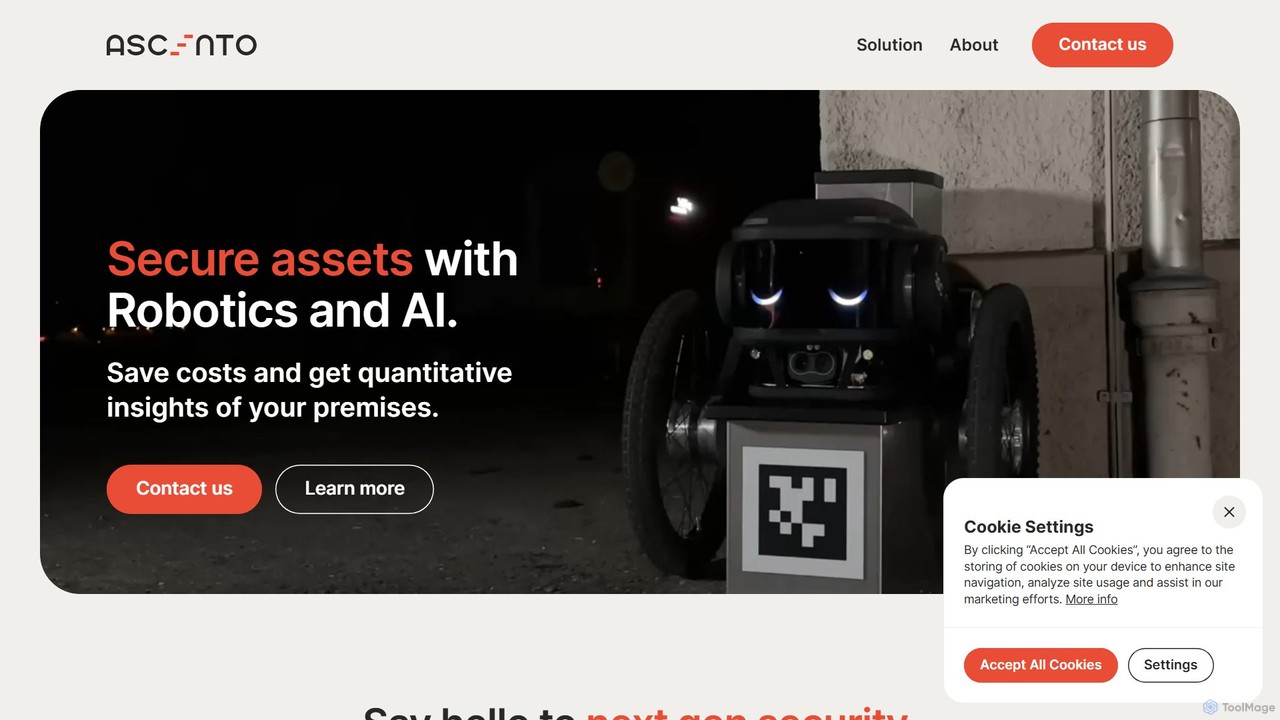
Ascento provides an advanced security solution using autonomous, all-terrain robots powered by AI. It offers 24/7 monitoring, threat …
Ascento provides an advanced security solution using autonomous, all-terrain robots powered by AI. It offers 24/7 monitoring, threat detection, and perimeter control through its Robotics-as-a-Service (RaaS) model. The system includes robots equipped with thermal and RGB cameras, managed via a secure app, to enhance site security and reduce costs.
About Robotic Surveillance
Robotic Surveillance tools are AI-powered systems that use autonomous or semi-autonomous mobile robots for security and monitoring. These platforms integrate advanced sensors like high-definition cameras, thermal imagers, and LiDAR with AI algorithms for navigation, object recognition, and anomaly detection. They provide a dynamic and proactive security layer, capable of patrolling large areas, accessing hazardous environments, and responding to incidents in real-time. This mobility distinguishes them from fixed security cameras, offering greater coverage and operational flexibility.
Core Features
- Autonomous Navigation: Robots independently patrol predefined routes or dynamically navigate complex environments while avoiding obstacles.
- Multi-Sensor Fusion: Combines data from various sensors (e.g., visual, thermal, audio) to create a comprehensive understanding of the environment.
- Real-time Threat Detection: AI analytics on-board or in the cloud identify potential threats such as intruders, fires, or leaks and send instant alerts.
- Remote Operation and Control: Allows human operators to take manual control of the robot to investigate specific incidents or navigate challenging situations.
Use Cases
These tools are ideal for securing large-scale facilities such as manufacturing plants, warehouses, data centers, and energy substations. They are also deployed for perimeter security, construction site monitoring, and public safety in large venues. Their ability to operate in harsh or dangerous conditions makes them valuable for industrial inspections and post-incident assessment.
How to Choose
When selecting a Robotic Surveillance tool, consider the operational environment (indoor, outdoor, rugged terrain). Evaluate the robot's type (ground, aerial) and its sensor payload to match your specific monitoring needs. Assess the level of autonomy versus the need for human control. Finally, check its integration capabilities with your existing Video Management System (VMS) and security infrastructure.
Robotic SurveillanceUse Cases
Automated Night Patrols in a Warehouse
A logistics facility manager schedules a fleet of autonomous ground robots to patrol a 500,000 sq. ft. warehouse after hours. The robots follow optimized routes, using thermal and HD cameras to detect unauthorized personnel or signs of fire hazards. If an anomaly is detected, the system sends a real-time alert with video footage to the central security desk, allowing for immediate verification and response. This automates routine security tasks, reduces human error, and ensures consistent coverage of the entire facility without incurring high labor costs.
Perimeter Security for Critical Infrastructure
A security operator at a power plant uses a mixed fleet of aerial drones and ground robots for perimeter surveillance. The drones provide a wide-area overview, while the ground robots patrol the fence line. The system's AI is trained to distinguish between wildlife and human intruders, significantly reducing false alarms. When a potential breach is detected, the nearest robot is automatically dispatched to the location to provide a close-up view, allowing security personnel to assess the threat remotely before deploying a human response team.
Hazardous Environment Inspection
An industrial safety officer deploys a rugged, all-terrain robot to inspect a chemical storage area after a suspected leak. The robot, equipped with gas sensors and a thermal camera, navigates the potentially hazardous zone to identify the source and extent of the leak. It streams live data and video to the officer, who remains in a safe location. This allows for rapid and accurate assessment of dangerous situations without risking human life, ensuring compliance with safety protocols and enabling a more informed cleanup and repair process.
Construction Site Progress Monitoring
A project manager uses an autonomous drone to perform daily flights over a large construction site. The drone captures high-resolution imagery and LiDAR data, which is processed to create 3D models of the site. This allows the manager to track progress against the schedule, verify work quality, and manage inventory of materials on site. The drone also performs security sweeps at night, identifying unauthorized access or theft of equipment, providing a dual-purpose solution for both project management and security.
Public Event Crowd Monitoring
For a large music festival, event organizers deploy mobile surveillance robots to patrol the perimeter and navigate through designated pathways within the crowd. The robots provide a mobile, eye-level view that complements fixed overhead cameras. On-board AI analyzes crowd density and flow, alerting staff to potential bottlenecks or areas of concern. The robots also serve as mobile information and emergency communication points, enhancing both security and attendee safety in a dynamic and crowded environment.
Post-Incident Assessment and Data Collection
Following a structural fire, first responders deploy a specialized robot to enter the unstable building. The robot uses LiDAR to create a 3D map of the interior, identifying structural weaknesses and potential hazards for human teams. It also carries sensors to detect residual heat spots or hazardous gases. This remote assessment provides critical information that allows incident commanders to plan a safer and more effective entry for firefighters and investigators, minimizing risk and accelerating the investigation process.