ToolMage
Sign in

Best 1 Coaching AI tools for Presentation

Popular Coaching AI tools in Presentation include PitchDesk, helping you work more efficiently.

PitchDesk

PitchDesk

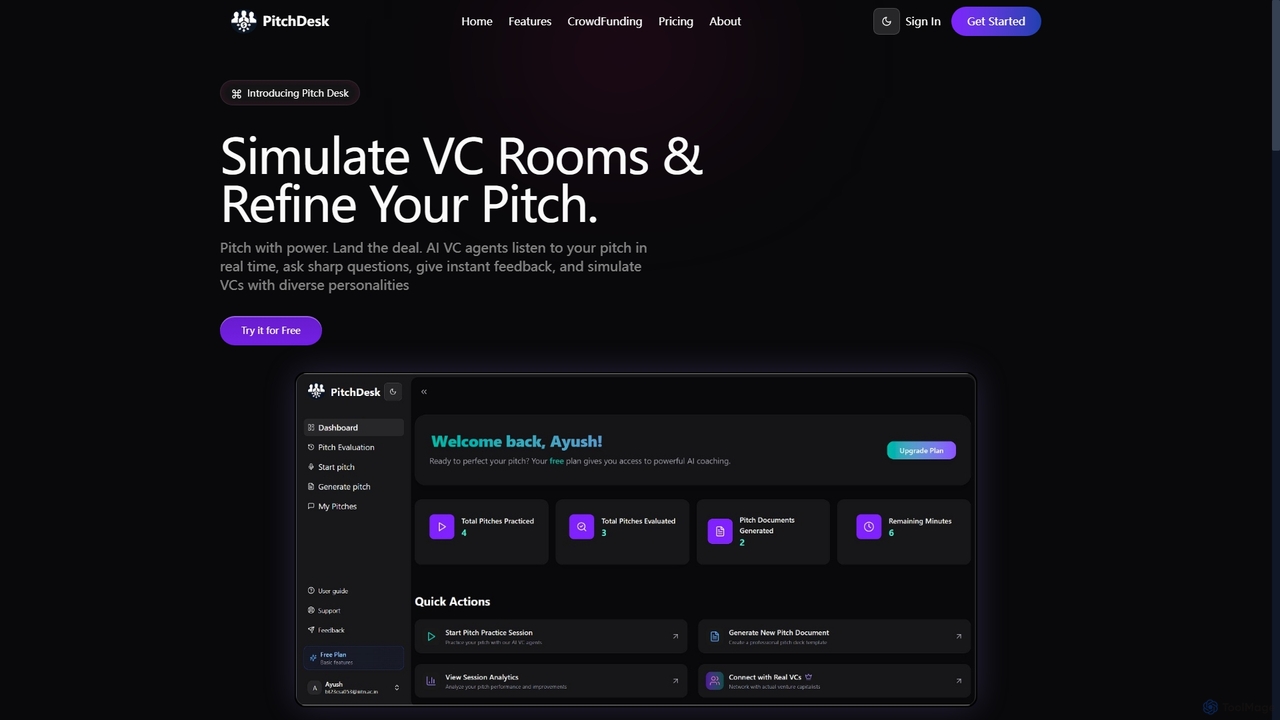
PitchDesk is an AI-powered platform designed to help startups, entrepreneurs, and students refine their pitch skills. It offers AI-driven practice sessions with detailed feedback, investor-ready document generation, and opportunities to connect with potential investors, building confidence and clarity for crucial meetings.

Startup
Visits 4.8KFavorites 147Likes 161

About Coaching

AI Coaching tools are sophisticated platforms designed to provide personalized guidance and feedback for skill development and performance improvement. Leveraging advanced artificial intelligence, these tools analyze user input—such as speech, text, or video—to identify strengths and areas for growth. While often used in conjunction with presentation tools to refine delivery and impact, their primary focus extends beyond mere delivery, aiming to foster comprehensive personal and professional growth across various domains.

Core Features

  • Personalized Feedback: Offers tailored insights on performance, communication style, and skill execution.
  • Performance Analysis: Utilizes AI to objectively evaluate speech patterns, body language, content clarity, and more.
  • Skill Development Modules: Provides structured exercises and learning paths to target specific areas for improvement.
  • Goal Tracking & Progress Monitoring: Helps users set objectives and visualize their advancement over time.
  • Communication Practice: Facilitates interactive simulations for practicing conversations, pitches, or interviews.

Use Cases

AI Coaching tools are invaluable for professionals seeking to enhance their public speaking, sales, or leadership capabilities. They also support individuals in interview preparation, language learning, and personal productivity. These tools offer a scalable and objective approach to continuous improvement, providing actionable insights that complement traditional coaching methods.

How to Choose

When selecting an AI Coaching tool, consider the specific domain it specializes in (e.g., public speaking, sales, leadership), the depth and actionability of its feedback, and its integration capabilities with existing workflows. Evaluate the customization options for learning paths, data privacy policies, and the overall user experience to ensure it aligns with your development goals.

Featured tool rankings

Coaching use cases

1

Enhancing Public Speaking Skills

For professionals, students, or anyone needing to deliver impactful presentations, AI coaching tools offer a powerful solution. Users can record practice speeches, and the AI analyzes aspects like pacing, filler words, tone, eye contact, and body language. It provides immediate, objective feedback and suggestions for improvement, helping individuals refine their delivery, boost confidence, and make their message more engaging and persuasive. This leads to more polished and effective public speaking.

2

Sales Team Performance Improvement

Sales managers can leverage AI coaching to elevate their team's performance. Sales representatives can practice pitches, handle objections, and simulate client interactions. The AI analyzes communication effectiveness, identifies key selling points, and suggests improvements in empathy and active listening. This data-driven approach ensures consistent messaging, helps reps refine their closing techniques, and ultimately contributes to higher conversion rates and improved sales outcomes across the team.

3

Leadership Development for Managers

Mid-level managers and team leads can utilize AI coaching to cultivate stronger leadership qualities. Through interactive simulations and scenario-based training, the AI provides feedback on decision-making, delegation strategies, conflict resolution, and effective team communication. It helps leaders understand their impact, refine their management style, and develop crucial soft skills necessary for fostering a productive and engaged team environment, leading to better organizational outcomes.

4

Interview Preparation and Mock Interviews

Job seekers can significantly boost their interview readiness with AI coaching tools. These platforms conduct mock interviews, asking common and behavioral questions. The AI analyzes responses for clarity, conciseness, relevance, and even non-verbal cues like eye contact and facial expressions. It provides constructive feedback on how to articulate experiences better, manage nerves, and present oneself confidently, increasing the chances of success in competitive job markets.

5

Personal Productivity and Goal Achievement

Individuals aiming for personal growth or entrepreneurs managing multiple tasks can benefit from AI coaching for productivity. The tool helps users define clear goals, break them into actionable steps, and track progress. It offers personalized prompts for reflection, suggests time management techniques, and provides motivational nudges to overcome procrastination and build consistent habits. This support fosters greater self-discipline and helps users stay on track towards their personal and professional objectives.

6

Language Learning and Pronunciation Practice

Language learners can use AI coaching to dramatically improve their pronunciation and conversational fluency. By engaging in spoken practice sessions, the AI listens attentively, identifies specific pronunciation errors, and provides immediate, targeted corrective feedback. It can also simulate realistic conversations, allowing learners to practice speaking in context and build confidence, accelerating their acquisition of a new language with greater accuracy and naturalness.

Coaching FAQ

What are AI Coaching tools?

AI Coaching tools are software applications that leverage artificial intelligence, including natural language processing, computer vision, and machine learning, to provide personalized guidance, feedback, and training. Their primary purpose is to help individuals develop specific skills, improve performance, and achieve personal or professional goals. They act as virtual mentors, offering objective analysis and actionable insights across various domains like public speaking, sales, leadership, and personal productivity.

How do AI Coaching tools differ from traditional human coaching?

AI Coaching tools offer several distinct advantages compared to traditional human coaching. They provide scalable, objective, and consistent feedback based on data analysis, often available 24/7 at a lower cost. They excel at identifying patterns and providing quantitative metrics. However, human coaches bring empathy, nuanced understanding of complex emotional contexts, and the ability to build deep personal rapport. AI tools are best seen as powerful complements, automating routine feedback and data analysis, allowing human coaches to focus on deeper, more complex developmental areas.

What types of skills can AI Coaching tools help improve?

AI Coaching tools are versatile and can assist in improving a wide range of skills. Common areas include public speaking (pacing, filler words, body language), communication (clarity, conciseness, active listening), sales effectiveness (pitch delivery, objection handling), leadership (delegation, feedback, decision-making), interview preparation (response quality, confidence), and even language pronunciation. They are particularly effective for skills that involve observable behaviors and measurable metrics.

How do AI Coaching tools provide feedback?

AI Coaching tools provide feedback through sophisticated analysis of user inputs. For speech-related coaching, they use speech recognition and natural language processing to analyze words, tone, pace, and clarity. For video-based coaching, computer vision tracks eye contact, facial expressions, and body language. This data is then processed against predefined criteria or learned models to generate real-time suggestions, post-session reports, personalized exercises, and progress dashboards, offering actionable insights for improvement.

What should I consider when choosing an AI Coaching tool?

When selecting an AI Coaching tool, first identify your primary development goal—whether it's public speaking, sales, leadership, or personal growth. Evaluate the tool's specialization and the quality/granularity of its feedback. Consider its integration capabilities with your existing platforms, data privacy and security measures, and the level of customization it offers for learning paths. Finally, assess the pricing model, user interface, and the availability of support to ensure it meets your specific needs and budget.