Privacy Best in category 1 results Decentralized Ai AI Tool

Popular AI tools in the Decentralized Ai field of Privacy include Flower, etc., helping you quickly improve efficiency.

Free
Flower

Flower

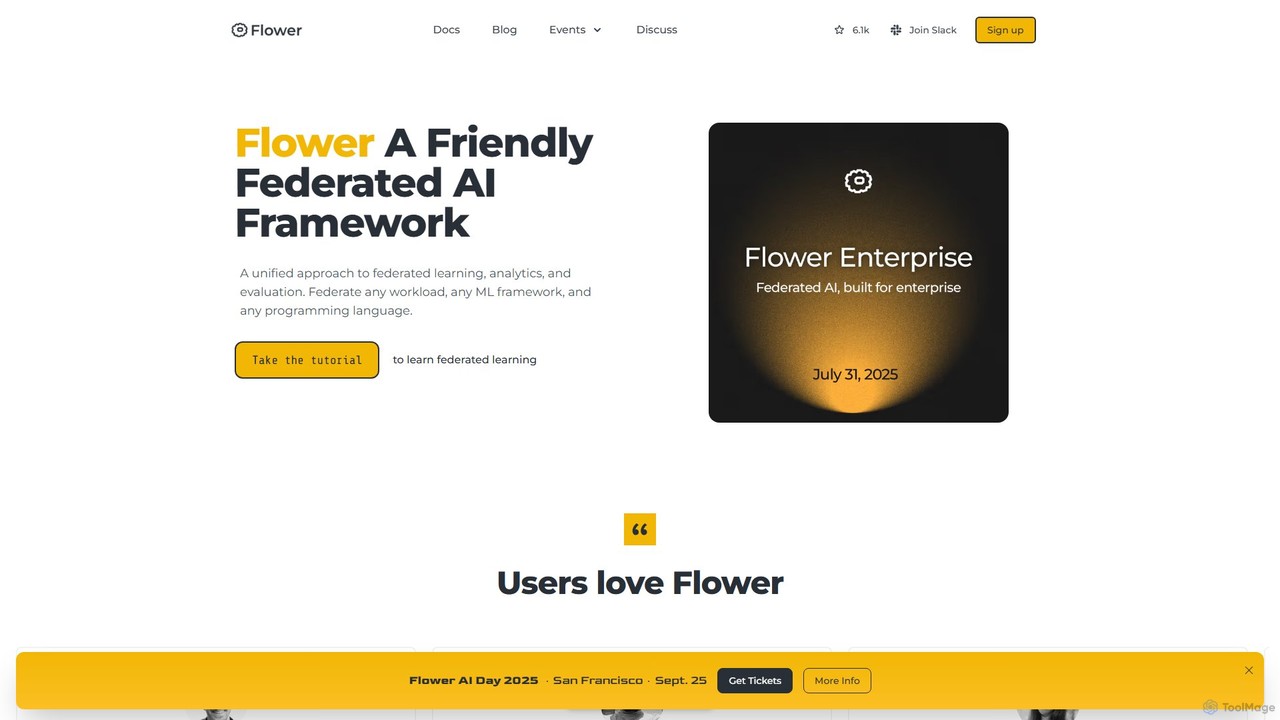
Flower is a friendly, open-source framework for federated learning, analytics, and evaluation. It enables training AI models on …

71.3K

About Decentralized Ai

Decentralized AI refers to artificial intelligence systems that operate on a distributed, peer-to-peer network rather than on centralized servers. These tools leverage technologies like blockchain and federated learning to process data and run models across multiple nodes, enhancing user privacy and control. This architecture creates more transparent, censorship-resistant, and collaborative AI ecosystems where users can own their data and even participate in model governance. The core value lies in shifting power from a single entity to a distributed community.

Core Features

  • Distributed Computation: AI models are trained and executed across a network of independent nodes, eliminating single points of failure.
  • Data Sovereignty: Users retain control over their personal data, which is often processed locally or in an encrypted, distributed manner.
  • Censorship Resistance: Without a central authority, it is significantly harder for any single entity to shut down or manipulate the AI service.
  • Verifiable Provenance: Often uses blockchain to create a transparent and immutable audit trail for data, models, and AI-generated outputs.
  • Token-based Incentives: Many platforms use cryptographic tokens to reward participants for contributing computing power, data, or model improvements.

Use Cases

Decentralized AI is particularly valuable in fields where data privacy, trust, and verifiability are critical. This includes healthcare for collaborative research without sharing raw patient data (federated learning), finance for creating transparent and auditable predictive models, and the creator economy for establishing verifiable ownership of AI-generated art and content through NFTs.

How to Choose

When selecting a Decentralized AI tool, consider the underlying technology (e.g., specific blockchain, federated learning protocol), the strength of its privacy guarantees, and the level of decentralization. Also evaluate the size and activity of its developer community, the transparency of its governance model, and the sustainability of its economic incentives (tokenomics).

Decentralized AiUse Cases

1

Secure Medical Research Collaboration

A consortium of hospitals and research institutions aims to train a predictive model for disease detection. Instead of pooling sensitive patient data into a central database, which poses significant privacy risks, they use a Decentralized AI platform based on federated learning. Each institution trains a copy of the model on its own local data. Only the anonymous model updates, not the raw data, are shared and aggregated to improve the global model. This allows for powerful collaborative research while ensuring patient data never leaves the hospital's secure environment, complying with regulations like HIPAA.

2

Creating Verifiable AI-Generated Art

A digital artist uses a decentralized AI art generator to create a new collection. The platform records the artist's text prompt, the specific version of the AI model used, and the final generated image on a public blockchain. This creates an immutable and verifiable record of provenance. The artist can then mint the artwork as a Non-Fungible Token (NFT) that links directly to this on-chain record. Collectors can easily verify the artwork's authenticity and origin, distinguishing it from unauthorized copies and increasing its value and trustworthiness in the digital art market.

3

Uncensored Content Generation

A journalist operating in a region with strict internet censorship needs to research and write articles on sensitive topics. Using a centralized AI writing assistant risks their work being monitored, blocked, or the service being shut down by authorities. Instead, they use a decentralized large language model that runs on a peer-to-peer network. Since there is no central server to block or company to compel, the service remains accessible. This allows the journalist to generate text, summarize information, and draft articles with a reduced risk of external interference or censorship, protecting their freedom of expression.

4

Community-Owned and Governed AI Models

A global community of open-source developers wants to build a powerful, transparent alternative to proprietary AI models. They use a decentralized AI platform that allows them to collaboratively contribute data and computing resources to train a shared model. Contributors are rewarded with governance tokens based on the quality and quantity of their contributions. These tokens grant them voting rights on key decisions, such as model updates, feature development, and how the platform's treasury is used. This creates a democratically governed AI ecosystem owned by its users and builders, not a single corporation.

5

Private and Personalized AI Assistants

A user wants a powerful AI assistant on their smartphone but is concerned about sending personal data like emails, calendars, and messages to a company's cloud servers. They install a decentralized AI assistant that runs primarily on their device. The model performs most tasks locally, ensuring sensitive information never leaves their phone. For more complex queries that require external knowledge, the assistant queries a distributed network of information providers without revealing the user's identity. This provides the benefits of a smart assistant while maintaining strict user privacy and data control.

6

Auditable Financial Fraud Detection

A financial institution needs to deploy an AI model to detect fraudulent transactions. To increase transparency and trust with regulators and customers, they use a decentralized AI system. Every prediction made by the model (e.g., flagging a transaction as fraudulent) is recorded on a blockchain. This creates an immutable log that can be audited by third parties to verify that the model is operating fairly and as intended, without bias. This on-chain audit trail provides a higher level of assurance compared to traditional, opaque 'black box' AI models common in the finance industry.

Decentralized AiFrequently Asked Questions