SquarePact
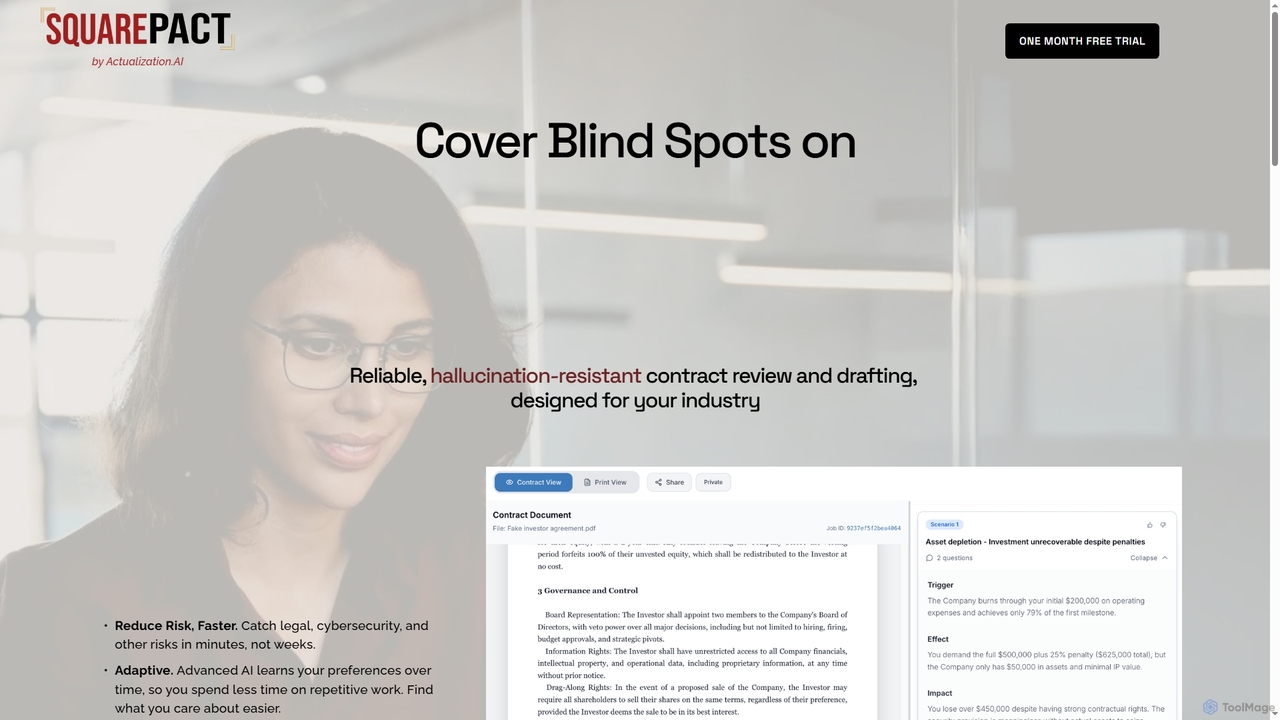
SquarePact is an AI-powered contract review and drafting tool specifically designed for non-lawyers in real estate, procurement, and …
SquarePact is an AI-powered contract review and drafting tool specifically designed for non-lawyers in real estate, procurement, and business. It leverages hallucination-resistant AI to quickly identify legal, cybersecurity, and other risks, ensure compliance with industry-specific regulations, and streamline contract workflows, significantly reducing risk and saving valuable time.
POCsheet
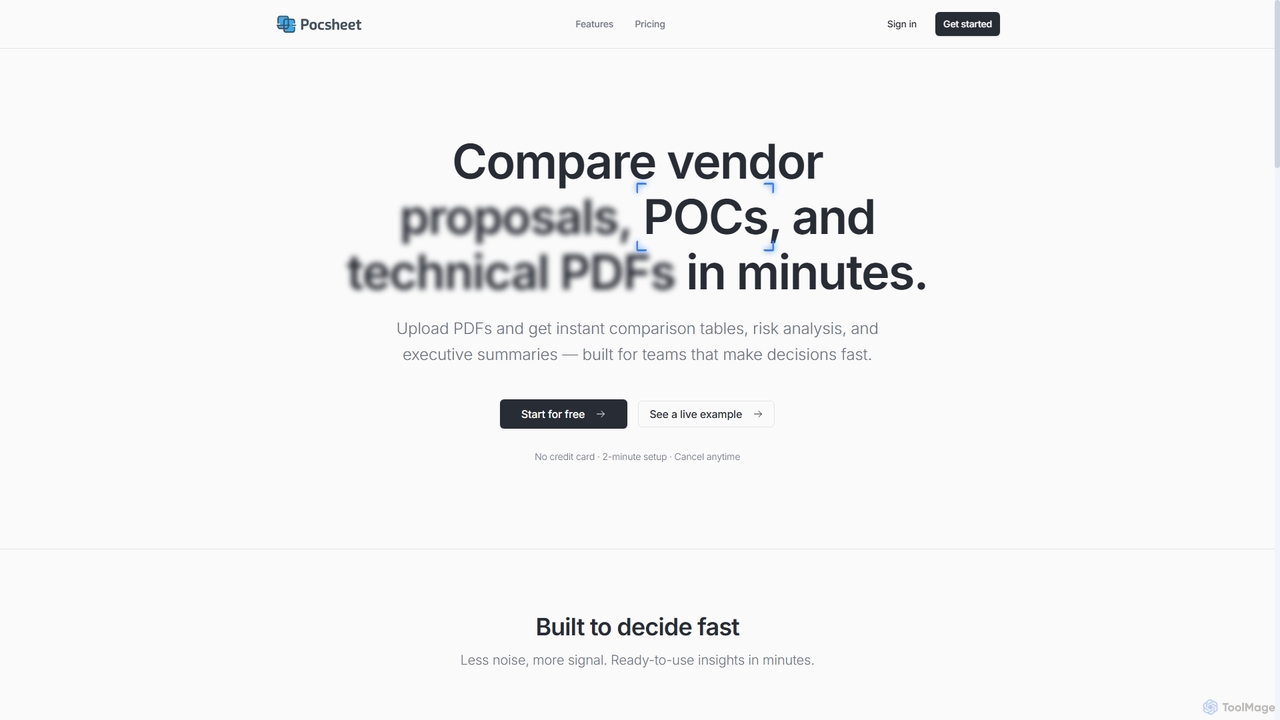
POCsheet is an AI-powered document comparison tool designed for teams to quickly analyze vendor proposals, technical specifications, and …
POCsheet is an AI-powered document comparison tool designed for teams to quickly analyze vendor proposals, technical specifications, and contracts. It automates the extraction of key features, risk identification, and generates instant comparison tables and executive summaries, saving significant time in decision-making processes.
RFP360
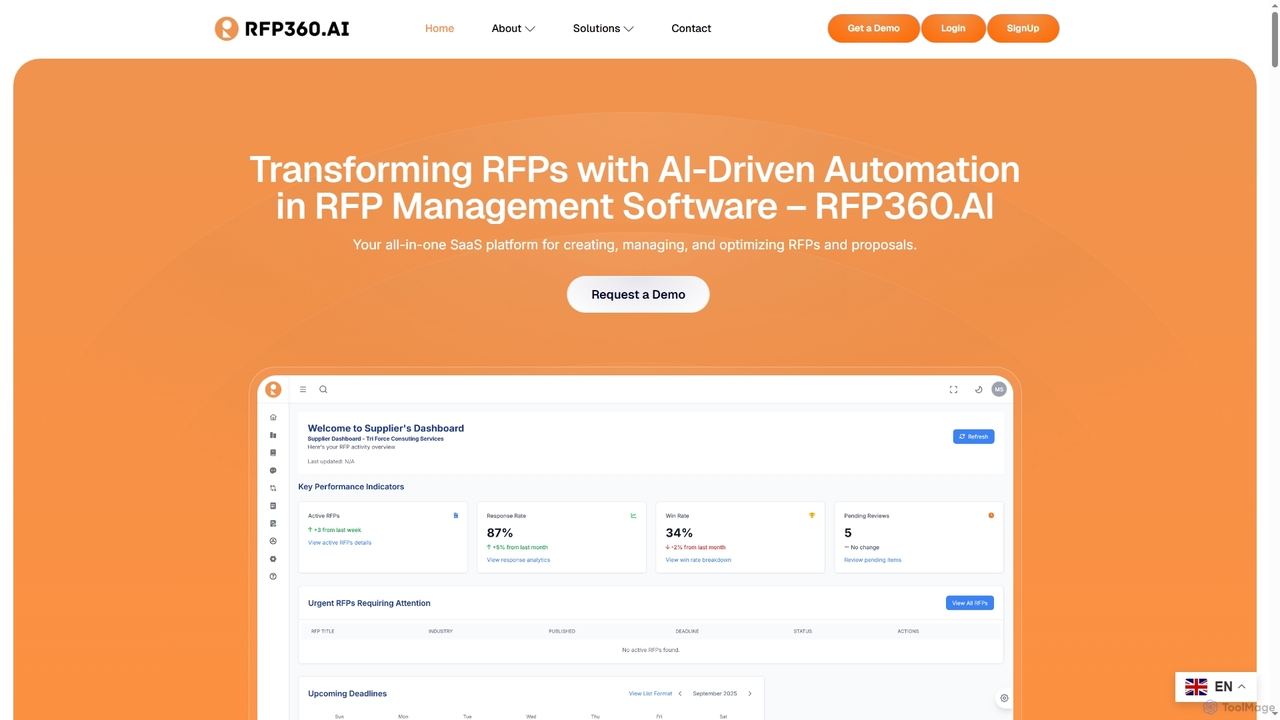
RFP360 is an AI-powered SaaS platform that revolutionizes the entire RFP and proposal lifecycle for both buyers and …
RFP360 is an AI-powered SaaS platform that revolutionizes the entire RFP and proposal lifecycle for both buyers and suppliers. It streamlines creation, management, and optimization of sourcing events and competitive bids, leveraging automation and intelligent insights to accelerate workflows and improve outcomes.
UpTrade
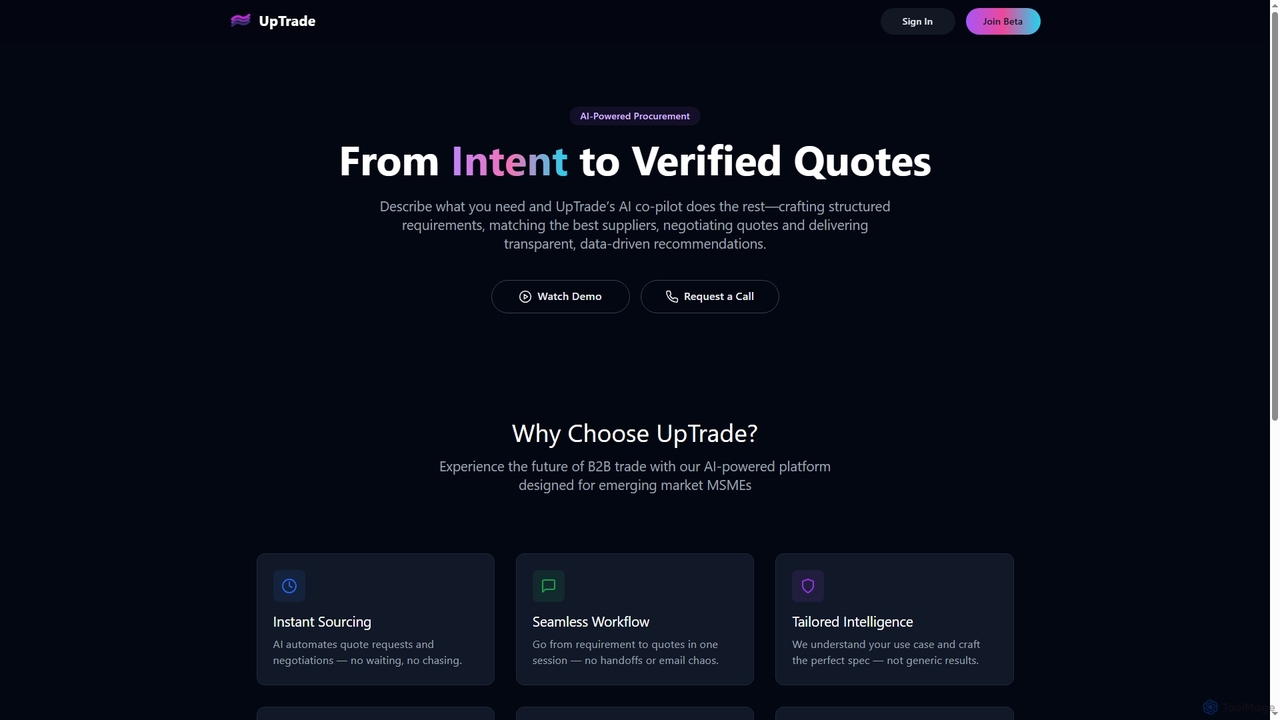
UpTrade is an AI-powered B2B procurement platform designed for emerging market MSMEs. It automates the entire sourcing cycle, …
UpTrade is an AI-powered B2B procurement platform designed for emerging market MSMEs. It automates the entire sourcing cycle, from crafting structured requirements and matching verified suppliers to negotiating quotes and delivering data-driven recommendations, significantly reducing manual effort and accelerating deal closures.
About Procurement
Procurement AI tools are a class of software that leverages artificial intelligence to automate and optimize the entire source-to-pay lifecycle. They utilize machine learning for predictive spend analysis and supplier risk assessment, and natural language processing to analyze contracts and automate communications. These tools empower organizations to make smarter purchasing decisions, reduce operational costs, and mitigate supply chain vulnerabilities. By transforming vast procurement data into actionable insights, they shift the focus from manual administrative tasks to strategic supplier relationship management.
Core Features
- Spend Analysis & Optimization: Analyzes historical spending data to identify savings opportunities and non-compliant spending.
- Supplier Discovery & Risk Management: Identifies and vets potential suppliers, continuously monitoring for financial, operational, or compliance risks.
- Contract Lifecycle Management (CLM): Automates the analysis and management of contracts, flagging non-standard clauses or risks.
- Automated Requisition & PO Processing: Streamlines the creation and approval of purchase requisitions and orders, reducing manual data entry.
- Predictive Demand Forecasting: Uses historical data and market trends to predict future needs for goods and services, optimizing inventory levels.
Applicable Scenarios
These tools are particularly valuable for medium to large enterprises with complex global supply chains. Industries such as manufacturing, retail, and healthcare rely on them to manage direct and indirect spend. Procurement, finance, and supply chain departments use them to enhance budget control, ensure compliance, and build resilient supplier networks.
How to Choose
When selecting a Procurement AI tool, consider its integration capabilities with your existing ERP and finance systems. Evaluate the scope of its functionality—whether it covers the full source-to-pay cycle or specializes in one area like spend analysis. Assess the depth of its data analytics and predictive power, and ensure the user interface is intuitive for procurement professionals without a data science background.
ProcurementUse Cases
Automated Supplier Risk Assessment
A procurement manager in a global manufacturing firm needs to monitor hundreds of suppliers for potential disruptions. Using a Procurement AI tool, they can automate this process. The AI continuously scans public data, financial reports, and news feeds, flagging suppliers with high risk scores based on factors like financial instability or geopolitical events. This allows the manager to proactively engage with at-risk suppliers or switch to alternatives, ensuring production continuity and significantly reducing supply chain vulnerabilities before they impact operations.
Strategic Sourcing and Supplier Discovery
A sourcing specialist is tasked with finding new, cost-effective suppliers for a critical component. Instead of manual research, they use an AI platform. By inputting component specifications, compliance requirements, and diversity goals, the AI scours a global database to identify and shortlist qualified suppliers. It provides a comparative analysis of pricing, lead times, and performance history. This reduces the sourcing cycle time from weeks to days and uncovers innovative suppliers that might have been missed through traditional methods.
Optimizing Tail Spend Management
A Chief Financial Officer (CFO) notices that a significant portion of the company's budget is consumed by 'tail spend'—small, infrequent purchases that are difficult to manage. An AI procurement tool is implemented to analyze all transactions. The system automatically categorizes this spend, identifies rogue purchasing outside of approved channels, and suggests consolidating purchases with preferred vendors. This provides the CFO with full visibility and control, leading to 10-15% cost savings on previously unmanaged spend and improved overall budget adherence.
Automating Purchase Order (PO) Processing
A procurement operations team spends hours daily manually processing purchase requisitions and creating POs, a repetitive and error-prone task. By implementing an AI system, approved requisitions are automatically converted into POs. The AI validates the information against contracts and budgets, routes them for any final digital approvals, and sends them to suppliers without human intervention. This frees up the team from administrative work to focus on more strategic activities like vendor negotiation, and reduces PO processing errors by over 90%.
AI-Powered Contract Analysis
A corporate legal team is responsible for reviewing thousands of supplier contracts for risk and compliance. Manually, this is a slow and inconsistent process. They adopt an AI tool that uses Natural Language Processing (NLP) to scan contracts in minutes. The AI automatically extracts key terms, identifies non-standard clauses, flags potential risks, and compares terms against company playbooks. This accelerates the review cycle, ensures consistent application of legal standards, and allows lawyers to focus their expertise on high-risk, complex negotiations.
Predictive Analytics for Demand Forecasting
A supply chain planner for a retail company struggles with accurately forecasting demand for seasonal products, leading to stockouts or excess inventory. They leverage an AI procurement platform that analyzes historical sales data, market trends, weather patterns, and social media sentiment. The AI model generates highly accurate demand forecasts, recommending optimal purchasing times and quantities. This data-driven approach improves inventory turnover, reduces carrying costs, and minimizes lost sales due to stockouts, directly boosting the company's bottom line.