Product Management Best in category 1 results Product Strategy AI Tool

Popular AI tools in the Product Strategy field of Product Management include Priceagent, etc., helping you quickly improve efficiency.

Priceagent

Priceagent

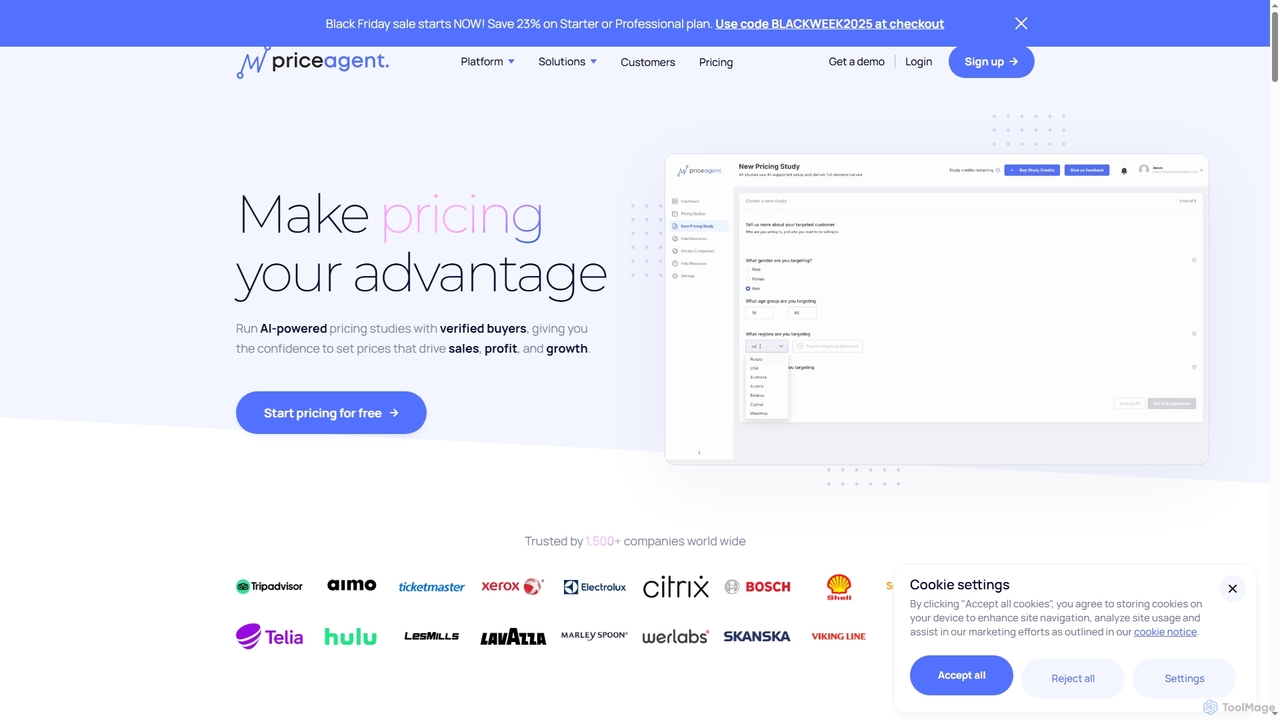
Priceagent is an AI-powered SaaS platform that enables businesses to confidently set optimal prices based on real-time customer …

6.6K

About Product Strategy

Product Strategy tools are AI-powered platforms designed to define, refine, and execute successful product roadmaps. These tools leverage data analytics, market insights, and predictive modeling to guide product development from conception to launch. They empower product managers and teams to make informed decisions, align with business goals, and adapt to market changes. By integrating AI, they offer dynamic insights for competitive advantage and sustainable growth within the broader field of Product Management.

Core Features

  • Market Analysis & Trend Prediction: AI-driven insights into market dynamics, competitor strategies, and emerging trends to identify opportunities.
  • Customer Needs Mapping: Tools to analyze user feedback, behavior data, and sentiment to uncover unmet customer needs and pain points.
  • Roadmap Prioritization: AI algorithms that help prioritize features and initiatives based on business value, effort, and strategic alignment.
  • Strategic Alignment & Goal Setting: Facilitates the definition of clear product visions, objectives, and key results (OKRs) that align with overall company strategy.
  • Risk Assessment & Scenario Planning: Evaluates potential risks for product initiatives and models various strategic scenarios to inform decision-making.

Use Cases

Product Strategy tools are essential for product managers, CPOs, and innovation teams in tech companies, startups, and enterprises. They are used to develop new product lines, optimize existing portfolios, and pivot strategies in response to market shifts. For instance, a product team might use these tools to analyze market gaps before launching a new SaaS feature or to refine pricing strategies for an existing mobile app.

How to Choose

When selecting Product Strategy tools, consider the depth of market intelligence, the robustness of data integration with existing systems, and the flexibility of roadmap visualization. Evaluate the AI's predictive accuracy, the ease of collaboration features for cross-functional teams, and the tool's ability to scale with your product portfolio. Also, assess the learning curve and the availability of support resources to ensure seamless adoption.

Product StrategyUse Cases

1

Validating New Product Concepts

Product managers use AI tools to analyze market demand, competitive landscape, and potential user adoption for new product ideas before significant investment. This involves feeding concept descriptions into the AI to generate market fit scores and identify potential risks or opportunities, saving development costs and time. For instance, a product team can input a new feature idea and receive an AI-generated report on its market viability and target audience.

2

Developing a New Product Line Strategy

A Product Lead at a growing SaaS company needs to identify market opportunities and define the strategic direction for a new product line. They utilize AI Product Strategy tools to analyze competitor offerings, predict market demand for specific features, and map potential customer segments. The tool helps in crafting a data-backed value proposition and initial roadmap, reducing the time spent on manual research by 60% and ensuring strategic alignment from day one.

3

Optimizing Product Roadmap Prioritization

Product teams leverage AI to prioritize features and initiatives on their roadmap by evaluating potential impact, development effort, and strategic alignment. The AI processes user feedback, business goals, and resource constraints to suggest optimal sequencing, ensuring high-value features are delivered first. This helps product owners make data-driven decisions on what to build next, maximizing ROI.

4

Optimizing Existing Product Portfolio Performance

A Portfolio Manager in an enterprise software firm needs to evaluate the performance of current products and identify areas for improvement or divestment. They employ Product Strategy AI to aggregate sales data, user engagement metrics, and customer feedback across multiple products. The AI identifies underperforming features, suggests potential cross-selling opportunities, and provides insights into market saturation, enabling data-driven decisions to reallocate resources and boost overall portfolio profitability.

5

Conducting Real-time Competitive Analysis

Product strategists employ these tools to continuously monitor competitor product launches, feature updates, pricing changes, and marketing campaigns. AI aggregates data from various sources, providing instant alerts and detailed reports on competitive moves, enabling rapid strategic adjustments. This allows companies to stay agile and respond proactively to market shifts, maintaining a competitive edge.

6

Prioritizing Features for a Product Roadmap

A Senior Product Manager for a mobile application needs to decide which features to develop next from a backlog of ideas, balancing user value and business impact. They feed user story data, impact estimates, and development costs into the AI Product Strategy tool. The tool then generates prioritized lists based on various models (e.g., RICE, MoSCoW), highlighting features with the highest ROI or strategic fit, streamlining the decision-making process and ensuring resources are focused on high-impact initiatives.

7

Identifying Untapped Market Opportunities

Business development and product innovation teams utilize AI to scan vast datasets of consumer behavior, social media trends, and industry reports. The AI identifies underserved customer segments or emerging needs that current products don't address, guiding the development of innovative solutions. This proactive approach helps companies discover new growth avenues and expand their market reach.

8

Conducting Competitive Landscape Analysis

A Market Intelligence Analyst for a tech startup needs to gain a deep understanding of competitors' strategies, strengths, and weaknesses. They leverage AI Product Strategy tools to continuously monitor competitor product launches, pricing changes, marketing campaigns, and customer reviews. The AI identifies emerging competitive threats and opportunities, providing real-time alerts and comprehensive reports that inform the startup's own strategic positioning and differentiation efforts.

9

Forecasting Product Performance & Market Adoption

Product leaders use AI models to predict the potential success of new features or product iterations based on historical data, market conditions, and user engagement patterns. This helps in setting realistic KPIs, allocating marketing budgets, and preparing for market entry or expansion. Accurate forecasts enable better resource planning and risk management for product launches.

10

Aligning Product Vision with Company Objectives

A Chief Product Officer (CPO) at a scale-up needs to ensure all product initiatives directly contribute to the company's overarching strategic goals and OKRs. They integrate the company's strategic objectives into the AI Product Strategy platform. The tool then provides a framework to evaluate new product ideas and existing projects against these objectives, highlighting potential misalignments and suggesting adjustments to ensure every product effort is a step towards achieving the company's long-term vision.

11

Aligning Product Strategy with Business Goals

Executive teams and product VPs use AI tools to ensure that product initiatives directly contribute to overarching business objectives like revenue growth, market share expansion, or customer retention. The tools provide dashboards and reports that visualize strategic alignment and highlight areas for adjustment, ensuring product efforts are always in sync with the company's vision.

12

Forecasting Market Trends and Future Opportunities

An Innovation Lead in a consumer electronics company needs to anticipate future market shifts and identify novel opportunities for product innovation. They utilize AI Product Strategy tools to analyze vast datasets including social media trends, patent filings, academic research, and economic indicators. The AI identifies nascent trends and predicts their potential impact on consumer behavior, enabling the company to proactively develop products that meet future demand and maintain a competitive edge.

Product StrategyFrequently Asked Questions