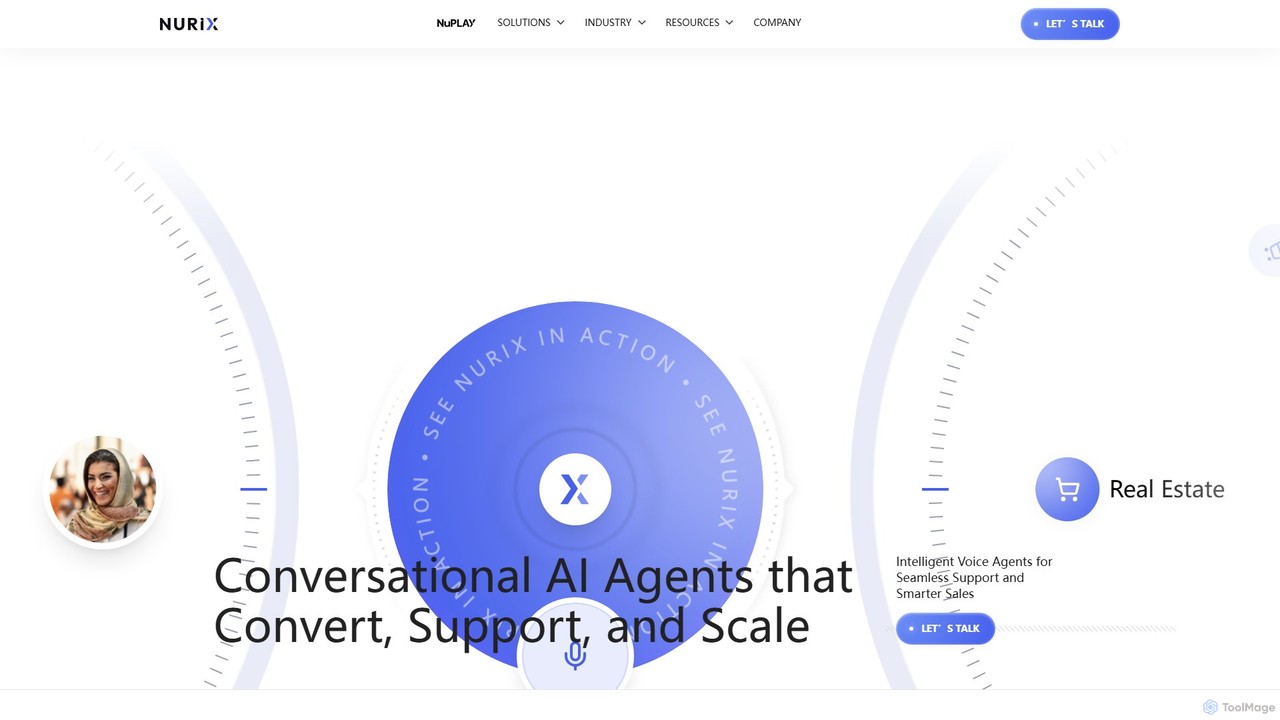
Nurix
Nurix is an advanced conversational AI platform that provides intelligent voice agents for sales and customer support. It …
Nurix is an advanced conversational AI platform that provides intelligent voice agents for sales and customer support. It enables businesses to automate interactions, qualify leads, and resolve customer issues 24/7 with human-like, low-latency conversations. Designed for enterprises, it offers seamless integrations and rapid deployment.
About Call Center
AI Call Center tools are advanced solutions that use artificial intelligence to automate and enhance customer communication and support operations. These platforms leverage technologies like Natural Language Processing (NLP) and speech recognition to understand, route, and even resolve customer inquiries in real-time. By automating routine tasks and providing data-driven insights, they enable businesses to improve agent productivity, reduce operational costs, and deliver a more responsive customer experience 24/7. Unlike traditional systems, AI-powered centers can perform sentiment analysis, offer predictive routing, and provide agents with live assistance.
Core Features
- Intelligent Voice Response (IVR): Understands natural language and conversational queries, moving beyond simple keypad menus.
- Real-time Agent Assist: Provides agents with live suggestions, relevant knowledge base articles, and customer data during calls.
- Sentiment Analysis: Analyzes the customer's tone of voice and language to gauge satisfaction and urgency.
- Automated Call Summarization: Automatically generates concise summaries and notes after each conversation, saving agent time.
- Predictive Call Routing: Intelligently directs callers to the most suitable agent based on their issue, history, and agent skill set.
Use Cases
These tools are widely adopted in industries with high call volumes, such as e-commerce, banking, telecommunications, and healthcare. Customer service managers use them to automate Tier-1 support, while sales teams leverage them for lead qualification and outbound campaigns. Operations analysts also use the analytics features to monitor performance and identify areas for service improvement.
How to Choose
When selecting an AI Call Center tool, evaluate its integration capabilities with your existing CRM and helpdesk software. Assess the accuracy of its AI models, particularly for speech-to-text and intent recognition. Consider the platform's scalability to handle peak call volumes and the level of customization available to train the AI on your specific business processes and terminology.

Call CenterUse Cases
Automating Tier-1 Customer Support
A customer service manager at an e-commerce company uses an AI Call Center tool to handle high volumes of routine inquiries. The AI-powered IVR system can instantly answer common questions like 'Where is my order?' or 'How do I process a return?' by integrating with the company's logistics and CRM systems. This automation deflects up to 60% of incoming calls from human agents, allowing them to focus on complex, high-value customer issues. The result is a significant reduction in wait times and operational costs, while improving overall customer satisfaction.
Real-time Sales Agent Coaching
A sales team lead in a financial services firm implements an AI Call Center tool with real-time agent assist. During live calls with potential clients, the AI analyzes the conversation and provides the sales agent with on-screen prompts. These prompts can include key product details, answers to common objections, or reminders to mention a specific promotion. This live coaching helps newer agents perform like veterans, ensures consistent messaging across the team, and has been shown to increase lead conversion rates by up to 20% by providing the right information at the right moment.
Automating Post-call Quality Assurance
A quality assurance analyst in a large contact center is tasked with reviewing hundreds of calls daily for compliance and quality. By using an AI Call Center tool, 100% of call recordings are automatically transcribed and analyzed. The AI checks for script adherence, mandatory disclosures, and customer sentiment. It flags calls that deviate from standards for human review, reducing the manual workload by over 80%. This allows the QA team to focus on coaching and targeted training rather than random sampling, leading to a measurable improvement in service quality and compliance.
Proactive Outbound Customer Engagement
A customer success manager at a SaaS company uses an AI Call Center's predictive analytics to identify customers at risk of churning. The AI analyzes usage data, support ticket history, and recent interactions to flag accounts with low engagement. The system then triggers an automated, personalized outbound call or SMS campaign to these users, offering help, scheduling a training session, or highlighting new features. This proactive approach helps re-engage customers before they decide to leave, significantly improving customer retention and lifetime value.
Expanding Multilingual Customer Support
A global retail brand wants to offer 24/7 support to customers in multiple countries without the high cost of hiring multilingual agents for every time zone. They deploy AI voicebots in their call center that can converse fluently in five different languages. These voicebots handle common inquiries and can seamlessly transfer the call to a human agent if the issue is complex. This strategy allows the company to provide consistent, immediate support to its international customer base, improving global brand perception and customer loyalty while keeping staffing costs under control.
Emergency Response and Call Triage
During a major service outage, a utility company faces a sudden surge of thousands of customer calls. An AI Call Center system is used to manage the influx. The AI provides all callers with an immediate, automated update on the outage status and estimated resolution time. It also uses NLP to identify callers reporting critical emergencies, such as a downed power line, and instantly routes them to the front of the queue for priority human assistance. This system prevents the call center from being overwhelmed, disseminates crucial information efficiently, and ensures life-threatening situations are addressed immediately.