ToolMage
Sign in

Best 1 Expert Network AI tools for Productivity

Popular Expert Network AI tools in Productivity include GoReply, helping you work more efficiently.

GoReply
Paid

GoReply

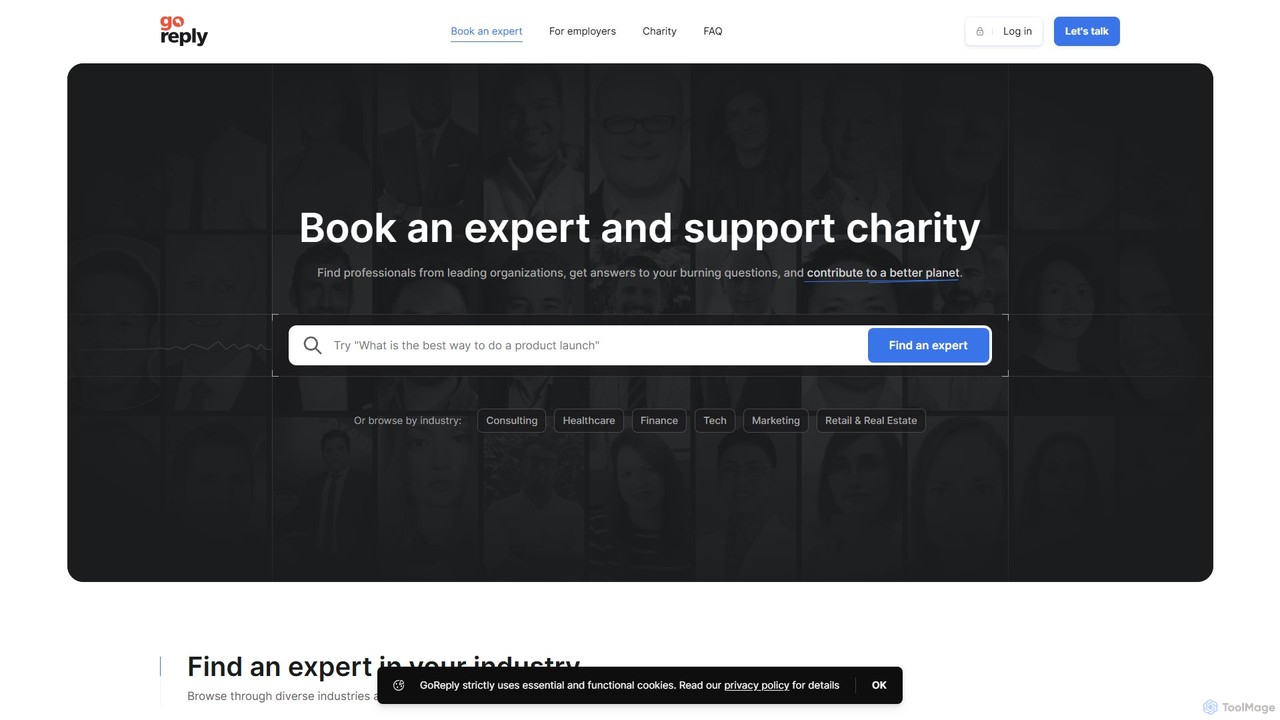
GoReply is a unique platform for skill-based philanthropy, connecting users with industry experts for paid consultations. All consultation fees are donated to charity, enabling professionals and companies to leverage their expertise for social good, boost employee engagement, and meet Corporate Social Responsibility (CSR) and ESG goals.

Corporate Social Responsibility
Visits 8KFavorites 126Likes 130

About Expert Network

Expert Network tools are AI-driven platforms that connect businesses with subject-matter specialists for on-demand consultations. They use sophisticated algorithms to match user queries with the most relevant experts from a global, vetted pool. These platforms provide rapid access to niche knowledge, enabling informed strategic decisions, market research, and technical problem-solving. Unlike traditional consulting, they offer a flexible and efficient way to gain critical insights without long-term commitments.

Core Features

  • AI-Powered Expert Matching: Utilizes algorithms to analyze user needs and expert profiles for highly accurate and fast connections.
  • On-Demand Consultations: Facilitates various interaction formats, including phone calls, video conferences, and written surveys.
  • Compliance Frameworks: Includes built-in tools and protocols to ensure all interactions adhere to industry regulations and confidentiality standards.
  • Vetted Specialist Pools: Maintains a curated database of experts who have undergone rigorous screening and verification processes.
  • Project Management Interface: Provides tools for scheduling, communication, and payment processing within the platform.

Use Cases

These tools are primarily used by professionals in roles requiring deep, specific industry knowledge. Common users include investment analysts conducting due diligence, corporate strategy teams evaluating new markets, R&D departments seeking technical validation, and legal firms sourcing expert witnesses.

How to Choose

When selecting an Expert Network tool, consider the network's industry specialization and the depth of its expert pool. Evaluate the rigor of their expert vetting and compliance procedures. Compare engagement models (e.g., per-call vs. subscription) and pricing structures. Finally, assess the platform's user interface for ease of search, scheduling, and communication.

Featured tool rankings

Expert Network use cases

1

Investment Due Diligence

An investment analyst at a private equity firm is evaluating a potential acquisition in a niche B2B software market. Using an AI Expert Network, they quickly identify and schedule calls with three former senior executives from competitor companies. Within 48 hours, the analyst gains firsthand insights into the target's competitive positioning, technological risks, and customer churn rates. This rapid access to primary intelligence allows the firm to make a more confident and well-informed investment decision, validating their thesis or uncovering critical red flags.

2

Market Entry Strategy Validation

A corporate strategy manager is tasked with assessing the viability of launching a new product line in Latin America. Instead of commissioning a lengthy market research report, the manager uses an expert network to conduct a series of one-hour consultations with local supply chain, regulatory, and marketing experts in Brazil and Mexico. These targeted conversations provide nuanced, on-the-ground insights into local challenges and opportunities, allowing the team to quickly refine their go-to-market strategy and financial projections with greater accuracy.

3

R&D Technical Problem-Solving

An R&D team at a manufacturing company hits a roadblock with a new material science application. Their internal expertise is limited. Using an expert network, the team lead connects with a retired professor and a lead scientist from a non-competing industry who have extensive experience with the specific polymer in question. Through two focused video consultations, the team gains novel ideas for process optimization and alternative material compositions, saving months of trial-and-error experimentation and accelerating their development timeline.

4

Sourcing Legal Expert Witnesses

A paralegal at a law firm is tasked with finding a highly specific expert witness for a complex patent litigation case involving medical devices. Traditional search methods are slow and yield few qualified candidates. The paralegal uses an expert network platform, filtering by patent history, academic publications, and prior testimony experience. The AI-driven search returns a short-list of vetted candidates in hours. The firm is then able to quickly engage the most suitable expert, significantly strengthening their case preparation and saving valuable time.

5

Competitive Intelligence Gathering

A market research analyst needs to understand a competitor's go-to-market strategy for a new product. Public information is limited. The analyst uses an expert network to connect with former employees (in compliance with confidentiality agreements), industry journalists, and channel partners of the competitor. Through these confidential consultations, the analyst pieces together a comprehensive view of the competitor's sales structure, pricing strategy, and marketing tactics, providing their own company with a significant strategic advantage.

6

Product Feature Prioritization

A product manager for a B2B SaaS platform is struggling to prioritize the development roadmap. To validate assumptions, they use an expert network to schedule several 30-minute calls with senior decision-makers in their target customer segment. Instead of relying on surveys, these direct conversations provide rich, qualitative feedback on pain points and desired features. This process helps the product manager build a business case for the most impactful features, ensuring development resources are allocated to what customers truly value.

Expert Network FAQ

What is an AI Expert Network tool?

An AI Expert Network is a platform that uses artificial intelligence to connect users with highly specialized subject-matter experts for on-demand consultations. Unlike a simple directory, these tools actively match your specific query to the most relevant expert based on their experience, publications, and past performance. The primary purpose is to facilitate rapid knowledge transfer for critical business decisions, such as market research, due diligence, and technical problem-solving.

How is an Expert Network different from a freelance platform?

The key difference lies in the objective. Expert Networks are designed for knowledge transfer—short, high-impact consultations to gain insights and inform decisions. Freelance platforms are for work delivery—hiring someone to complete a specific task or project. Consequently, experts on these networks are typically senior-level professionals valued for their perspective, not just their ability to execute a task. The vetting process is also generally more rigorous, and interactions are structured around consultations rather than project deliverables.

Who are the typical users of Expert Network tools?

These tools are primarily used by professionals who need to make high-stakes decisions based on deep, specific, and often time-sensitive information. Key user groups include:

  • Investment Professionals: Analysts at private equity, venture capital, and hedge funds conducting due diligence.
  • Corporate Strategists: Teams evaluating market entry, M&A opportunities, or competitive threats.
  • R&D and Product Leaders: Individuals seeking technical validation or feedback on product roadmaps.
  • Legal Professionals: Lawyers and paralegals sourcing expert witnesses for litigation.

How do I choose the right Expert Network tool?

Selecting the best tool depends on your specific needs. Consider these factors:

  • Network Specialization: Does the platform have deep expertise in your industry (e.g., healthcare, technology, finance)?
  • Expert Quality and Vetting: Investigate their process for screening and onboarding experts. How do they ensure quality?
  • Compliance and Confidentiality: Ensure the platform has robust protocols to protect sensitive information and prevent conflicts of interest.
  • Pricing Model: Compare pay-per-consultation models with subscription plans to see which aligns with your expected usage.
  • Platform Usability: Evaluate how easy it is to search for experts, schedule calls, and manage projects.

Is the information shared in expert consultations confidential?

Yes, reputable Expert Network platforms operate under strict confidentiality and compliance frameworks. All interactions, including the user's identity and the nature of their query, are kept confidential. Experts are bound by non-disclosure agreements (NDAs) and are screened to prevent conflicts of interest. Platforms often provide built-in compliance tools to help users and experts navigate industry-specific regulations, ensuring a secure environment for sensitive discussions.