Engagerfy
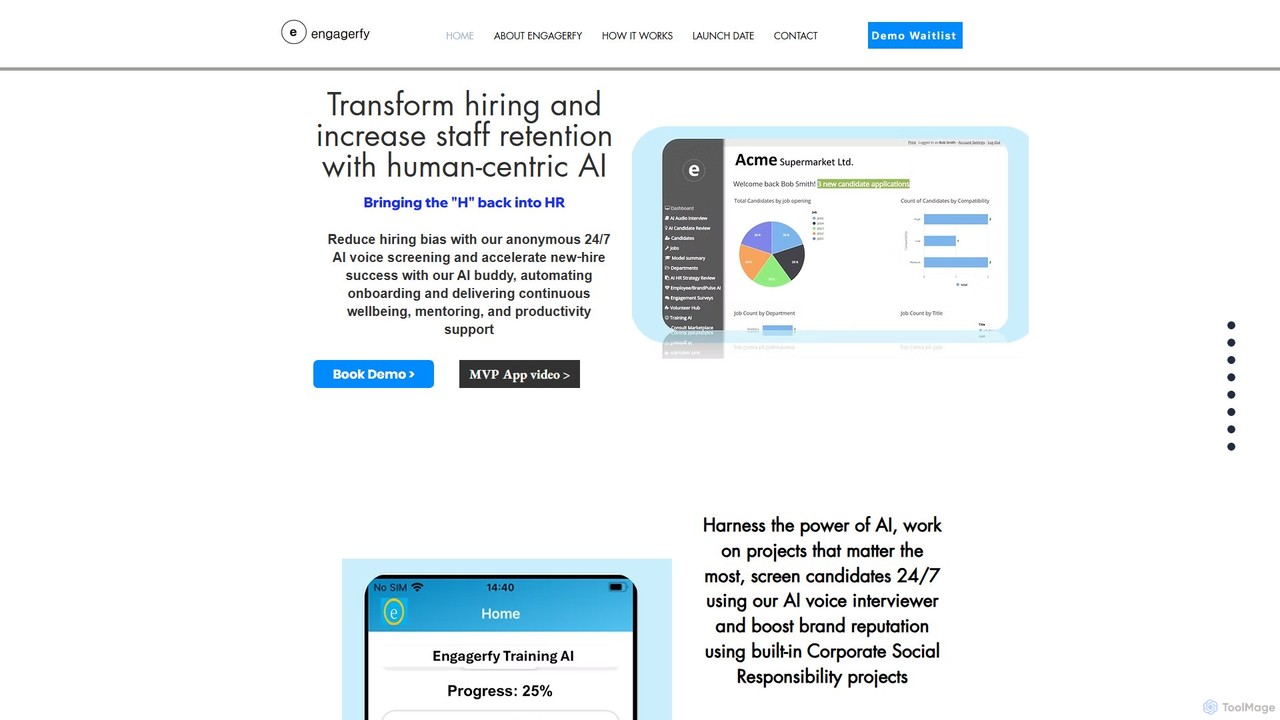
Engagerfy is a human-centric AI platform designed to revolutionize HR by managing the entire employee lifecycle. It uses …
Engagerfy is a human-centric AI platform designed to revolutionize HR by managing the entire employee lifecycle. It uses AI for anonymous voice screening to reduce hiring bias, an AI buddy for onboarding and continuous support, and automated tools to enhance employee engagement and retention.
GoReply
GoReply is a unique platform for skill-based philanthropy, connecting users with industry experts for paid consultations. All consultation …
GoReply is a unique platform for skill-based philanthropy, connecting users with industry experts for paid consultations. All consultation fees are donated to charity, enabling professionals and companies to leverage their expertise for social good, boost employee engagement, and meet Corporate Social Responsibility (CSR) and ESG goals.
About Corporate Social Responsibility
Corporate Social Responsibility (CSR) tools are AI-powered platforms designed to help organizations manage, track, and report on their ethical, social, and environmental impact. These tools leverage data analytics and automation to streamline the collection and analysis of ESG (Environmental, Social, and Governance) data. By integrating CSR into business operations, they enable companies to enhance transparency, ensure compliance, and drive sustainable practices. This leads to improved stakeholder relations and long-term value creation.
Core Features
- ESG Data Collection & Analysis: Automates the gathering and processing of environmental, social, and governance data from various sources.
- Sustainability Reporting: Generates comprehensive reports compliant with global standards like GRI, SASB, and TCFD.
- Supply Chain Ethics Monitoring: Tracks and assesses the social and environmental performance of suppliers and partners.
- Stakeholder Engagement Management: Facilitates communication and feedback collection from employees, customers, investors, and communities.
- Impact Measurement & Optimization: Quantifies the social and environmental impact of initiatives and suggests areas for improvement.
Use Cases
These tools are vital for companies seeking to formalize and improve their sustainability efforts, from large corporations needing to comply with international ESG regulations to investors assessing portfolio performance. They also support organizations aiming for certifications like B Corp, ensuring ethical and responsible business conduct.
How to Choose
When selecting a CSR AI tool, ensure it supports relevant reporting frameworks (e.g., GRI, SASB) and can integrate with your existing ERP, HR, and supply chain systems. Evaluate its customization capabilities to adapt to specific business needs, its scalability for future growth, and the depth of its analytical and reporting features to make informed decisions.

Corporate Social ResponsibilityUse Cases
Automating ESG Data Collection for Annual Reports
Sustainability managers in large enterprises use CSR AI tools to automatically gather environmental data (e.g., energy consumption, emissions), social data (e.g., employee diversity, safety incidents), and governance data (e.g., board structure) from internal systems and external sources. This streamlines the preparation of annual sustainability reports, reducing manual effort by up to 70% and ensuring data accuracy for compliance.
Monitoring Supply Chain Ethical Compliance
Procurement teams leverage CSR platforms to continuously monitor their global supply chains for ethical labor practices, environmental impact, and human rights risks. The AI analyzes supplier audit reports, news feeds, and public data, flagging potential violations or high-risk areas. This proactive approach helps prevent reputational damage and ensures adherence to responsible sourcing policies.
Quantifying Social Impact of Community Programs
Corporate foundations or CSR departments utilize these tools to measure the tangible social impact of their community investment programs. By tracking metrics like beneficiary reach, educational outcomes, or local economic contributions, the AI provides data-driven insights. This enables organizations to optimize resource allocation and demonstrate the effectiveness of their social initiatives to stakeholders.
Enhancing Employee Engagement in Sustainability Initiatives
HR and internal communications teams deploy CSR AI tools to engage employees in corporate sustainability efforts. The platform can track employee participation in volunteering, suggest personalized eco-friendly actions, and report on collective impact. This fosters a culture of responsibility, boosts employee morale, and aligns individual actions with company-wide sustainability goals.
Streamlining Carbon Footprint Measurement and Reduction
Environmental managers use CSR AI tools to calculate the organization's carbon footprint across Scopes 1, 2, and 3. The AI integrates data from energy bills, travel logs, and supply chain emissions, providing a comprehensive overview. It then identifies key emission hotspots and suggests actionable strategies for reduction, aiding in achieving net-zero targets.
Assessing Investment Portfolio ESG Risks
Investment analysts and fund managers employ CSR AI tools to evaluate the ESG performance and risks of companies within their portfolios. The AI analyzes public disclosures, news, and third-party ratings to provide a holistic ESG score and identify potential controversies. This informs investment decisions, helping to build more resilient and responsible portfolios.