Recognito
Recognito offers top-tier, NIST-certified face recognition and ID verification SDKs. It provides solutions for 1:1 and 1:N facial …
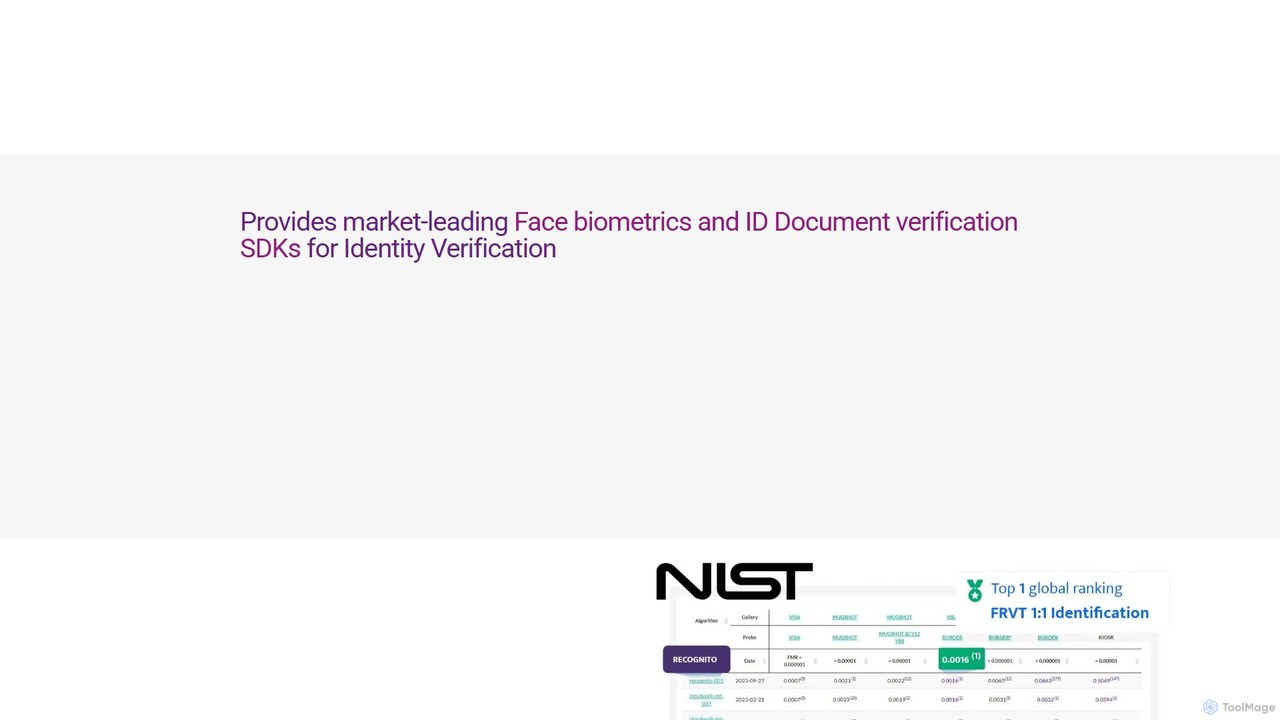
Recognito offers top-tier, NIST-certified face recognition and ID verification SDKs. It provides solutions for 1:1 and 1:N facial matching, 3D passive liveness detection, and deepfake prevention. Supporting over 14,000 document types, its SDKs are designed for easy integration into Windows, Linux, Android, and iOS applications, ensuring high accuracy and security for industries like banking, healthcare, and government. It offers on-premise and offline deployment for complete data privacy.
facia
Facia is an advanced AI-powered identity verification and security platform. It specializes in deepfake detection, liveness detection, and …
Facia is an advanced AI-powered identity verification and security platform. It specializes in deepfake detection, liveness detection, and age verification using facial biometrics. Designed for businesses, it helps prevent fraud, ensure regulatory compliance (like KYC and COPPA), and secure online interactions across various industries.
About Fraud Detection
Fraud Detection tools are AI-powered solutions designed to identify, prevent, and mitigate illicit activities across various digital and financial platforms. Leveraging advanced machine learning algorithms and behavioral analytics, these tools continuously monitor transactions and user patterns to detect anomalies indicative of fraud. Their primary value lies in protecting assets, safeguarding sensitive data, and maintaining business integrity by proactively flagging suspicious behaviors before significant losses occur.
Core Features
- Real-time Monitoring: Continuously analyzes transactions and user activities for immediate threat identification.
- Anomaly Detection: Identifies deviations from normal patterns using statistical and machine learning models.
- Predictive Analytics: Forecasts potential fraud risks based on historical data and emerging trends.
- Behavioral Biometrics: Analyzes user interaction patterns to verify identity and detect account takeover attempts.
- Link Analysis: Uncovers hidden connections between fraudulent entities and activities.
Use Cases
Financial institutions utilize these tools to combat credit card fraud, loan application fraud, and money laundering. E-commerce platforms deploy them to prevent payment fraud, account takeovers, and chargebacks, ensuring secure online transactions. Insurance companies leverage AI fraud detection to identify suspicious claims and reduce payouts on fraudulent policies.
How to Choose
When selecting a Fraud Detection tool, consider its detection accuracy and false positive rates, integration capabilities with existing systems, scalability to handle growing data volumes, and compliance with industry regulations. Evaluate the types of fraud it specializes in, its real-time processing capabilities, and the level of customization offered for your specific business needs.

Fraud DetectionUse Cases
Preventing Credit Card Fraud in Banking
For banks and financial institutions, AI fraud detection systems continuously analyze millions of credit card transactions in real-time. By identifying unusual spending patterns, geographic anomalies, or rapid successive purchases, the system can automatically flag suspicious transactions, block them, and alert customers, significantly reducing financial losses and enhancing customer trust.
Detecting E-commerce Payment Fraud
Online retailers face constant threats from payment fraud and chargebacks. AI tools monitor customer behavior, IP addresses, device fingerprints, and transaction values during checkout. They can identify high-risk orders, prevent unauthorized purchases, and minimize revenue loss, allowing legitimate transactions to proceed smoothly and securely.
Identifying Insurance Claims Fraud
Insurance companies use AI to scrutinize claims for inconsistencies, unusual patterns, or connections to known fraudulent networks. By analyzing vast datasets of historical claims, medical records, and policy information, the AI can flag suspicious claims for further investigation, helping to prevent millions in fraudulent payouts and maintain policyholder fairness.
Combating Account Takeover (ATO) Attacks
For any platform managing user accounts (e.g., social media, online banking, gaming), AI fraud detection monitors login attempts and user behavior post-login. It detects anomalies like logins from new devices/locations, unusual activity spikes, or rapid password changes, automatically locking accounts or prompting multi-factor authentication to protect user data and assets.
Preventing Internal Employee Fraud
Enterprises can deploy AI tools to monitor internal system access, data transfers, and employee expense reports. The AI identifies unusual access patterns, large data downloads, or suspicious expense claims that deviate from normal behavior, providing early warnings of potential insider threats, embezzlement, or data exfiltration, thus protecting corporate assets and intellectual property.
Real-time Loan Application Fraud Screening
Lending institutions leverage AI to rapidly assess the authenticity of loan applications. By analyzing applicant data against public records, credit bureau information, and historical fraud patterns, the AI can detect fabricated identities, synthetic fraud, or misrepresented financial information, enabling faster, more secure lending decisions and reducing default risks.