Productivity Best in category 1 results Visual Programming AI Tool

Popular AI tools in the Visual Programming field of Productivity include Orca, etc., helping you quickly improve efficiency.

Orca

Orca

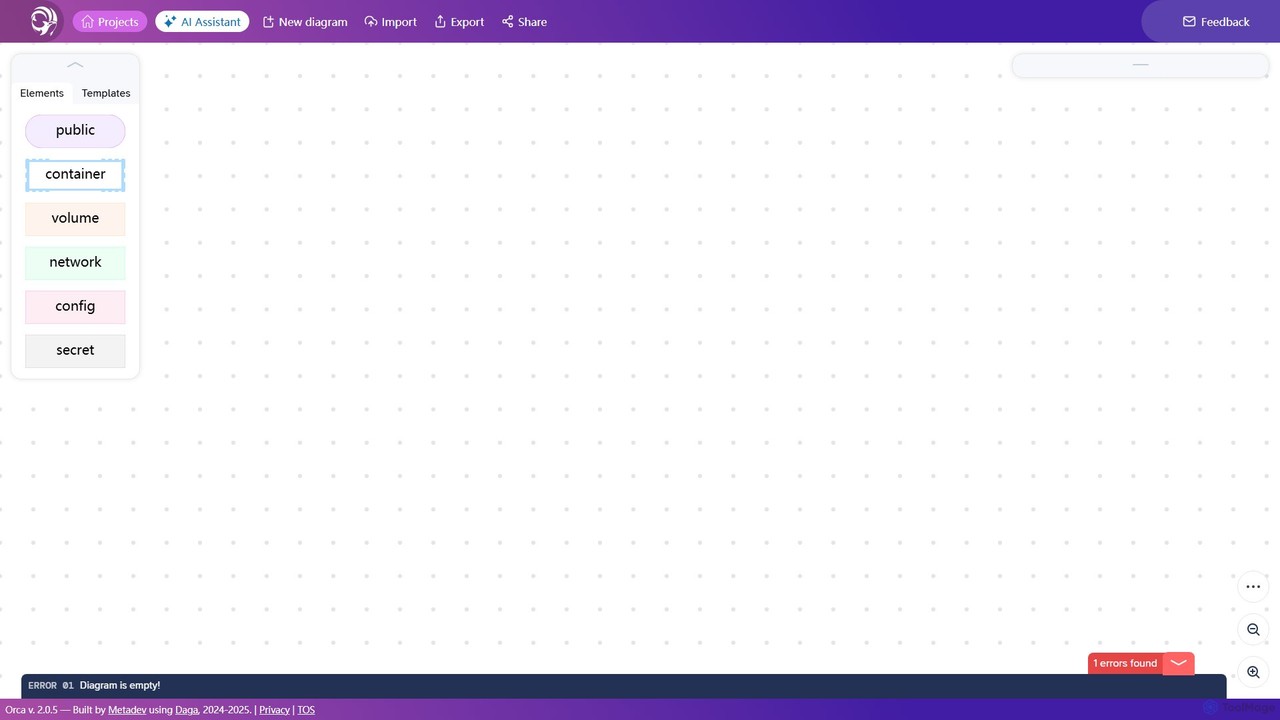
Orca is an intuitive visual tool for designing and managing containerized application architectures. It simplifies the complexity of …

1.3K

About Visual Programming

Visual Programming is a method of creating software applications and systems by manipulating graphical elements rather than writing traditional text-based code. These tools utilize intuitive drag-and-drop interfaces, flowcharts, or block-based systems to represent program logic and data flow. It significantly lowers the barrier to entry for programming, enabling non-developers and domain experts within the broader productivity landscape to build complex automations and applications efficiently.

Core Features

  • Graphical Interface: Provides an intuitive visual environment for designing program logic.
  • Drag-and-Drop Components: Allows users to assemble programs by connecting pre-built blocks or nodes.
  • Real-time Feedback: Offers immediate visual cues and debugging capabilities during development.
  • Integration Capabilities: Connects with various APIs, databases, and external services to extend functionality.
  • Workflow Automation: Facilitates the creation of automated processes and data pipelines.

Applicable Scenarios

Visual Programming tools are ideal for individuals and teams looking to automate repetitive tasks, rapidly prototype applications, or teach programming concepts without deep coding knowledge. They are widely used in business process automation, data orchestration, and interactive content creation, empowering users to build solutions quickly and visually.

How to Choose

When selecting a Visual Programming tool, consider its ease of use and learning curve for your team, the breadth of its integration ecosystem with your existing tools, and its scalability to handle future project complexity. Evaluate the available components, community support, and whether it aligns with your specific project requirements for data processing, UI development, or workflow automation.

Visual ProgrammingUse Cases

1

Automating Business Workflows

Business analysts or operations managers use visual programming to design and automate complex multi-step processes, such as customer onboarding, invoice processing, or data synchronization between different enterprise systems. This reduces manual effort and ensures consistency across operations, leading to significant time and cost savings.

2

Rapid Application Prototyping

Product designers and entrepreneurs leverage visual programming to quickly build functional prototypes of web or mobile applications. They can visually define user interfaces, backend logic, and data interactions, allowing for faster iteration and validation of ideas before committing to full-scale development, accelerating time-to-market.

3

Data Integration and Transformation

Data analysts or scientists utilize visual programming platforms to connect disparate data sources, extract relevant information, transform it into a usable format, and load it into analytical tools or databases. This simplifies complex ETL (Extract, Transform, Load) pipelines without writing extensive code, making data preparation more accessible.

4

Building Custom Chatbots

Marketing professionals or customer service teams employ visual programming to design interactive chatbot flows. They can visually map out conversation paths, integrate with CRM systems, and define responses based on user input, creating intelligent virtual assistants without needing a developer, enhancing customer engagement and support efficiency.

5

IoT Device Automation

Smart home enthusiasts or industrial engineers use visual programming to create custom automation rules for IoT devices. They can visually link sensor inputs to actuator outputs, define schedules, and integrate with cloud services, enabling sophisticated control over connected environments without complex coding, simplifying smart system management.

6

Educational Programming

Educators introduce programming concepts to students using visual programming environments. The block-based or flowchart interfaces make abstract concepts like loops, conditionals, and variables tangible and easier to grasp, fostering computational thinking skills in a fun and accessible way, preparing students for future technical roles.

Visual ProgrammingFrequently Asked Questions