Gamaa
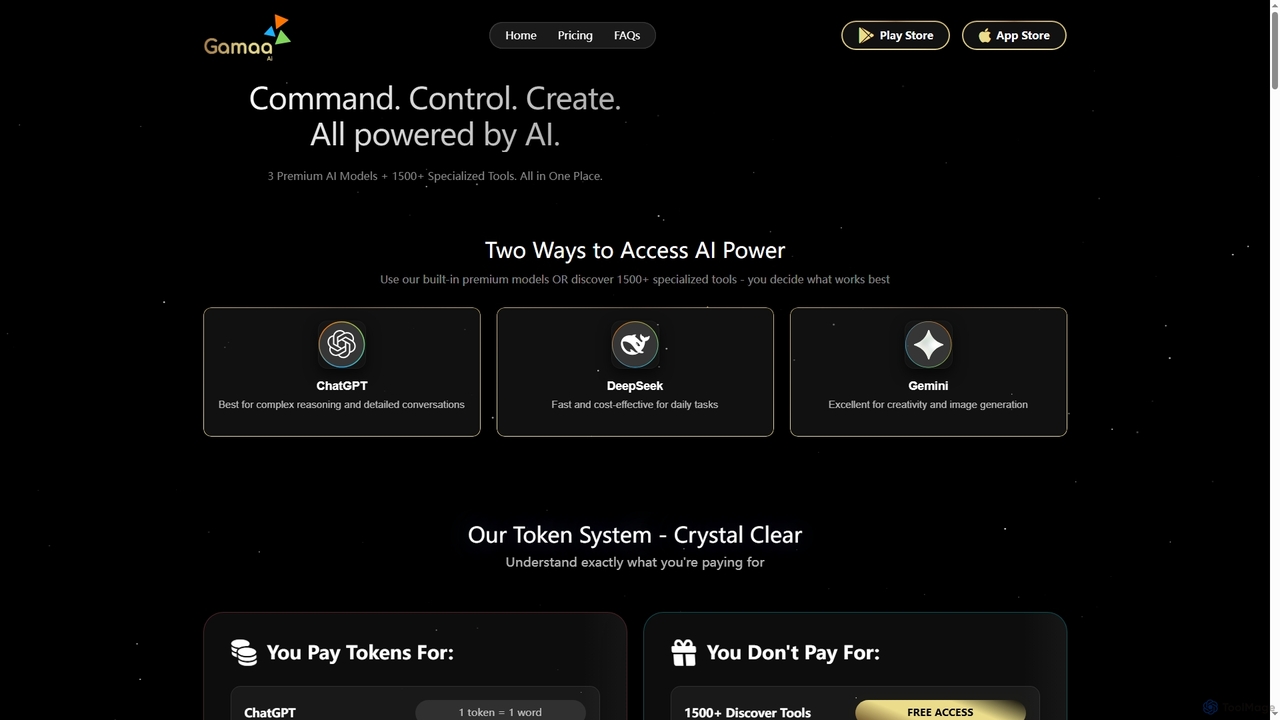
Gamaa is an advanced AI platform offering a unified chat interface that integrates the reasoning power of DeepSeek, …
Gamaa is an advanced AI platform offering a unified chat interface that integrates the reasoning power of DeepSeek, the creativity of ChatGPT, and the data context of Gemini. It provides access to over 1500 AI tools for writing, coding, analytics, and research, alongside a trending gallery of prompts and workflows. Its flexible credit system ensures users only pay for what they generate.
About Management
"Management" in prompt engineering refers to AI-powered tools designed to organize, version, test, and deploy prompts efficiently. These tools provide structured frameworks for the entire prompt lifecycle, from initial creation to ongoing optimization. They enable teams to maintain consistency, track performance, and facilitate collaboration across various AI applications. By centralizing prompt assets, these platforms significantly streamline the development and deployment of robust AI interactions, ensuring scalability and reliability.
Core Features
- Prompt Versioning: Tracks changes to prompts, allowing rollbacks and comparison of different iterations.
- Prompt Library: Centralized repository for storing, categorizing, and searching reusable prompts and templates.
- Performance Testing: Evaluates prompt effectiveness against predefined metrics and datasets to identify optimal versions.
- Access Control: Manages user permissions for prompt creation, editing, and deployment within teams.
- Deployment Pipelines: Automates the integration and deployment of tested prompts into AI applications.
Applicable Scenarios
Organizations and teams heavily reliant on AI models for content generation, customer service, or data analysis benefit greatly. For instance, a marketing agency managing hundreds of AI-generated ad copies needs robust versioning and a shared library to maintain brand voice and campaign effectiveness. Developers building AI-powered applications use these tools to ensure consistent prompt performance across different environments and to quickly iterate on prompt designs, accelerating feature delivery and reducing errors.
How to Choose
When selecting a prompt management tool, consider its integration capabilities with your existing AI platforms and development workflows, such as popular LLM APIs or internal systems. Evaluate the robustness of its version control, the flexibility of its prompt library features for categorization and search, and its support for comprehensive performance testing and A/B experimentation. Scalability for team collaboration, granular access control, and the ease of deploying prompts into production environments are also crucial factors for long-term success.

ManagementUse Cases
Version Control for AI Content Prompts
Content teams frequently iterate on prompts for blog posts, social media, or marketing copy. A prompt management tool allows content creators to track every version of a prompt, compare output quality, and revert to previous successful iterations, ensuring brand voice consistency and efficient content generation. This prevents loss of effective prompts and streamlines content updates.
Centralized Prompt Library for Chatbots
Customer service departments deploying AI chatbots need a consistent set of prompts for common queries. Prompt management tools enable bot developers to create and maintain a centralized library of tested, high-performing prompts for FAQs, troubleshooting, and escalation paths. This ensures uniform responses, reduces response time, and simplifies bot maintenance and updates across multiple channels.
A/B Testing Prompts for Marketing Performance
Marketing analysts can use prompt management platforms to A/B test different prompt variations for ad copy generation or campaign messaging. By deploying two versions of a prompt to generate content for a small segment of the audience and analyzing engagement metrics, teams can identify which prompt yields better conversion rates or click-through rates, leading to data-driven campaign optimization.
Collaborative Prompt Development for AI Apps
Software engineering teams building AI-powered features often require multiple developers to contribute to prompt design. A prompt management system facilitates collaborative editing, review, and approval workflows for prompts, similar to code repositories. This ensures quality control, prevents conflicts, and accelerates the integration of AI capabilities into applications.
Consistent Prompt Deployment Across Models
Enterprises often use various AI models (e.g., GPT-3, Claude, custom models) or deploy applications across different environments (dev, staging, production). Prompt management tools ensure that the same, validated prompts are consistently applied across all models and environments, preventing discrepancies in AI behavior and simplifying compliance and auditing processes.
Automated Prompt Deployment Pipelines
DevOps teams can leverage prompt management tools to integrate prompt updates into their continuous integration/continuous deployment (CI/CD) pipelines. Once a prompt is tested and approved, it can be automatically deployed to production AI services, reducing manual errors, accelerating feature releases, and ensuring that AI applications always use the latest optimized prompts.