ToolMage
Sign in

Best 4 Prompt Library AI tools for Prompt Engineering

Popular Prompt Library AI tools in Prompt Engineering include Prompts Chat, AIDiscoveryBoards, Banana Prompt Lab, and EasyPrompt Library, helping you work more efficiently.

Prompts Chat
Free

Prompts Chat

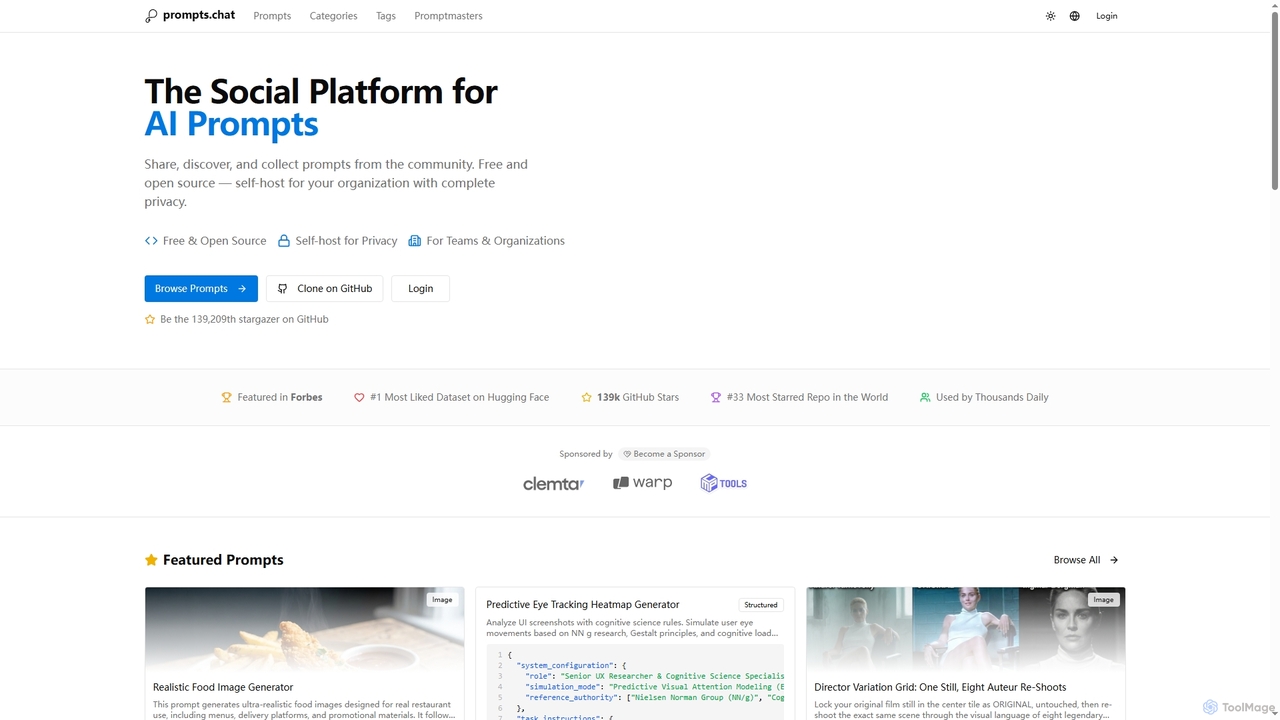
Prompts Chat is a free and open-source social platform for AI prompts, enabling users to share, discover, and collect high-quality prompts from a vibrant community. It offers self-hosting options for enhanced privacy, making it ideal for individuals and organizations seeking to leverage AI effectively.

Knowledge Sharing
Visits 185.4KFavorites 87Likes 104
Banana Prompt Lab

Banana Prompt Lab

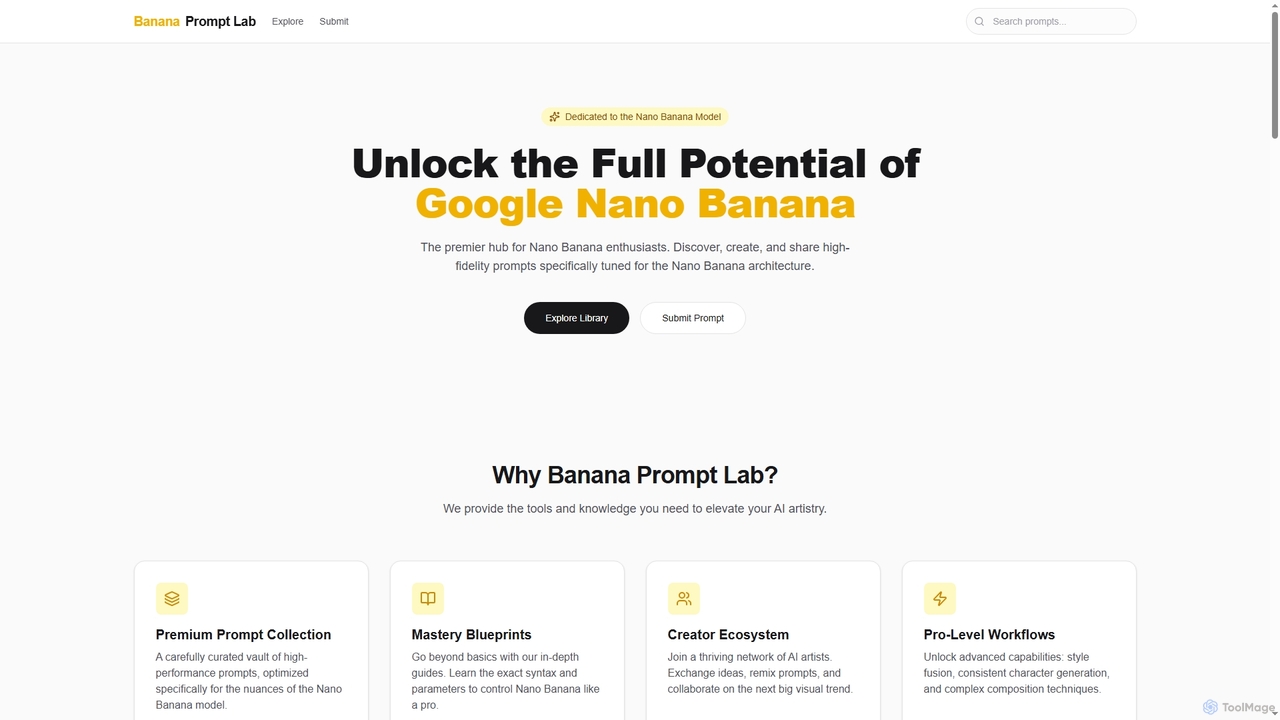
Banana Prompt Lab is the premier online platform dedicated to Google's Nano Banana model, offering a curated library of high-fidelity prompts, in-depth educational resources, and a vibrant creator community. It empowers artists and designers to master prompt engineering for advanced AI art generation, focusing on specific architecture nuances.

Ai Art Generation
Visits 5.4KFavorites 129Likes 128
AIDiscoveryBoards

AIDiscoveryBoards

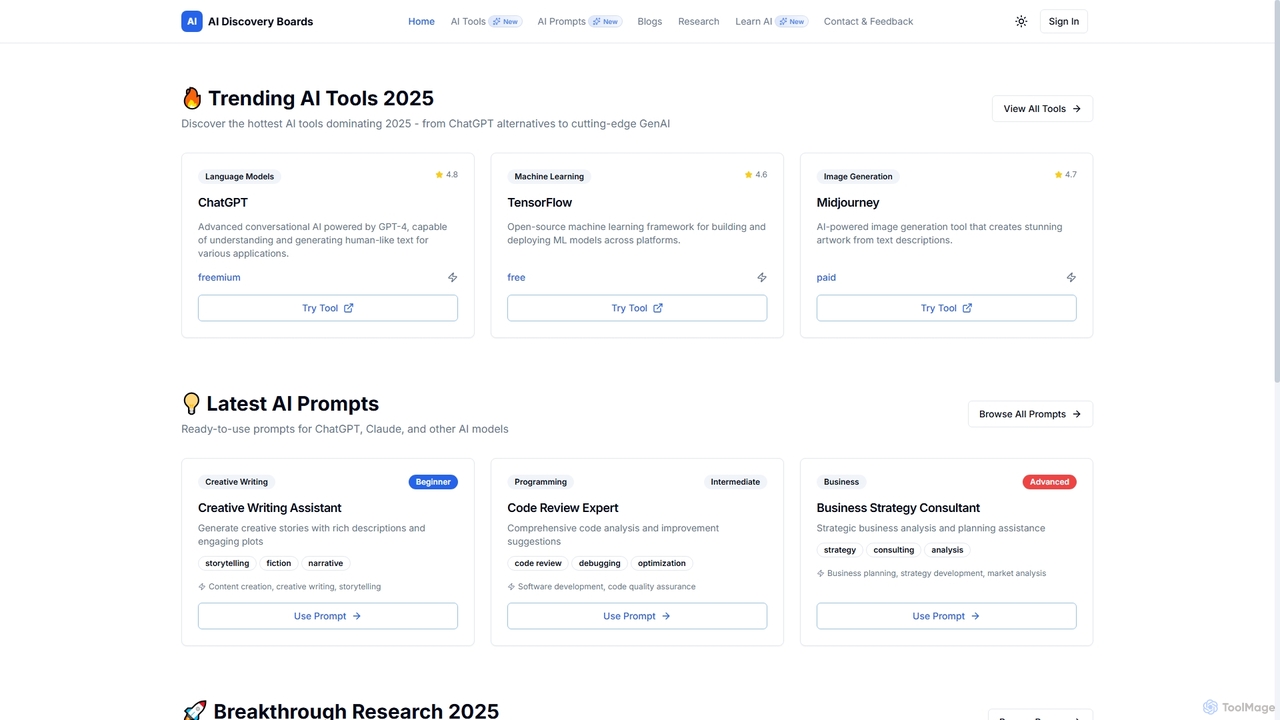
AIDiscoveryBoards is a comprehensive online platform designed to help users discover trending AI tools, explore the latest AI prompts, delve into groundbreaking AI research papers, and access curated AI learning resources. It serves as a central hub for staying updated on the rapidly evolving artificial intelligence landscape.

Tool Directory
Visits 5.5KFavorites 142Likes 140
EasyPrompt Library
Free

EasyPrompt Library

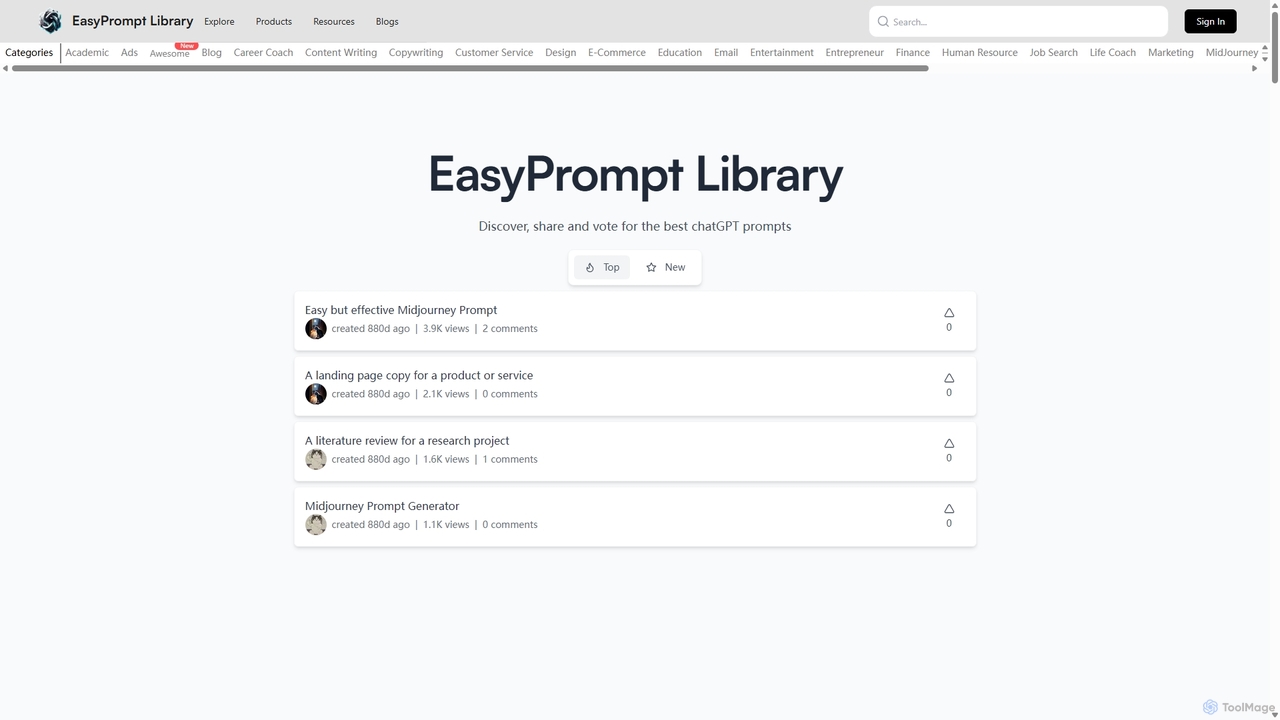
A community-driven platform to discover, share, and vote on the best prompts for AI models like ChatGPT and Midjourney. Access a vast, categorized library of high-quality prompts to enhance your AI-generated content, from marketing copy and academic research to stunning digital art.

Image Generation
Visits 5.4KFavorites 153Likes 170

About Prompt Library

A Prompt Library is a curated collection of pre-written instructions designed to guide AI models like large language models or image generators. These platforms provide tested, optimized, and categorized prompts that help users achieve specific, high-quality results without extensive trial and error. By offering a repository of successful examples, Prompt Libraries save time, provide creative inspiration, and serve as a valuable learning resource for mastering prompt engineering. They bridge the gap between user intent and AI output, ensuring more consistent and predictable outcomes.

Core Features

  • Categorized Collections: Prompts are organized by task, industry, AI model (e.g., GPT-4, Midjourney), or style for easy browsing.
  • Search and Filtering: Advanced search functions allow users to quickly find relevant prompts based on keywords, tags, or performance metrics.
  • Community Ratings and Feedback: Users can rate, comment on, and view the results of prompts, helping to identify the most effective ones.
  • One-Click Copying: Functionality to instantly copy a prompt for immediate use in a target AI application.
  • Prompt Templates: Structured prompts with variables that users can customize for their specific needs.

Use Cases

Prompt Libraries are widely used by content creators, marketers, developers, and artists. For instance, a social media manager can find proven prompts for generating engaging post captions, while a developer can access optimized prompts for code generation or debugging. Artists and designers use these libraries to discover complex prompt structures for creating specific visual styles with AI image generators.

How to Choose

When selecting a Prompt Library, consider the following: 1. AI Model Specificity: Ensure the library offers prompts tailored to the AI models you use. 2. Library Size and Diversity: A larger, more diverse collection provides more options for various tasks. 3. Quality Control and Community: Look for platforms with active communities and a clear system for vetting prompt quality. 4. Ease of Use: The interface should be intuitive, allowing for quick searching, filtering, and copying of prompts.

Prompt Library use cases

1

Accelerate Marketing Content Creation

A marketing professional needs to create a week's worth of social media content for a new product launch. Instead of brainstorming from scratch, they access a Prompt Library and search for 'product launch announcement' and 'customer testimonial post'. They find several high-quality, structured prompts, copy them, and adapt them with their product details. This process reduces content creation time significantly, ensures brand messaging consistency, and provides fresh ideas to avoid creative fatigue.

2

Streamline AI Art Generation

An artist wants to create a series of images in a specific 'cyberpunk noir' style using an AI image generator like Midjourney. Crafting such a complex prompt can be difficult. By using a Prompt Library, the artist can search for prompts tagged with 'cyberpunk' and 'noir', finding examples with detailed parameters for lighting, camera angles, and artistic influences. They can then use these proven prompts as a starting point, modifying them to fit their unique vision, which dramatically speeds up the creative iteration process.

3

Enhance Developer Productivity

A software developer is working on a new feature and needs to write a complex SQL query to fetch specific data. Instead of writing it from scratch, they search a developer-focused Prompt Library for 'SQL query for user segmentation'. They find a robust prompt template that asks for table names, conditions, and desired output columns. By filling in the variables, they get a functional and optimized query from an LLM in minutes, saving significant development and debugging time.

4

Overcome Writer's Block with Creative Starters

A novelist is struggling to start a new chapter. They feel stuck and uninspired. To break through this block, they visit a Prompt Library and browse the 'Creative Writing' category. They find prompts like 'Write a story that begins with a mysterious package arriving' or 'Describe a character who can talk to ghosts'. One of these prompts sparks an idea, providing the initial momentum needed to begin writing again. The library acts as a creative partner, offering endless starting points for storytelling.

5

Standardize Business Communication Tasks

A project manager needs to send weekly progress reports to stakeholders. To ensure consistency and save time, they use a Prompt Library to find a template for a 'professional project status update email'. This template outlines the key sections: summary, milestones achieved, challenges, and next steps. Each week, the manager uses this prompt, filling in the specific details. This standardizes communication, reduces the mental load of drafting emails, and ensures all critical information is included, improving clarity for all stakeholders.

6

Learn Effective Prompt Structuring

A student new to prompt engineering wants to understand what makes a good prompt. They use a Prompt Library not just for copying, but as an educational tool. By analyzing highly-rated prompts for various tasks, they can deconstruct their structure. They observe how experts use specific keywords, define context, set constraints, and format outputs. This reverse-engineering process is a practical way to learn the principles of effective prompting, accelerating their learning curve far more quickly than through trial and error alone.

Prompt Library FAQ

What is a Prompt Library?

A Prompt Library is a digital collection or marketplace of pre-written, tested, and categorized prompts for AI models. It functions as a resource hub where users can find, share, and use effective prompts to generate desired outputs from AI systems like ChatGPT or Midjourney. Unlike starting from scratch, a library provides proven templates that save time, improve result quality, and help users learn how to structure better prompts by example.

How do I choose the right Prompt Library?

To choose the right Prompt Library, consider these factors:

  • AI Model Support: Does it specialize in prompts for the models you use (e.g., GPT-4, Stable Diffusion, Claude)?
  • Content Quality and Curation: Is there a system for vetting prompts? Look for community ratings, staff picks, or clear quality standards.
  • Search and Discovery: How easy is it to find what you need? Good filtering options by category, tag, or popularity are essential.
  • Community vs. Premium: Decide if a free, community-driven library suits your needs or if a premium, professionally curated library offers better value for your specific use case.
What is the difference between a Prompt Library and a Prompt Builder?

A Prompt Library is a collection of complete, ready-to-use prompts. Its primary purpose is discovery and reuse, offering proven examples that work. In contrast, a Prompt Builder (or Generator) is a tool that helps you construct a prompt from scratch. It provides a structured interface, suggests components, and helps you assemble different elements (like style, tone, format) into a new, custom prompt. In short, a library gives you a finished product, while a builder gives you the tools to create your own.

Who benefits most from using a Prompt Library?

Virtually anyone using generative AI can benefit, but some groups find them particularly useful:

  • Beginners: They provide a great starting point and learning tool to understand how effective prompts are crafted.
  • Content Creators & Marketers: They can quickly find prompts for blogs, social media, and ad copy, speeding up their workflow.
  • Developers: They can find optimized prompts for specific coding tasks, API integration, or data analysis.
  • Artists & Designers: They can discover complex and nuanced prompts to achieve specific aesthetic styles in AI image generation.
Are prompts from a Prompt Library free to use?

It depends on the platform. Many Prompt Libraries operate on a freemium model. They offer a large selection of free, community-submitted prompts that are available for anyone to use. They may also offer premium or pro-level prompts that are professionally crafted and tested, available through a subscription or one-time purchase. Always check the terms of use for the specific library and prompt, especially for commercial projects, to ensure you comply with any licensing requirements.