ToolMage
Sign in

Best 6 Prompts AI tools

Popular Prompts AI tools include PromptDen, neoprompt, Prompt Library, Promptsideas, promptrr.io, and Promptzy, helping you work more efficiently.

Promptzy
Freemium

Promptzy

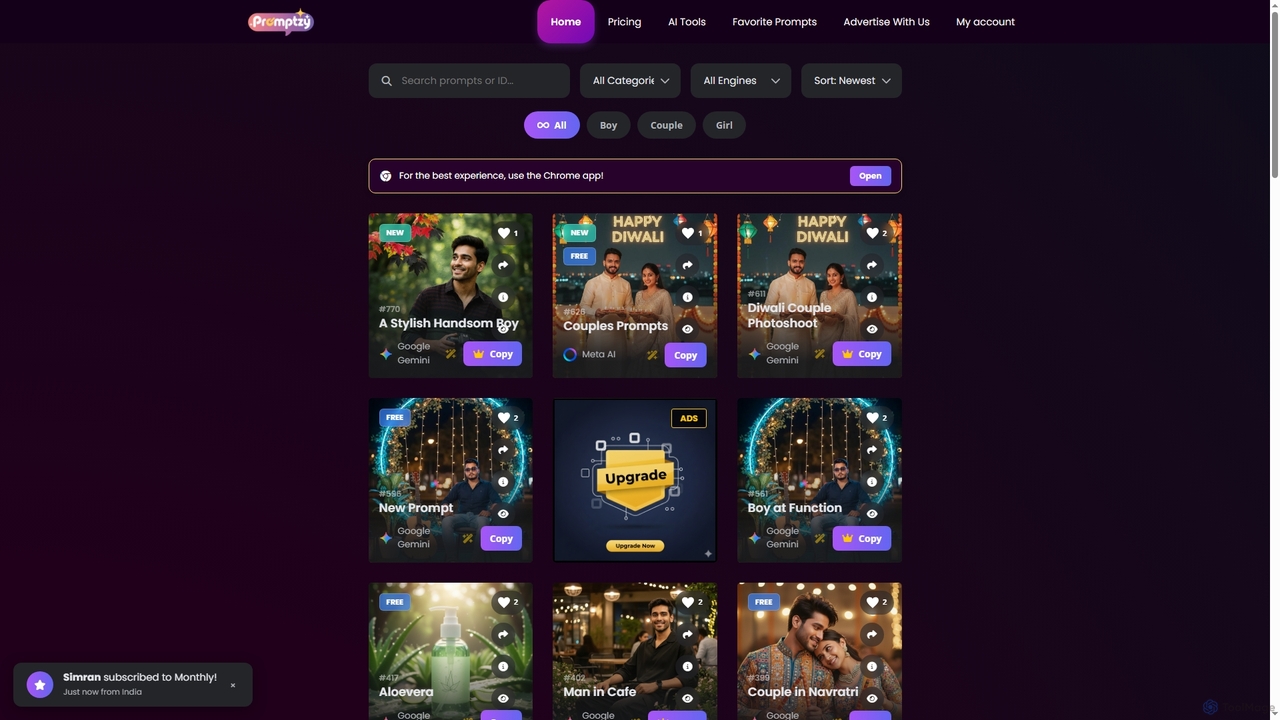
Promptzy is an AI prompt marketplace offering high-quality, ready-to-use prompts for various AI engines like ChatGPT, Google Gemini, and Midjourney. It helps creators, marketers, and businesses save time and enhance content generation, with free daily prompts and premium plans available.

Image Prompts
Visits 4.1KFavorites 140Likes 139
Promptsideas
Freemium

Promptsideas

A premier marketplace for high-quality AI prompts, connecting prompt engineers with creators, marketers, and developers. Discover, buy, and sell verified prompts for leading AI models like Midjourney, ChatGPT, DALL-E, and Stable Diffusion to streamline your creative and business workflows.

Image Generation
Visits 14.1KFavorites 127Likes 112
neoprompt
Freemium

neoprompt

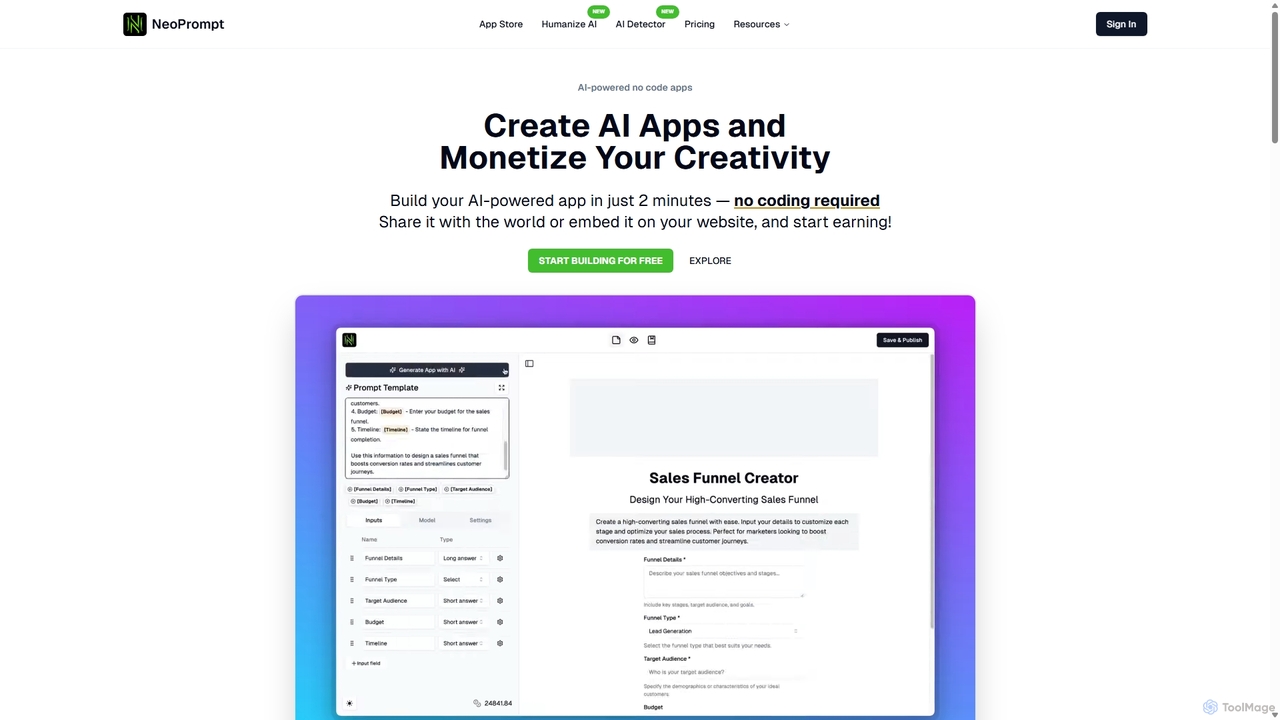
neoprompt is a versatile no-code platform that allows users to build and monetize custom AI applications in minutes. It also features an extensive library of over 150,000 prompts for popular AI models like Midjourney, ChatGPT, and Claude, empowering creators and businesses to leverage AI without technical barriers.

Low Code
Visits 50KFavorites 137Likes 142
promptrr.io
Freemium

promptrr.io

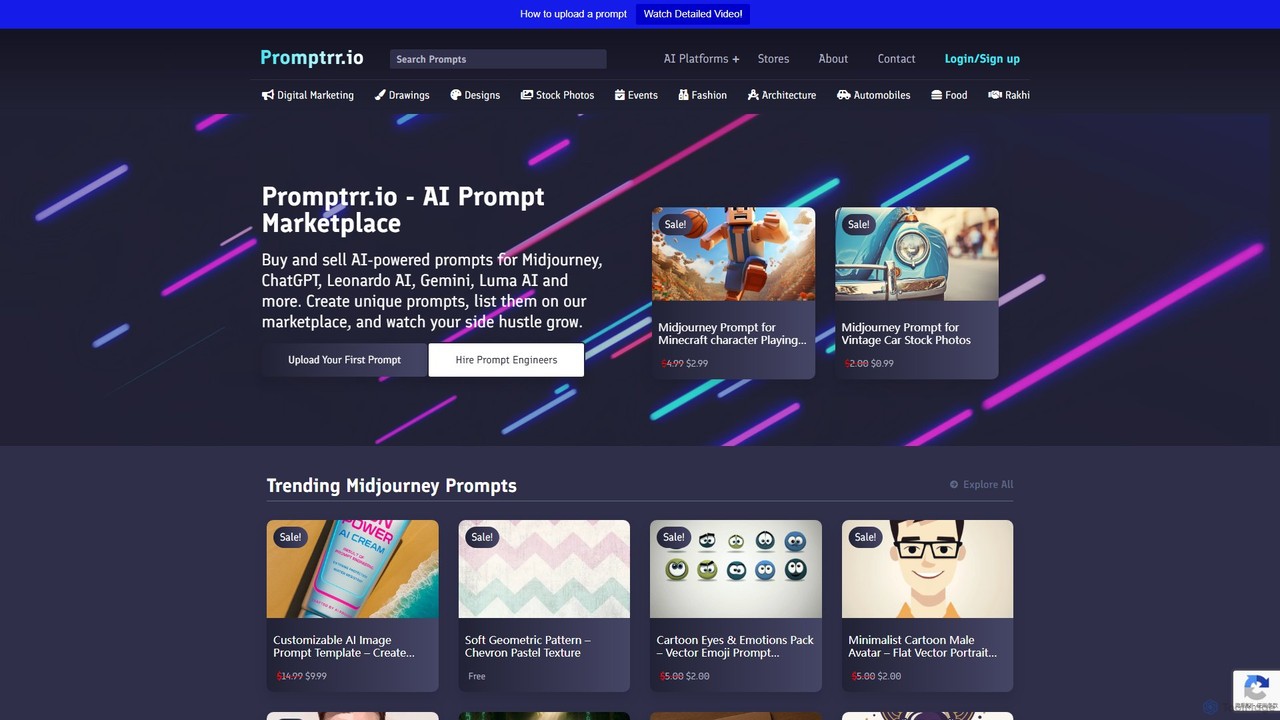
A comprehensive marketplace for buying and selling high-quality AI prompts. Promptrr.io connects prompt engineers with users of tools like ChatGPT, Midjourney, Leonardo AI, and Gemini, offering a vast library of prompts for art, marketing, productivity, and more. Creators can monetize their skills, while users can find the perfect prompt to enhance their AI-generated results.

Image Prompts
Visits 5.5KFavorites 143Likes 102
PromptDen
Freemium

PromptDen

PromptDen is a community-driven platform and browser extension for discovering, sharing, and managing AI prompts. It supports various models like ChatGPT, MidJourney, and Gemini, helping users from developers to artists enhance their creativity and productivity with a vast, curated library of high-quality prompts.

Image Generation
Visits 114KFavorites 123Likes 132
Prompt Library
Free

Prompt Library

A massive, free library of over 25,000 prompts for leading AI models like Midjourney, ChatGPT, Gemini, and DALL-E. Find inspiration and copy-paste high-quality prompts for image and text generation, saving time and enhancing your creative projects.

Image Generation
Visits 42.5KFavorites 113Likes 111

About Prompts

Prompts tools are specialized platforms designed to help users create, discover, manage, and optimize text-based instructions for generative AI models. These tools function as a crucial interface between human intent and AI output, enabling the generation of more precise, consistent, and high-quality results. By providing structured environments and resources, they empower users of all skill levels to master prompt engineering and unlock the full potential of AI for creative, analytical, or technical tasks. Many platforms also feature marketplaces for sharing or selling effective prompts.

Core Features

  • Prompt Marketplace: A platform for buying, selling, and discovering pre-built prompts for various AI models and tasks.
  • Prompt Builder: An interactive interface that guides users in constructing complex and effective prompts, often using templates or modular components.
  • Prompt Optimizer: Analyzes and refines existing prompts to improve clarity, efficiency, and the quality of the AI's output.
  • Prompt Library: A personal or team workspace to save, organize, categorize, and reuse successful prompts for future use.

Use Cases

Prompts tools are widely used by content creators, marketers, developers, and digital artists. For instance, a marketing team can use a shared prompt library to ensure brand voice consistency across all AI-generated copy. Developers utilize prompt optimizers to reduce token consumption and improve response accuracy in their applications. Digital artists browse marketplaces to find inspiration or purchase complex prompts for creating specific visual styles.

How to Choose

When selecting a Prompts tool, first consider its compatibility with the AI models you use (e.g., GPT-4, Midjourney, Stable Diffusion). Evaluate the core features: do you need a marketplace for ideas, a builder for complex tasks, or a library for team collaboration? Assess the user interface's suitability for your technical skill level. Finally, consider the community and support resources available, as an active community can be a valuable source of high-quality prompts and techniques.

Featured tool rankings

Prompts use cases

1

Creating High-Quality AI Art Prompts

A digital artist aims to generate a series of images in a consistent 'biopunk' style. Instead of relying on trial and error, they use a prompt builder tool. The tool allows them to systematically add parameters like 'organic machinery', 'hyper-detailed textures', and specify camera angles like 'low-angle shot' and lighting such as 'volumetric neon lighting'. They save this complex prompt as a template in their personal library, enabling them to produce a cohesive collection of artwork with a unique and replicable aesthetic, significantly speeding up their creative workflow.

2

Standardizing Brand Voice for Marketing Copy

A corporate marketing team needs to ensure all AI-generated content, from social media posts to email newsletters, maintains a consistent brand voice: 'professional, yet approachable and witty'. They use a prompt library tool to create and share a set of 'master prompts'. These prompts include core instructions about tone, target audience, and forbidden words. When a team member needs to generate new copy, they start with a master prompt, adding specific details for the task. This system ensures brand consistency, reduces editing time, and simplifies onboarding for new team members.

3

Optimizing API Prompts for Cost and Performance

A developer is building an application that uses a Large Language Model (LLM) API to summarize news articles. High API costs and slow response times are major concerns. They use a prompt optimizer tool to test different versions of their summarization prompt. The tool allows them to A/B test variations, such as asking for a bulleted list versus a paragraph, and measures key metrics like token count, latency, and factual accuracy. By identifying the most efficient prompt structure, the developer reduces average token usage by 30% and improves response speed, making the application more scalable and cost-effective.

4

Discovering Creative Ideas via a Prompt Marketplace

A content creator is experiencing writer's block and needs fresh ideas for their YouTube channel about historical events. They turn to a prompt marketplace and filter for 'history' and 'video script ideas'. They discover a top-rated prompt designed to generate 'what if' scenarios, such as 'What if the Library of Alexandria never burned down?'. By purchasing and using this prompt, they generate dozens of compelling video concepts. The marketplace not only provides a specific solution but also inspires a new content series for their channel, saving hours of brainstorming.

5

Crafting Complex Prompts for Academic Research

A university researcher needs to analyze hundreds of scientific papers on climate change. They use a prompt builder to create a multi-step 'chain' prompt. The first step instructs the AI to identify the core methodology of a paper. The second step asks it to summarize the key findings. The final step requires the AI to list the paper's limitations and format the entire output as a structured JSON object. This sophisticated prompt, managed and refined within the tool, automates a significant portion of their literature review process, allowing them to focus on analysis and synthesis rather than manual data extraction.

6

Monetizing Expertise by Selling Prompts

An expert prompt engineer specializes in creating prompts for generating photorealistic architectural visualizations. They have developed a set of highly detailed prompts that consistently produce stunning results for different building types (e.g., 'modern minimalist villa', 'brutalist public library'). Instead of keeping this expertise private, they list these prompts for sale on a prompt marketplace. They provide sample images, detailed instructions, and suggested negative prompts. This allows them to create a passive income stream by monetizing their skills, while providing immense value to architects and designers who can achieve professional results without needing advanced prompt engineering knowledge.

Prompts FAQ

What are AI Prompts tools?

AI Prompts tools are software applications or platforms designed to help users create, manage, discover, and refine instructions (prompts) for generative AI models. They are not the AI models themselves (like GPT or Midjourney), but rather auxiliary tools that enhance the interaction with them. Key features often include prompt builders with guided interfaces, marketplaces for buying and selling high-quality prompts, and libraries for organizing and reusing your most effective prompts.

How do I choose the right Prompts tool?

To choose the right Prompts tool, consider these factors:

  • AI Model Compatibility: Ensure the tool supports the specific AI models you use, whether it's for text (GPT-4, Claude) or images (Midjourney, DALL-E 3).
  • Core Functionality: Determine your primary need. Do you want to discover new ideas (marketplace), build complex instructions (builder), improve existing prompts (optimizer), or manage a team's prompts (library)?
  • User Experience: Look for an interface that matches your skill level. Some tools offer simple templates for beginners, while others provide advanced features for expert prompt engineers.
  • Pricing Model: Compare pricing structures. Some are subscription-based, others charge per prompt or offer a freemium model. Choose one that aligns with your usage frequency and budget.
What is the difference between a prompt and a prompt tool?

A prompt is the direct instruction—a piece of text, question, or command—that you give to a generative AI model to get a response. For example, 'Write a short poem about the moon' is a prompt.

A prompt tool is the software or platform you use to help create, refine, or manage those prompts. It's a meta-level tool. For example, a prompt builder helps you add details and structure to the simple poem prompt, while a prompt marketplace would let you buy a more complex, pre-tested prompt for generating sonnets in the style of Shakespeare.

Why is 'prompt engineering' important?

Prompt engineering is the skill of crafting effective instructions to guide generative AI models toward a desired output. It's important because the quality, relevance, and accuracy of the AI's response are directly dependent on the quality of the prompt. A vague prompt like 'write about cars' will yield a generic result. A well-engineered prompt like 'Write a 500-word blog post comparing the fuel efficiency of 2023 hybrid sedans for a non-technical audience' will produce a much more specific and useful output. Prompt tools are designed to facilitate this engineering process.

Can I make money with AI prompts?

Yes, it is possible to monetize skills related to AI prompts. The most direct method is by selling high-quality, well-tested prompts on a prompt marketplace. Experts in specific domains (like art, marketing, or programming) can create and sell prompt packs that help others achieve professional results quickly. Additionally, strong prompt engineering skills are becoming a valuable asset in many professions. By mastering prompts, you can deliver higher quality work more efficiently, which can translate into better job opportunities or higher rates for freelance services.