Paladin Drones
Paladin Drones offers an all-in-one Drone as First Responder (DFR) solution for public safety. It autonomously dispatches LTE-enabled …
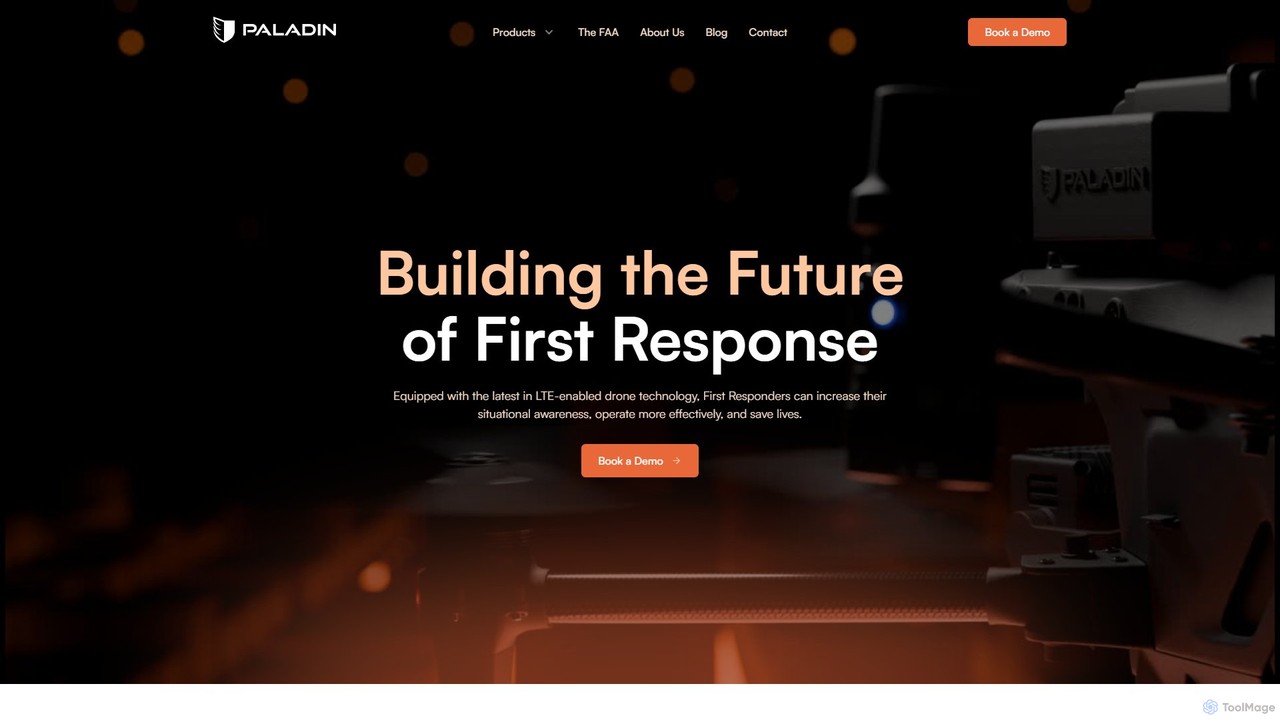
Paladin Drones offers an all-in-one Drone as First Responder (DFR) solution for public safety. It autonomously dispatches LTE-enabled drones to 911 calls, providing live video feeds to first responders within seconds. This enhances situational awareness, reduces response times, and improves the safety of officers and the community. The system includes hardware, software, and full FAA compliance support.
About Emergency Response
Emergency Response AI tools are specialized artificial intelligence applications designed to enhance the efficiency, speed, and effectiveness of managing and responding to critical incidents and disasters. These tools leverage advanced algorithms, real-time data analysis, and predictive modeling to provide actionable insights, automate critical tasks, and optimize resource deployment in high-stakes situations. They play a pivotal role within the broader public safety domain by enabling proactive preparedness, rapid decision-making, and coordinated actions during emergencies, ultimately minimizing harm and accelerating recovery.
Core Features
- Real-time Situational Awareness: Aggregates and analyzes diverse data streams (e.g., social media, sensor networks, news feeds) to create a unified, up-to-the-minute operational picture for responders.
- Predictive Modeling & Risk Assessment: Forecasts incident progression, identifies potential hotspots, and simulates various scenarios to inform strategic planning and resource pre-positioning.
- Automated Resource Allocation: Optimizes the deployment of personnel, vehicles, and equipment based on real-time incident needs, availability, and logistical constraints.
- Intelligent Communication & Alerting: Facilitates rapid, targeted dissemination of critical information and alerts to emergency personnel and affected populations via multiple channels.
- Post-Incident Analysis: Provides data-driven insights into response effectiveness, identifies bottlenecks, and suggests improvements for future emergency management protocols.
Applicable Scenarios
These tools are indispensable for emergency management agencies, public health organizations, and first responders. They are used in coordinating large-scale disaster relief efforts, managing public health crises by tracking disease spread, and optimizing search and rescue operations in complex environments.
How to Choose
When selecting Emergency Response AI tools, consider their data integration capabilities with existing systems, scalability to handle large-scale incidents, and reliability under pressure. Evaluate customization options to fit specific operational protocols, interoperability with other public safety platforms, and adherence to stringent data security and privacy standards.

Emergency ResponseUse Cases
Optimizing Disaster Relief Logistics
Emergency management agencies utilize AI to analyze real-time data on infrastructure damage, population displacement, and supply chain status during natural disasters. The AI system then recommends optimal routes and allocation strategies for distributing food, water, and medical aid, ensuring critical resources reach affected areas efficiently and minimizing delays in humanitarian efforts.
Predictive Wildfire Spread Modeling
Fire departments deploy AI tools that integrate weather forecasts, terrain data, vegetation maps, and historical fire behavior to predict wildfire paths and intensity. This allows incident commanders to proactively plan evacuation routes, strategically position firefighting resources, and establish containment lines, significantly enhancing public safety and reducing property loss.
Real-time Public Health Outbreak Tracking
Public health officials leverage AI to monitor and analyze vast amounts of data from hospitals, clinics, social media, and travel patterns to track the spread of infectious diseases. The system identifies emerging hotspots, forecasts future outbreak trajectories, and helps manage the efficient distribution of vaccines, medications, and medical personnel to critical areas.
Enhanced Search and Rescue Operations
Search and rescue teams employ AI-powered platforms to process and analyze data from drones, satellite imagery, and ground sensors in challenging environments. The AI can identify anomalies or potential signs of missing persons, optimize search patterns for ground teams, and prioritize areas for investigation, drastically reducing search times and improving success rates.
Automated Critical Infrastructure Monitoring
Utility companies use AI to continuously monitor critical infrastructure like power grids, water treatment plants, and communication networks, especially during extreme weather events. The AI detects anomalies, predicts potential failures before they occur, and automatically dispatches repair crews to specific locations, minimizing service disruptions and ensuring public safety.
Intelligent Mass Communication During Crises
Government agencies and emergency services utilize AI-driven communication platforms to disseminate targeted alerts and instructions to affected populations. The AI can segment audiences based on location, language, and specific needs, delivering timely and relevant information via SMS, social media, and public address systems, ensuring effective public guidance during emergencies.