CovertNest
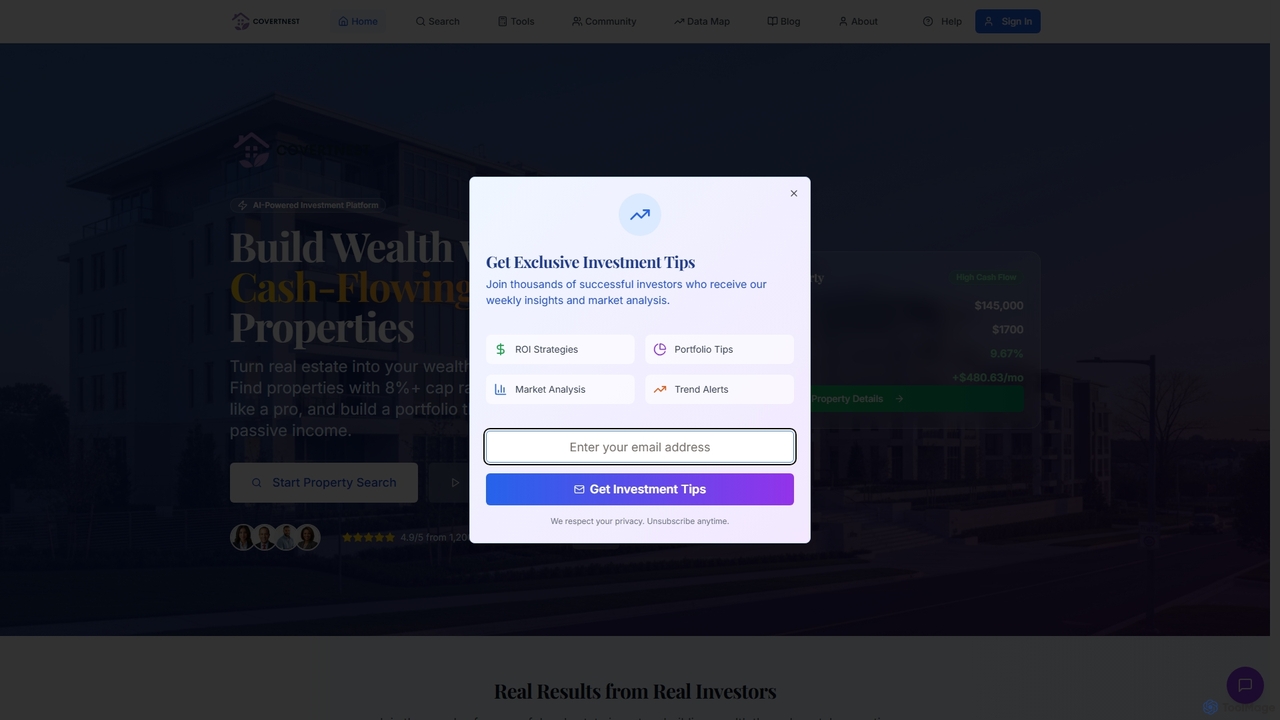
CovertNest is an AI-powered real estate investment platform designed to help investors find, analyze, and manage high-yield rental …
CovertNest is an AI-powered real estate investment platform designed to help investors find, analyze, and manage high-yield rental properties. It provides advanced search filters, comprehensive financial analysis tools, and personalized AI insights to build a cash-flowing portfolio, democratizing access to profitable investment opportunities.
Spatialzr
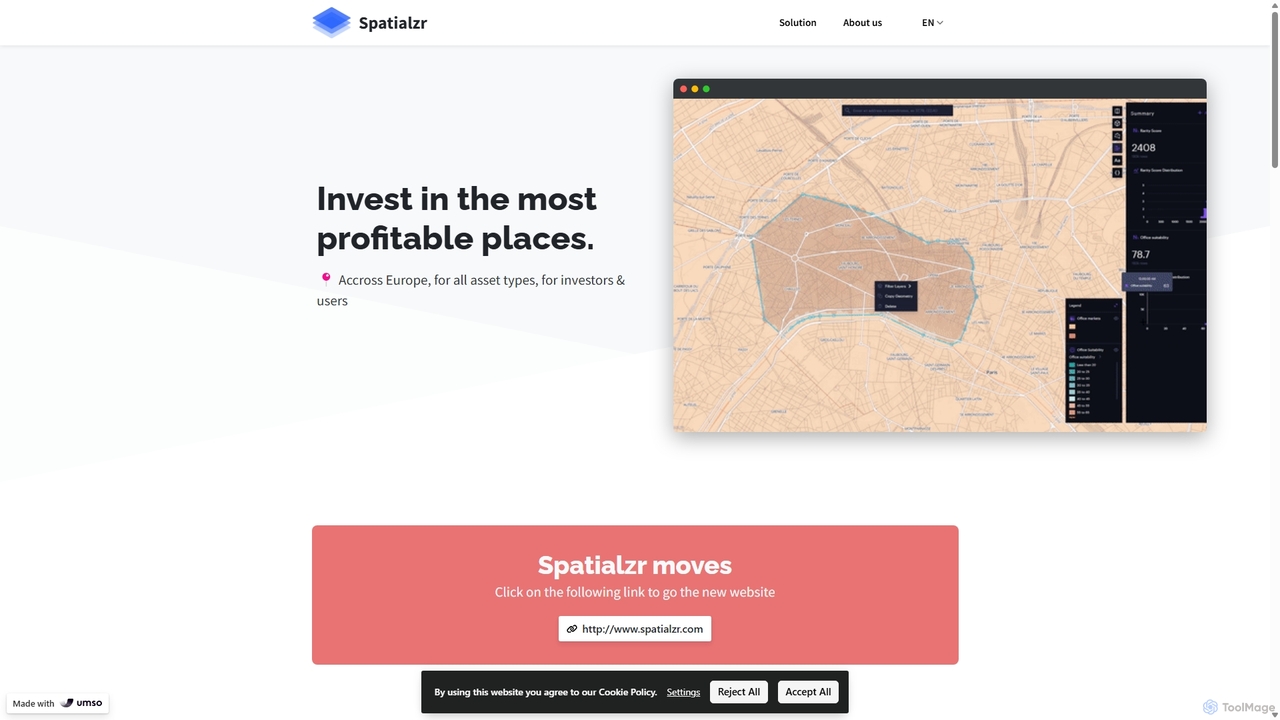
Spatialzr is an AI-powered platform designed for sustainable real estate investment and urban development. It leverages spatial data …
Spatialzr is an AI-powered platform designed for sustainable real estate investment and urban development. It leverages spatial data analysis and ESG principles to provide actionable insights, helping investors, developers, and planners make data-driven decisions that are both profitable and environmentally responsible. The tool promotes urban densification and resource conservation for building resilient future cities.
About Investment Analysis
AI Investment Analysis tools for real estate are specialized platforms that use machine learning to evaluate property profitability and market risks. These tools process vast datasets, including historical sales, rental income, and demographic trends, to generate predictive financial models. They empower investors, developers, and analysts to make data-driven decisions, accurately forecast returns, and identify high-potential opportunities. This analytical depth goes beyond traditional spreadsheets, offering dynamic risk assessment and future performance projections.
Core Features
- Predictive Valuation Modeling: Utilizes AI to forecast a property's future value (e.g., After Repair Value) based on market trends and property characteristics.
- Cash Flow & ROI Analysis: Automatically calculates key metrics like Cash-on-Cash Return, Cap Rate, and Net Operating Income over long-term horizons.
- Market Trend Identification: Analyzes macroeconomic data, population growth, and local market indicators to pinpoint emerging or declining neighborhoods.
- Risk Assessment: Models potential risks such as market volatility, interest rate changes, and unexpected vacancy rates to stress-test an investment.
- Comparable Property Analysis (Comps): Intelligently finds and adjusts comparable properties to provide a more accurate and data-backed current market valuation.
Use Cases
These tools are primarily used by individual real estate investors, property developers, real estate investment trusts (REITs), and financial analysts. They are essential during the due diligence phase of acquiring rental properties, commercial buildings, or land for development. They also support ongoing portfolio management by helping asset managers identify underperforming properties and optimize for higher returns.
How to Choose
When selecting an AI Investment Analysis tool, consider the quality and breadth of its data sources (e.g., MLS integration, public records). Evaluate the transparency of its analytical models and the ability to customize assumptions like inflation or rent growth. Also, assess its reporting capabilities and ease of use, ensuring it aligns with your specific investment strategy, whether it's fix-and-flip, long-term rentals, or commercial development.
Investment AnalysisUse Cases
Evaluating a Fix-and-Flip Property's Profitability
A real estate investor is considering a distressed property for a fix-and-flip project. They use an AI Investment Analysis tool to input the purchase price, estimated renovation costs, and projected holding period. The AI analyzes recent sales of similar renovated homes in the area (comps), local market appreciation rates, and seasonal demand. It then generates a detailed report predicting the After Repair Value (ARV), potential net profit, and ROI. This data-driven forecast helps the investor avoid emotional decisions and confidently determine if the project meets their minimum profit threshold before making an offer.
Forecasting Long-Term Rental Cash Flow
A buy-and-hold investor wants to analyze a potential rental property. Using an AI analysis tool, they input the property's price, down payment, loan terms, estimated taxes, and insurance. The AI pulls local rental market data to suggest a competitive rent price. It then projects the monthly and annual cash flow for the next 15 years, factoring in customizable assumptions for rent increases, vacancy rates, and maintenance expenses. The output includes key metrics like Cash-on-Cash Return and Cap Rate, providing a clear, long-term financial picture that helps the investor compare different properties objectively.
Identifying Undervalued Real Estate Markets
A real estate investment fund manager needs to identify new markets for capital deployment. They use an AI analysis platform to screen entire metropolitan areas. The tool analyzes dozens of data points simultaneously, such as population growth, job market trends, median income changes, and new construction permits. The AI identifies specific zip codes or neighborhoods that show leading indicators of future appreciation but where property values have not yet surged. This allows the fund to strategically enter markets early, maximizing potential returns before they become widely known and competitive.
Performing Due Diligence on a Commercial Property
A commercial real estate analyst is evaluating a multi-unit apartment building for acquisition. They upload the seller's rent roll and operating expense statements into an AI tool. The AI cross-references this information with its database of local market rents, vacancy rates, and typical operating costs for similar buildings. It flags discrepancies, such as overstated rental income or understated maintenance costs. The tool then generates an independent pro forma analysis, providing a more realistic valuation and cash flow projection. This helps the analyst negotiate a better price and avoid overpaying based on inflated seller claims.
Optimizing a Real Estate Investment Portfolio
An asset manager oversees a portfolio of 50 rental properties. They use an AI analysis tool to aggregate performance data for all assets. The AI analyzes each property's cash flow, appreciation, and loan-to-value ratio against current market conditions. It identifies the top-performing assets and flags underperforming ones that might be candidates for sale or a 1031 exchange. The platform can also run simulations, such as modeling the impact of refinancing several properties or selling one to acquire two others. This provides the manager with strategic insights to continuously rebalance and optimize the portfolio for maximum overall return.
Comparative Analysis for a New Development Project
A property developer is deciding between three potential land parcels for a new condominium project. They use an AI investment tool to conduct a feasibility study for each site. The developer inputs land cost, estimated construction costs, and unit mix for each scenario. The AI analyzes local zoning laws, market absorption rates for new condos, and projected sales prices based on comparable new developments. It generates a side-by-side comparison of the potential ROI, development timeline, and risk factors for each parcel. This comprehensive analysis enables the developer to select the most financially viable site with the highest probability of success.