
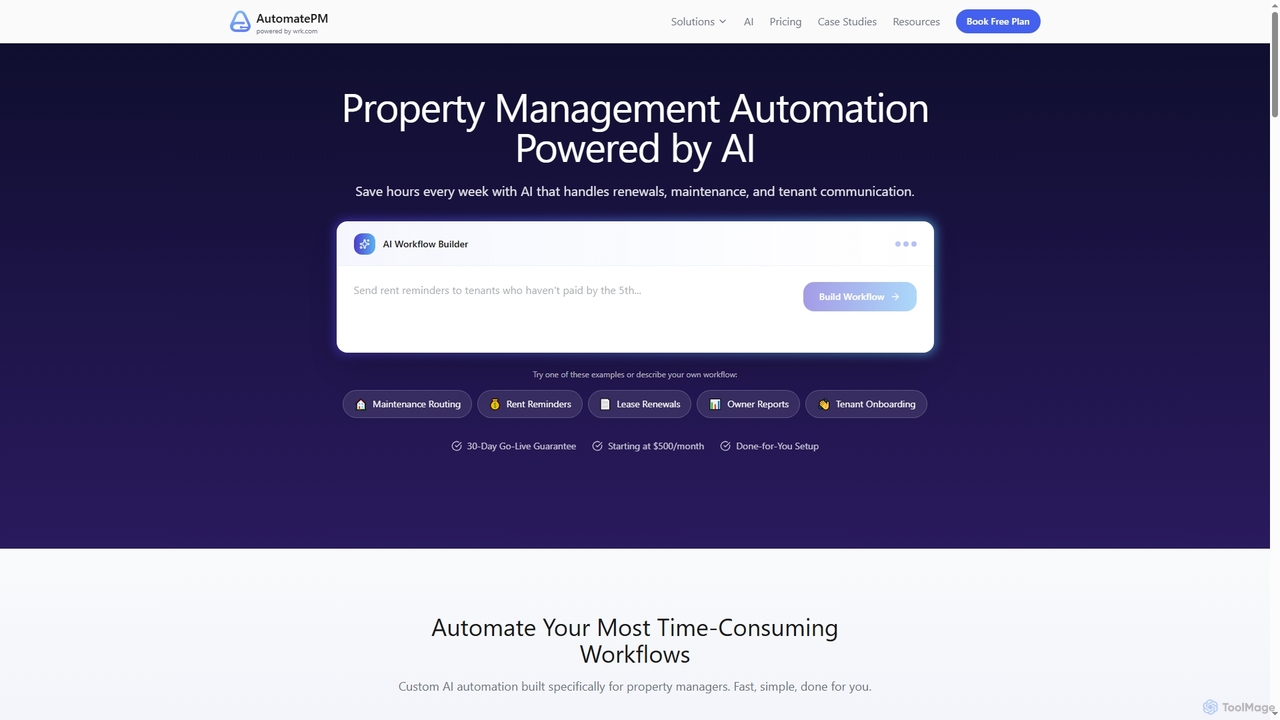
AutomatePropertyManagement
AutomatePropertyManagement is an AI-powered platform designed to streamline property management workflows, saving property managers 20-40 hours per month. …
AutomatePropertyManagement is an AI-powered platform designed to streamline property management workflows, saving property managers 20-40 hours per month. It automates tasks like lease renewals, maintenance requests, tenant communication, rent collection, owner reports, and tenant onboarding, ensuring efficiency and reducing operational costs.
About Software
AI Real Estate Software is a category of specialized tools that leverage artificial intelligence to optimize property management, investment analysis, and client interactions. These platforms utilize machine learning models and data analytics to process vast market datasets, predict trends, and automate complex tasks. The primary value lies in providing agents, investors, and managers with data-driven insights for more accurate decision-making and enhanced operational efficiency. They transform traditional real estate practices by introducing predictive capabilities and intelligent automation.
Core Features
- Predictive Market Analysis: Forecasts property value trends, rental demand, and market fluctuations using historical and real-time data.
- Automated Valuation Models (AVM): Provides instant, AI-driven property valuations by analyzing comparable sales, location, and property features.
- AI Lead Scoring: Automatically identifies and prioritizes high-intent leads based on behavior, demographics, and engagement patterns.
- Intelligent Document Processing: Uses NLP to extract key information from contracts, leases, and legal documents, reducing manual review time.
- AI-Powered Virtual Staging: Generates realistic virtual furniture and decor for property photos to enhance marketing appeal.
Use Cases
This software is primarily used by real estate agencies, property investment firms, property management companies, and construction developers. For instance, an agent can use AI lead scoring to focus on the most promising buyers, while an investor can leverage predictive analytics to identify neighborhoods with high growth potential. Property managers use it for dynamic rent pricing and maintenance scheduling.
How to Choose
When selecting AI Real Estate Software, consider the specific functions you need, such as lead generation versus property analysis. Evaluate its integration capabilities with your existing CRM and MLS systems. Assess the accuracy of its predictive models and the quality of its data sources. Finally, consider the user interface's ease of use and the provider's customer support and training resources.
SoftwareUse Cases
Automating Lead Qualification for Real Estate Agents
A real estate agent receives dozens of inquiries daily from various online portals. Using AI Real Estate Software, the system automatically analyzes each lead's information, such as budget, location preference, and online behavior (e.g., properties viewed). It then assigns a priority score to each lead. This allows the agent to immediately focus on the top 10% of high-intent buyers, scheduling calls and viewings with them first. This process reduces lead response time by over 70% and increases the conversion rate by focusing efforts on the most promising prospects.
Identifying Undervalued Investment Properties
An investment firm aims to acquire properties with high appreciation potential. They use AI software to scan an entire city's real estate listings. The AI analyzes factors beyond price, including zoning laws, upcoming infrastructure projects (like new subway lines), school district ratings, and crime rates. It cross-references this with historical price data to identify properties currently priced below their predicted future value. The firm receives a daily report of the top 5 undervalued properties, allowing them to make swift, data-backed acquisition decisions before these opportunities become widely known.
Dynamic Rental Pricing for Property Managers
A property management company oversees a portfolio of 500 rental units. Manually adjusting rent for each unit upon lease renewal is time-consuming and often suboptimal. By implementing AI software, the system continuously analyzes market rental rates, local demand, seasonality, and even specific building amenities. When a lease is up for renewal, the AI suggests an optimal new rental price that maximizes revenue while minimizing vacancy risk. The manager can review the suggestion and the data behind it, then approve the adjustment with a single click, ensuring competitive and profitable pricing across the entire portfolio.
Enhancing Property Marketing with AI Virtual Staging
A real estate marketing team needs to list a vacant property, which often appears less appealing to potential buyers. Instead of incurring the high cost and logistical hassle of physical staging, they use an AI software tool. They upload photos of the empty rooms, and the AI generates multiple, fully-furnished design options in various styles (e.g., modern, classic, minimalist). The team can select the best options and use these virtually staged images in online listings and marketing materials. This approach increases online engagement by over 40% and helps buyers better visualize the property's potential, leading to faster sales.
Streamlining Contract Analysis for Legal Teams
A real estate law firm handles hundreds of lease agreements and purchase contracts each month. Manually reviewing each document for critical clauses, dates, and potential risks is a bottleneck. They deploy an AI software with Natural Language Processing (NLP) capabilities. The legal team uploads a batch of contracts, and the AI automatically extracts key data points like renewal dates, liability clauses, and payment terms into a structured summary. It also flags non-standard or potentially risky clauses for human review. This reduces the time spent on preliminary document review by up to 80%, allowing lawyers to focus on high-level legal strategy and negotiation.
Forecasting Construction Demand for Developers
A property developer is planning a new residential project and needs to decide between building luxury condos or mid-range family apartments. They use an AI analytics platform that processes demographic data, income levels, employment growth projections, and current housing inventory in the target area. The AI model simulates future demand for different types of housing. The results indicate a growing demand for mid-range apartments due to a recent influx of young professionals, while the luxury market is nearing saturation. Based on this forecast, the developer confidently proceeds with the apartment project, mitigating investment risk and aligning the project with true market needs.