ToolMage
Sign in

Best 1 Reference Management AI tools

Popular Reference Management AI tools include Sciscoper, helping you work more efficiently.

Freemium

Sciscoper

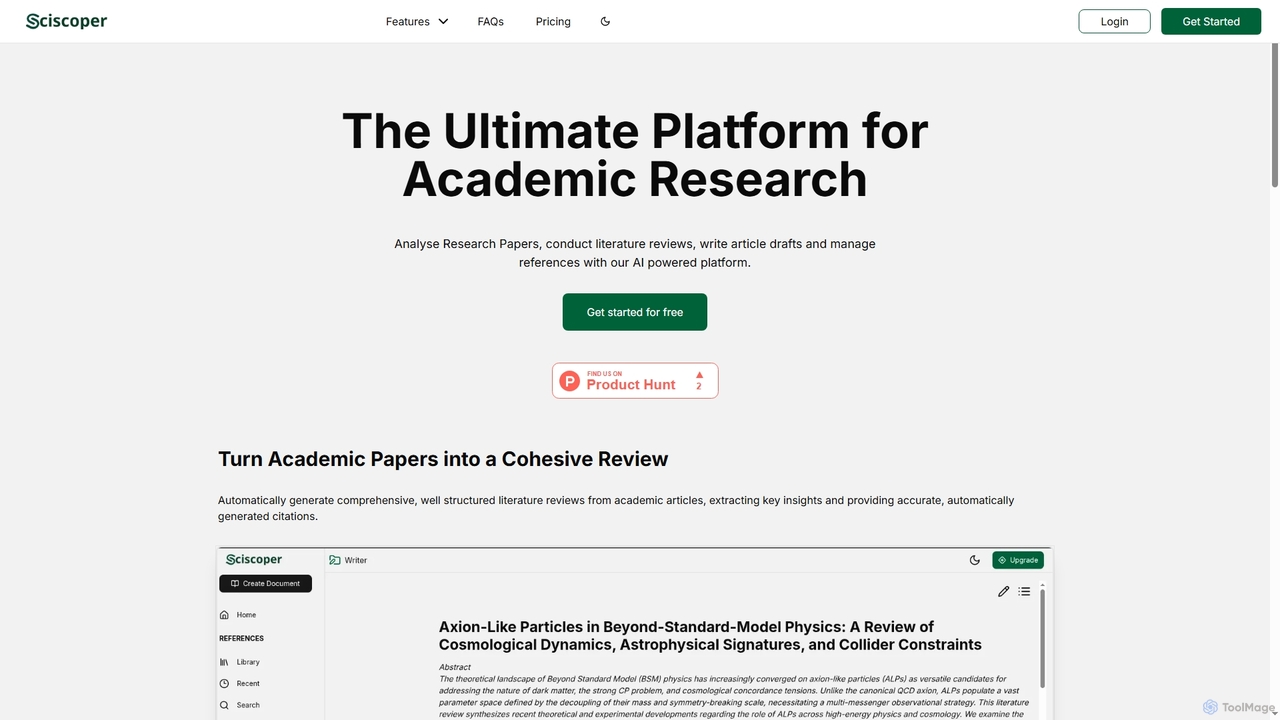
Sciscoper is an AI-powered platform designed to streamline academic research. It helps students and researchers analyze papers, conduct literature reviews, draft articles, and manage references efficiently. With features like PDF chat, semantic search, and an AI writer, it accelerates the entire research workflow.

Pdf Tools
Visits 3.6KFavorites 136Likes 128

About Reference Management

Reference Management tools are AI-powered applications designed to streamline the entire research workflow, from discovery to publication. These platforms leverage artificial intelligence to automate the collection, organization, citation, and sharing of academic references and research materials. By intelligently processing scholarly articles, books, and other sources, they significantly enhance efficiency for researchers, students, and academics, ensuring accuracy and consistency in academic writing.

Core Features

  • Automated Metadata Extraction: AI automatically extracts author, title, journal, year, and other bibliographic data from PDFs and web pages.
  • Smart Citation Generation: Generates citations and bibliographies in various styles (APA, MLA, Chicago) with AI-driven accuracy checks.
  • Semantic Search & Discovery: Uses AI to understand research context, suggesting relevant articles and identifying connections between topics.
  • Duplicate Detection & Merging: Intelligently identifies and merges duplicate entries in your library, maintaining data integrity.
  • Note-taking & Annotation: Allows users to highlight, annotate, and add notes directly to research papers within the system.

Use Cases

Researchers and students utilize reference management tools to maintain a well-organized library of sources for their theses, dissertations, and journal articles. Academics employ these systems to collaborate on large research projects, ensuring consistent citation practices across multiple contributors. Publishers and editors also benefit from these tools for verifying citation accuracy and formatting compliance.

How to Choose

When selecting a reference management tool, consider its integration capabilities with word processors (e.g., MS Word, LaTeX) and academic databases. Evaluate the range of citation styles supported and the accuracy of AI-driven features like metadata extraction and duplicate detection. Assess collaboration features for team projects and cloud synchronization options for accessibility across devices. Finally, review pricing models and the availability of customer support.

Featured tool rankings

Reference Management use cases

1

Academic Thesis & Dissertation Writing

Doctoral candidates and master's students can use AI-powered reference management tools to organize hundreds of research papers, books, and articles. The tools automate citation insertion and bibliography generation in specific academic styles (e.g., APA, MLA), ensuring consistency and accuracy throughout the writing process. This significantly reduces manual formatting errors and saves valuable time during the final stages of thesis submission.

2

Automating Bibliography Creation for Dissertations

A PhD student compiling their dissertation needs to manage hundreds of sources and generate a perfectly formatted bibliography. Using a reference management tool, they can import references from various databases, automatically extract metadata, and generate the entire bibliography in APA 7th edition style with a single click, saving days of manual formatting and error checking.

3

Streamlining Academic Thesis Writing

Graduate students use AI reference management to collect hundreds of sources, automatically extract metadata from PDFs, and generate accurate in-text citations and bibliographies in specific university-required styles. This significantly reduces manual formatting errors and saves countless hours during the writing and revision phases, allowing focus on content quality.

4

Efficient Literature Review for Researchers

University researchers leverage these tools to organize vast amounts of scientific literature for comprehensive reviews. AI features can help summarize key findings from papers, identify thematic connections, and suggest relevant articles, accelerating the process of synthesizing information for new studies or grant applications.

5

Collaborative Research Project Citation Management

A team of researchers working on a joint scientific paper needs to ensure consistent citation across all sections contributed by different authors. The reference management platform allows them to share a centralized library, add new sources, and automatically synchronize changes, guaranteeing that all in-text citations and the final reference list adhere to the chosen journal's style guide.

6

Comprehensive Literature Review for Research

Researchers conducting extensive literature reviews benefit from these tools by efficiently categorizing, annotating, and cross-referencing numerous studies. AI features can help identify key themes, summarize articles, and suggest related papers, accelerating the synthesis of information. This allows researchers to build a robust foundation for their studies and identify gaps in existing knowledge more effectively.

7

Managing Legal Case References

Legal professionals and paralegals utilize reference management software to meticulously track and cite legal precedents, statutes, and scholarly articles relevant to ongoing cases. The tools ensure precise citation formatting required in legal documents, minimizing errors and enhancing the credibility of legal arguments.

8

Organizing Research Papers for Literature Reviews

An academic preparing a comprehensive literature review for a grant proposal must sift through hundreds of articles. A reference management tool enables them to import PDFs, tag them by topic, add personal notes and highlights, and quickly search for specific keywords or authors, drastically reducing the time spent organizing and retrieving relevant information.

9

Grant Proposal & Funding Application Preparation

Scientists and project managers preparing grant proposals often need to cite a large volume of previous research and publications to support their methodology and expected outcomes. Reference management tools streamline the process of compiling and formatting these references, ensuring all sources are correctly attributed and adhere to the specific guidelines of funding bodies, enhancing the proposal's credibility.

10

Organizing Sources for Medical Publications

Medical writers and clinicians employ AI reference managers to compile and cite research papers, clinical trials, and guidelines for journal submissions or medical reports. The ability to quickly switch between different medical citation styles (e.g., Vancouver, AMA) and verify accuracy is crucial for compliance and peer review.

11

Maintaining a Personal Academic Library

A university professor wants to keep a well-structured digital library of all their published works, influential papers, and teaching materials. They use a reference management system to categorize articles, link to full-text PDFs, and easily retrieve any source for lectures or future research, ensuring long-term accessibility and discoverability of their intellectual assets.

12

Legal Research and Brief Drafting

Legal professionals, including lawyers and paralegals, utilize these tools to manage vast libraries of case law, statutes, and legal articles. The software helps organize legal precedents, track citations within briefs, and generate accurate bibliographies for court submissions. This ensures meticulous referencing, reduces the risk of errors, and supports the integrity of legal arguments.

13

Collaborative Research Project Management

Research teams in institutions or corporations use shared reference libraries to collectively manage sources for large-scale projects. AI tools facilitate collaborative annotation, track changes, and ensure all team members access the most up-to-date bibliography, fostering seamless teamwork across geographical locations.

14

Ensuring Citation Accuracy in Journal Submissions

A junior researcher submitting an article to a high-impact journal needs to ensure every citation is flawless to avoid desk rejection. The reference management tool's AI-powered citation checker identifies missing fields, formatting inconsistencies, and potential errors before submission, significantly increasing the chances of a smooth review process.

15

Fact-Checking & Citation for Content Creation

Content creators, journalists, and bloggers who produce fact-based articles or reports can use reference management tools to meticulously track their sources. This ensures that all claims are supported by credible evidence and properly cited, enhancing the content's authority and trustworthiness. It also simplifies the process of updating or verifying information in the future.

16

Collaborative Research Project Management

Research teams working on joint projects can leverage these tools for shared reference libraries, collaborative annotation, and synchronized citation management. Team members can access, contribute to, and update a central repository of sources, ensuring everyone is working with the latest information and maintaining consistent citation practices across different sections of a collaborative paper or report.

17

Personal Knowledge Base for Lifelong Learners

Individuals engaged in continuous learning or personal research build their own digital libraries of articles, books, and web content. AI reference management helps categorize these sources, extract key information, and easily retrieve them for future reference or personal writing projects, transforming raw data into an organized knowledge base.

18

Streamlining Grant Proposal Reference Compilation

A research institution applying for multiple grants simultaneously requires efficient management of diverse reference lists for each proposal. The tool allows researchers to create separate collections for different projects, easily switch between citation styles, and quickly generate accurate bibliographies tailored to each funding body's specific requirements, accelerating the application process.

Reference Management FAQ

What are AI Reference Management tools?

AI Reference Management tools are software platforms that use artificial intelligence to assist in collecting, organizing, citing, and formatting academic and professional references. They automate tasks like metadata extraction from documents, generate citations in various styles, and can even help summarize content or suggest related research, significantly improving research workflow efficiency and accuracy.

What are Reference Management tools?

Reference Management tools are software applications designed to help researchers, students, and academics collect, organize, store, and cite academic references. They streamline the process of managing bibliographic information, often integrating with word processors to automate in-text citations and bibliography generation, ensuring accuracy and consistency in scholarly writing.

What are Reference Management tools?

Reference Management tools are software applications designed to help researchers, students, and academics collect, organize, store, and cite research sources. They automate the process of creating bibliographies and in-text citations, ensuring accuracy and adherence to various academic styles. Modern AI-powered versions often include features like semantic search, automated summarization, and knowledge graph creation to enhance research efficiency.

How do AI-powered Reference Management tools differ from traditional ones?

AI-powered Reference Management tools go beyond basic organization and citation. Traditional tools primarily focus on storing references and generating bibliographies. AI versions integrate advanced capabilities such as natural language processing for semantic search, automated extraction of key information from PDFs, intelligent summarization, and even suggesting related articles based on your research context. This significantly enhances discovery, analysis, and overall research productivity.

How do AI features enhance Reference Management?

AI significantly enhances reference management by automating tedious tasks. This includes intelligent metadata extraction from PDFs, semantic search capabilities to discover related articles, smart duplicate detection, and AI-powered citation style validation. These features reduce manual effort, improve data accuracy, and help users find relevant information more efficiently.

How do AI features enhance traditional reference management?

AI features enhance traditional reference management by automating labor-intensive tasks. For instance, AI can automatically extract accurate bibliographic data from PDFs, identify and correct citation inconsistencies, suggest relevant articles based on your library, and even provide quick summaries of papers. This moves beyond simple storage to intelligent assistance, saving time and reducing errors.

What key features should I look for in a Reference Management tool?

When choosing a Reference Management tool, prioritize features like robust integration with word processors (e.g., Microsoft Word, Google Docs) and browser extensions for easy capture. Look for comprehensive support for various citation styles (APA, MLA, Chicago, etc.), efficient PDF annotation and organization capabilities, and strong collaboration features if you work in a team. AI-driven semantic search and summarization can be significant advantages for deeper research.

Who benefits most from using Reference Management tools?

Researchers, university students (especially those writing theses or dissertations), academics, and anyone involved in scholarly writing benefit greatly. These tools are invaluable for managing large volumes of sources, ensuring correct citation, and collaborating on research projects, making the entire academic writing process more organized and less prone to errors.

Who benefits most from using Reference Management tools?

Students, academics, researchers, medical writers, legal professionals, and anyone involved in extensive research and writing benefit most. These tools are invaluable for managing large volumes of sources, ensuring accurate citations in theses, dissertations, journal articles, reports, and legal documents, thereby maintaining academic integrity and professional credibility.

What should I consider when choosing a Reference Management tool?

Key considerations include compatibility with your operating system and word processor, the range of supported citation styles, ease of importing references from various sources, and the quality of AI features like metadata extraction. Also, evaluate collaboration capabilities, cloud synchronization, customer support, and the overall user interface for ease of use.

What are the key factors to consider when choosing an AI Reference Management tool?

When choosing an AI Reference Management tool, consider its citation style support (e.g., APA, MLA, Chicago), integration with word processors (Word, Google Docs), the accuracy and utility of its AI features (e.g., extraction, summarization), collaboration capabilities for team projects, cloud synchronization, and user interface intuitiveness. Also, evaluate its ability to handle various document types and its pricing model.

Who benefits most from using Reference Management software?

Reference Management software is most beneficial for anyone involved in academic writing, research, or content creation that requires extensive sourcing and citation. This includes university students (undergraduate to doctoral), academic researchers, professors, librarians, journalists, legal professionals, and medical writers. Essentially, anyone who needs to manage a large volume of references accurately and efficiently will find these tools invaluable.

Can AI Reference Management tools help with literature reviews?

Yes, AI Reference Management tools are highly beneficial for literature reviews. They can help organize hundreds of papers, identify key themes and authors, summarize abstracts or full texts, and even suggest articles that might be relevant to your research but are not yet in your library. This significantly streamlines the process of synthesizing existing knowledge and identifying research gaps.

Can Reference Management tools help with collaborative research?

Yes, many modern reference management tools offer robust collaborative features. They allow multiple users to share a single reference library, add and annotate sources, and synchronize changes in real-time. This ensures that all team members are working with the same, up-to-date information and maintaining consistent citation practices across a shared project.

Can Reference Management tools help with plagiarism detection?

While Reference Management tools primarily focus on organizing and citing sources correctly, some advanced versions integrate with or offer features that can indirectly help prevent plagiarism. By ensuring all sources are properly attributed and cited according to academic standards, they reduce the risk of unintentional plagiarism. However, for comprehensive plagiarism detection, dedicated plagiarism checking software is typically used in conjunction with reference management tools.
