Religion Best in category 1 results Church Management AI Tool

Popular AI tools in the Church Management field of Religion include Church Loom, etc., helping you quickly improve efficiency.

Church Loom

Church Loom

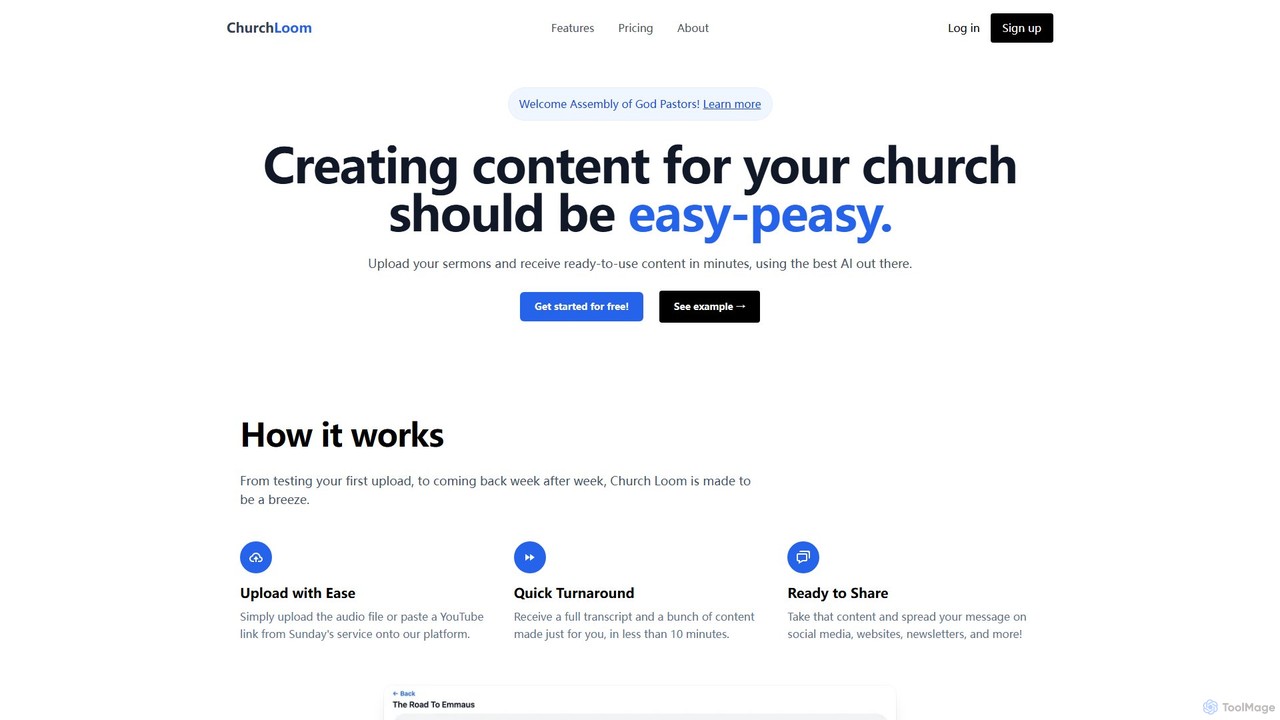
Church Loom is an AI-powered content creation platform designed for churches and pastors. It effortlessly transforms sermon recordings …

3.3K

About Church Management

AI Church Management tools are specialized platforms that leverage artificial intelligence to streamline administrative operations and enhance community engagement for religious organizations. These systems go beyond traditional databases by using AI for predictive analytics, automation, and personalized communication. They help church leaders manage memberships, track donations, coordinate volunteers, and organize events more effectively, freeing up valuable time for pastoral care and ministry. This data-driven approach enables deeper insights into congregation health and growth opportunities.

Core Features

  • Intelligent Member Database: Uses AI to segment congregation members based on engagement, giving history, and participation, enabling targeted outreach.
  • Predictive Giving Analysis: Forecasts donation trends and identifies potential major donors by analyzing historical financial data.
  • Automated Communication Workflows: Creates and automates personalized email and text message sequences for new visitors, volunteers, and specific groups.
  • Smart Volunteer Management: Matches volunteers' skills and availability with ministry needs and automates scheduling and reminders.

Use Cases

These tools are designed for church administrators, pastors, finance committees, and volunteer coordinators. They are applicable in churches of all sizes, from small local congregations to large multi-site organizations. Common applications include automating the new visitor follow-up process, planning strategic fundraising campaigns, and efficiently managing scheduling for services and community events.

How to Choose

When selecting an AI Church Management tool, consider the size of your congregation and its potential for growth. Evaluate the platform's integration capabilities with your existing accounting software, website, and communication channels. Prioritize tools with robust data security and clear privacy policies. Finally, assess the user-friendliness of the interface for both staff and volunteers who may have varying levels of technical skill.

Church ManagementUse Cases

1

Automating New Visitor Follow-Up

A church's welcome team coordinator uses an AI management tool to create an automated communication workflow for first-time visitors. Once a new visitor's contact information is entered, the system automatically sends a personalized 'thank you for visiting' email, followed by a text message a few days later with information about small groups. The following week, it sends an email from the lead pastor. This automated sequence ensures every visitor receives a warm, consistent welcome, significantly increasing the rate of return visits without adding to the team's manual workload.

2

Optimizing Donation Campaigns with Predictive Analytics

A church's finance committee is planning its annual giving campaign. Using an AI church management tool, they analyze past giving data. The AI identifies members who have consistently given in the past but have the capacity for larger gifts, and also flags members whose giving has declined. Based on these insights, the committee creates targeted communication: a personalized appeal to potential major donors and a gentle re-engagement message for lapsed givers. This data-driven strategy results in a more effective campaign, exceeding the fundraising goal by 15%.

3

Streamlining Volunteer Scheduling for Major Events

An event coordinator is organizing a large community outreach event requiring 50 volunteers for various roles. Instead of sending mass emails, they use the AI management system's volunteer module. The system identifies all members who have previously volunteered or expressed interest in similar events. It then automatically sends invitations based on their listed skills and availability, allowing them to sign up for specific time slots directly. The AI fills 80% of the roles automatically within 48 hours, allowing the coordinator to focus on personal follow-ups for the remaining specialized positions.

4

Personalizing Small Group Recommendations

A discipleship pastor wants to increase small group participation. Using the AI tool, they analyze member profiles, including demographics, interests checked during registration, and past event attendance. The AI generates personalized recommendations for each member not currently in a group, suggesting 2-3 groups that align with their life stage, location, and interests (e.g., 'Young Professionals Group' or 'Weekday Morning Bible Study'). These targeted invitations are sent via email, resulting in a 30% increase in new small group sign-ups compared to previous general announcements.

5

Gauging Congregational Sentiment from Feedback

After a major sermon series, the lead pastor wants to understand the congregation's response. They use the AI tool's NLP (Natural Language Processing) feature to analyze hundreds of open-ended comments from a digital survey. The AI automatically categorizes comments into themes like 'clarity of message,' 'practical application,' and 'areas of confusion.' It also performs sentiment analysis, showing that 85% of feedback was positive. This allows the pastor to quickly grasp key takeaways and identify topics for future clarification without manually reading every single comment, saving hours of work.

6

Managing Pastoral Care and Prayer Requests

A church's care team uses the AI management system as a central hub for logging prayer requests and pastoral visits. When a prayer request is submitted online, it's automatically logged and assigned to a team member. The AI can flag requests containing keywords like 'hospital' or 'emergency' for immediate attention. The system also tracks follow-up actions, sending reminders to team members to check in with individuals after a week. This ensures a systematic and compassionate response, preventing anyone from being overlooked during a difficult time.

Church ManagementFrequently Asked Questions