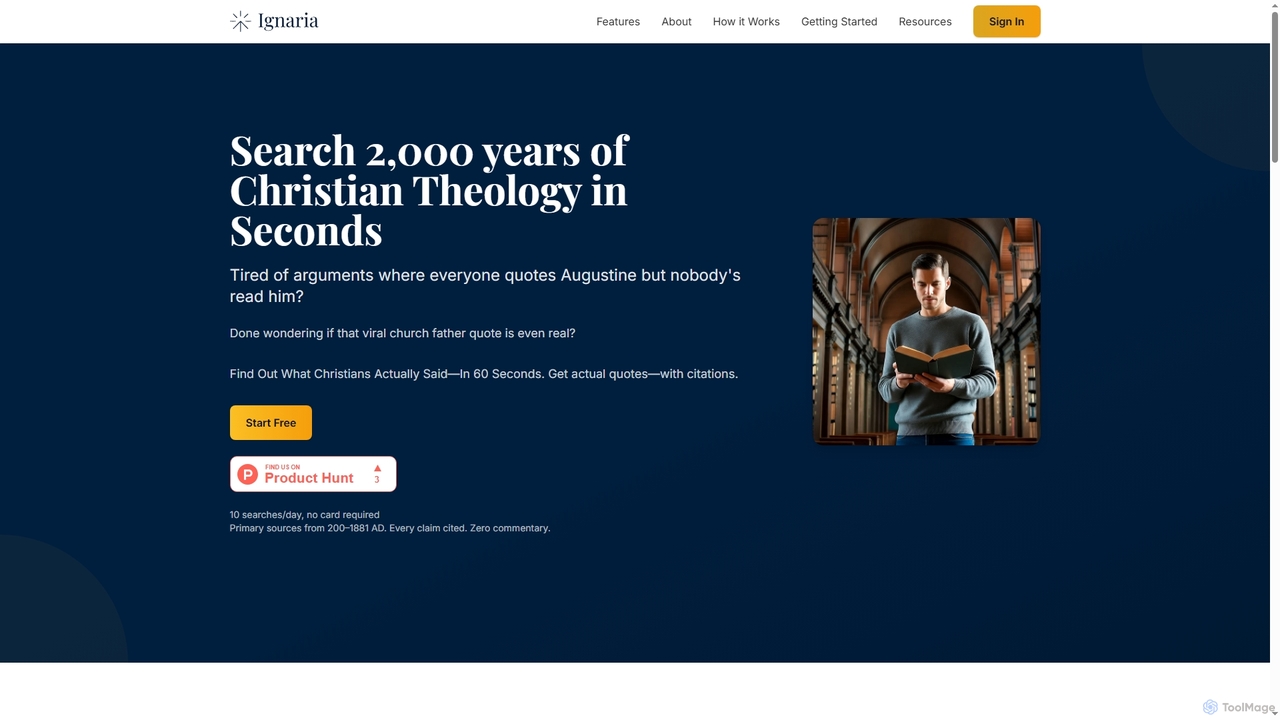
Theology AI tools are specialized artificial intelligence applications designed to assist in the academic and systematic study of religious beliefs, practices, and experiences. Leveraging advanced natural language processing, machine learning, and vast digital libraries, these tools facilitate deep textual analysis, historical context understanding, and comparative theological research. They empower scholars, students, and religious professionals to explore complex doctrines, interpret sacred texts, and engage with philosophical questions more efficiently and rigorously, offering new avenues for discovery within the broader field of religion.
Core Features
- Scriptural Exegesis: Provides advanced tools for linguistic, historical, and theological analysis of sacred texts, identifying nuances in original languages and cross-referencing commentaries.
- Doctrinal Comparison: Enables AI-driven comparison of theological concepts and doctrines across various religious traditions or historical periods, highlighting similarities and differences.
- Ancient Language Support: Offers assistance with translation and contextual understanding of texts in original languages such as Hebrew, Koine Greek, Aramaic, or Latin, crucial for primary source research.
- Ethical Framework Analysis: Facilitates the simulation and analysis of complex ethical dilemmas by applying various theological perspectives and moral reasoning frameworks.
- Historical Contextualization: Automatically retrieves and presents historical, cultural, and philosophical contexts relevant to specific theological texts or debates.
Use Cases
Academic researchers utilize these tools for in-depth textual criticism, historical theological investigations, and the mapping of doctrinal developments over centuries. Seminarians and students employ them for comprehensive study, essay preparation, and understanding complex theological arguments. Religious leaders can use them to deepen their understanding of intricate theological issues for sermons, pastoral counseling, or interfaith dialogue, ensuring well-informed perspectives.
How to Choose
When selecting a Theology AI tool, consider its accuracy in textual interpretation across diverse sacred texts and its robust support for ancient languages. Evaluate the breadth and reliability of its underlying linguistic and historical databases, its ability to support specific theological traditions or methodologies, and the transparency of its AI models. Furthermore, assess its customizability to fit particular research needs and its integration capabilities with existing academic workflows.