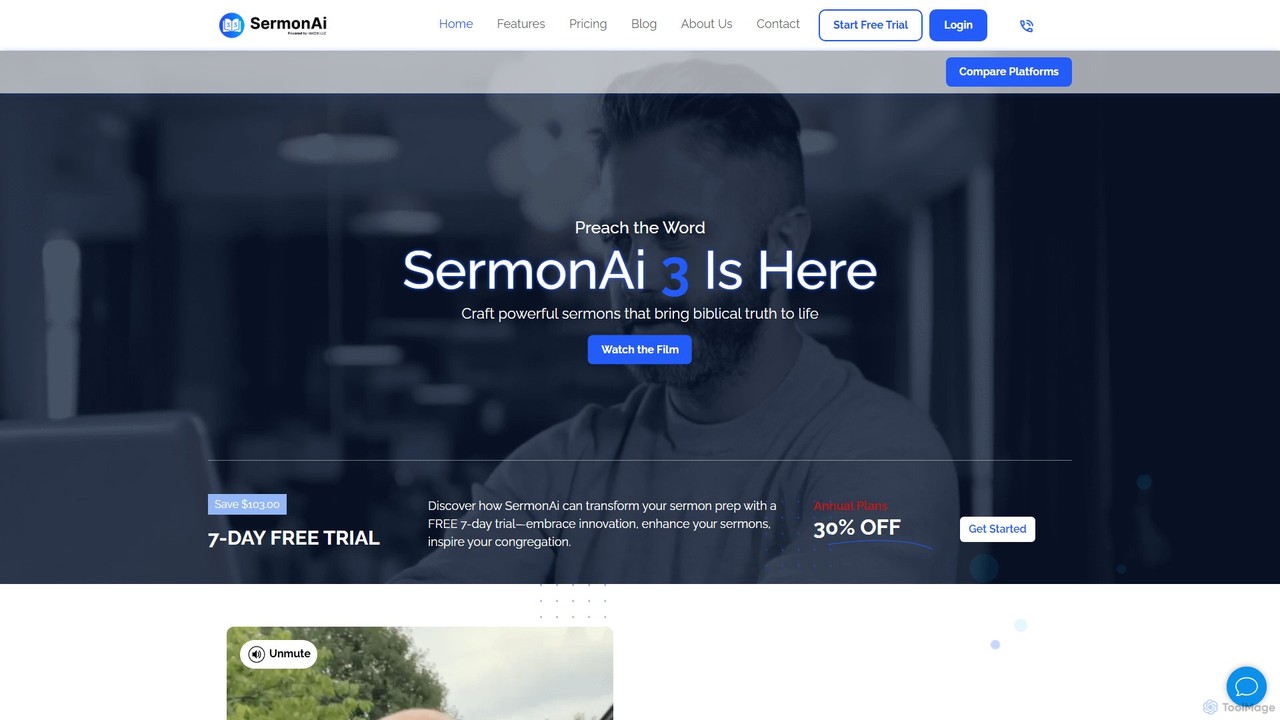
SermonAI
SermonAI is a comprehensive AI-powered suite designed for pastors and ministry leaders to streamline sermon preparation. It integrates …
SermonAI is a comprehensive AI-powered suite designed for pastors and ministry leaders to streamline sermon preparation. It integrates advanced research tools, a powerful writing assistant, and creative content generators into a single platform. From deep biblical exegesis with Greek/Hebrew interlinears to crafting engaging sermon manuscripts and repurposing content for social media, SermonAI provides over 50 specialized tools to enhance workflow and create impactful messages efficiently.
About Ministry Tools
AI Ministry Tools are a specialized category of software designed to assist religious leaders, churches, and faith-based organizations in their operational and spiritual tasks. Leveraging natural language processing and theological data models, these tools streamline sermon preparation, biblical research, and community communication. They empower ministry professionals to automate administrative work, deepen their study, and engage more effectively with their congregations. This allows leaders to dedicate more time to pastoral care and strategic planning.
Core Features
- Sermon Preparation Assistant: Generates sermon outlines, provides exegetical insights, and suggests relevant illustrations based on scripture passages.
- Theological Research Engine: Answers complex theological questions by referencing vast digital libraries of commentaries, systematic theologies, and historical texts.
- Community Engagement Content: Creates drafts for newsletters, social media posts, and small group study guides tailored to a specific audience.
- Administrative Automation: Helps manage communications, schedule events, and draft responses to common inquiries from the community.
Applicable Scenarios
These tools are primarily used by pastors, ministry directors, seminary students, and church administrators. Common applications include weekly sermon writing, creating curriculum for Bible studies, quickly researching doctrinal questions for counseling sessions, and managing digital outreach campaigns for church events.
Selection Criteria
When choosing an AI Ministry Tool, consider its theological alignment and the sources it's trained on. Evaluate the depth of its research capabilities, its ease of use for non-technical staff, and its integration with existing Church Management Software (ChMS). Data privacy and security for congregation information are also critical factors.
Ministry ToolsUse Cases
Accelerating Weekly Sermon Preparation
A pastor preparing for a Sunday sermon uses an AI ministry tool to research a specific biblical passage. By inputting the scripture, the tool generates a summary of historical context, key theological themes, and cross-references. It then produces several potential sermon outlines, complete with illustrative stories and application questions. This process reduces research and structuring time from 8-10 hours to 2-3 hours, allowing the pastor to focus more on prayer, reflection, and tailoring the message to their specific congregation.
Creating Small Group Study Guides
A small group leader needs to create a discussion guide on the topic of 'grace'. They use an AI ministry tool, inputting the topic and desired length. The AI generates a complete guide including an introduction, key scripture passages on grace, thought-provoking discussion questions for different age groups, and practical application challenges. This saves the volunteer leader hours of preparation and provides a structured, theologically sound resource for their group meeting.
Answering Complex Theological Questions
A seminary student writing a paper on Christology encounters a complex question about the hypostatic union. Instead of manually searching through dozens of books, they use an AI ministry tool's Q&A feature. The tool quickly synthesizes information from various theological traditions (e.g., Patristic, Reformed, Lutheran), providing a concise overview of different perspectives, key theologians involved, and citations for further reading. This acts as a powerful research assistant, helping the student grasp the nuances of the doctrine efficiently.
Drafting Church Communications and Announcements
A church administrator needs to send out a weekly e-newsletter and post announcements on social media. They provide the AI tool with key information points: this week's sermon topic, upcoming events, and a prayer request. The AI generates a warm, engaging newsletter draft and several social media post variations optimized for different platforms (Facebook, Instagram). The administrator can then quickly review, edit, and schedule the posts, ensuring consistent and timely communication with the congregation while saving significant writing time.
Personalizing Pastoral Care Follow-Up
After a counseling session or hospital visit, a pastor wants to send a thoughtful follow-up message. They use an AI tool, providing brief notes about the conversation and the individual's situation. The AI helps draft a personalized, empathetic email or text message that includes a relevant scripture of encouragement and a specific prayer. This helps the pastor maintain personal connections with a large number of congregants efficiently, ensuring no one feels overlooked during difficult times.
Adapting Content for Multilingual Outreach
A missions organization creates Bible study materials in English but needs to distribute them to partners in Spanish-speaking and Korean-speaking regions. They use an AI ministry tool with advanced translation and localization features. The tool not only translates the text but also suggests culturally relevant analogies or illustrations to replace Western-centric ones. This ensures the core theological message remains intact while being more accessible and impactful for a global audience, streamlining the cross-cultural ministry process.