
Research Best in category 1 results Lab Automation AI Tool

Popular AI tools in the Lab Automation field of Research include Culture Biosciences, etc., helping you quickly improve efficiency.

Culture Biosciences

Culture Biosciences

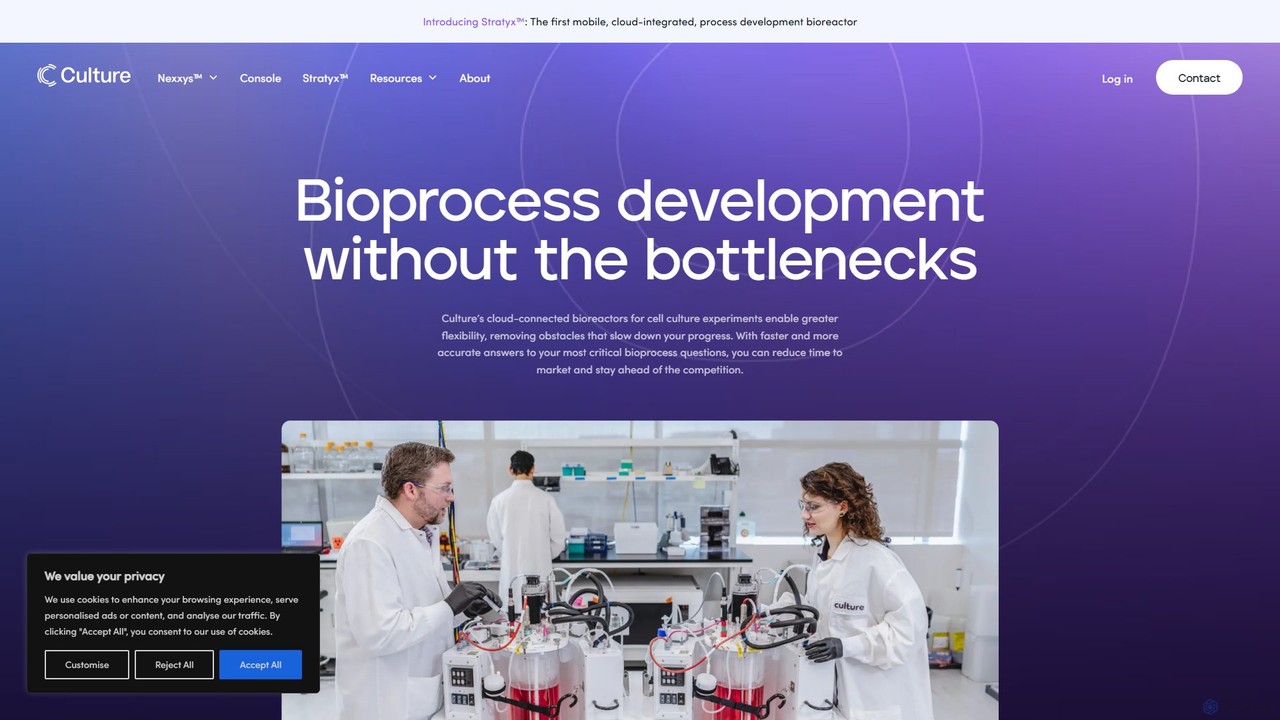
Culture Biosciences offers a cloud-based biomanufacturing platform that leverages AI and automation to accelerate bioprocess development. It provides …

27.4K

About Lab Automation

Lab Automation tools are AI-driven systems designed to automate physical experiments and data analysis in scientific research. These platforms integrate software with robotic hardware to execute complex workflows, from liquid handling and sample preparation to data acquisition. Their primary value lies in dramatically increasing experimental throughput, improving data reproducibility, and freeing researchers from repetitive manual tasks. By leveraging AI, these tools can also optimize experimental designs and analyze results on a scale unattainable by humans.

Core Features

  • Robotic Process Automation (RPA): Directly controls laboratory hardware like liquid handlers, plate readers, and robotic arms to perform physical tasks.
  • Automated Experiment Design: Utilizes AI algorithms to suggest optimal experimental parameters and sequences, accelerating the discovery process.
  • High-Throughput Data Acquisition & Analysis: Automatically captures data from instruments and applies machine learning models to interpret complex, large-scale datasets.
  • Workflow Management: Provides a centralized interface to design, schedule, monitor, and manage multi-step experimental protocols.
  • LIMS/ELN Integration: Seamlessly connects with Laboratory Information Management Systems (LIMS) and Electronic Lab Notebooks (ELN) for data tracking and documentation.

Use Cases

Lab Automation tools are pivotal in fields requiring high-throughput screening and process optimization. They are extensively used in pharmaceutical drug discovery, synthetic biology for engineering microbes, materials science for developing new compounds, and genomics for automated sample preparation. Roles such as research scientists, lab managers, and bioinformaticians in both academic and industrial R&D settings rely on these tools.

How to Choose

When selecting a Lab Automation tool, first consider its compatibility with your existing laboratory hardware and instruments. Evaluate the flexibility of the workflow designer—can you create custom protocols or are you limited to templates? Assess the platform's data analysis capabilities and its ability to integrate with other software like LIMS. Finally, consider the system's scalability to ensure it can meet your future throughput demands.

Lab AutomationUse Cases

1

Automating High-Throughput Drug Screening

A pharmaceutical research team uses a lab automation platform to screen a library of 100,000 small molecules against a specific cancer target. The system automates the entire workflow: dispensing compounds into microplates, adding cell cultures and reagents, incubating, and reading results with a high-content imager. The integrated AI analyzes the imaging data in real-time to identify promising hits, reducing the screening and initial analysis time from months to just a few weeks and minimizing human error in liquid handling.

2

Accelerating Synthetic Biology Design-Build-Test Cycles

A synthetic biology startup employs an automated 'cloud lab' to engineer yeast strains for producing a valuable chemical. Researchers submit their DNA construct designs via a web portal. The platform's robots then perform DNA assembly, transform the yeast, cultivate the engineered strains in micro-bioreactors, and measure the product yield using mass spectrometry. This closed-loop system allows for rapid iteration, completing hundreds of Design-Build-Test-Learn cycles per week, a task that would take years manually.

3

Automating NGS Library Preparation

A core genomics facility at a university uses a lab automation workstation to prepare libraries for Next-Generation Sequencing (NGS). The process involves numerous precise liquid handling steps, including fragmentation, adapter ligation, and PCR amplification. The automated system handles up to 96 samples simultaneously, ensuring high consistency across samples and reducing hands-on time for technicians by over 80%. This allows the facility to increase its sample throughput significantly and offer faster turnaround times for researchers.

4

Automated Cell Culture and Maintenance

A cell therapy company uses an automated incubation and imaging system to maintain and monitor dozens of cell line cultures simultaneously. The robot periodically moves plates from the incubator to a microscope for imaging, then uses AI to analyze cell confluence and morphology. Based on the analysis, it automatically triggers alerts for passaging or media changes, and can even perform these tasks itself with a connected liquid handler. This ensures optimal cell health, provides a complete, auditable record of cell growth, and prevents contamination from manual handling.

5

Developing New Materials with Autonomous Systems

A materials science lab at a national research institute uses an autonomous research robot to discover new alloys with specific properties. A researcher defines the objective, such as 'maximize conductivity while minimizing cost'. The AI plans and executes a series of experiments, synthesizing small samples of different alloy compositions, testing their properties (e.g., conductivity, hardness), and feeding the results back into its model. The model then predicts the next most promising composition to test, efficiently navigating a vast chemical space to find optimal materials faster than human-led trial and error.

6

Automating Clinical Diagnostic Workflows

A large clinical diagnostics lab automates its ELISA and PCR testing workflows for infectious diseases. Robotic arms move sample plates between liquid handlers, thermocyclers, and plate readers. The lab automation software manages the entire process, tracking each sample from accessioning to final result. This high level of automation increases the lab's testing capacity by over 300%, ensures full sample traceability for regulatory compliance, and reduces the risk of cross-contamination, leading to more reliable diagnostic results for patients.

Lab AutomationFrequently Asked Questions