
ToolMage
Sign in

Best 1 Ebooks AI tools for Resources

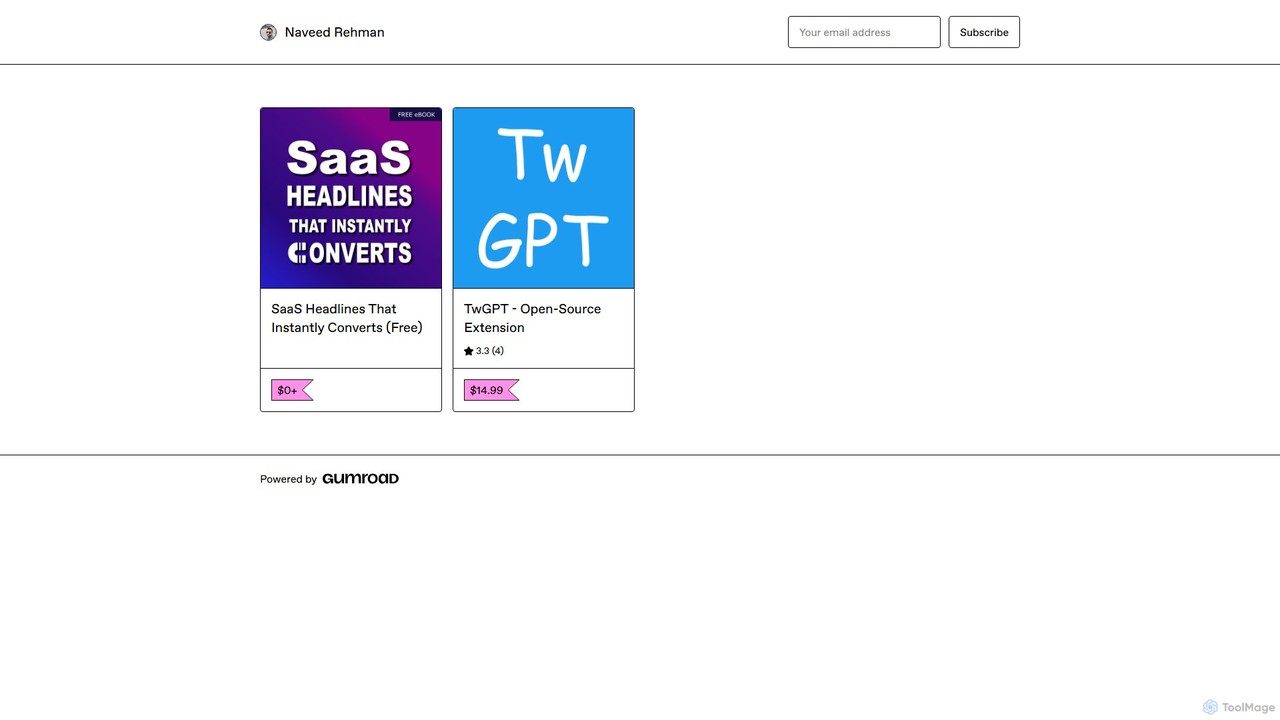
Popular Ebooks AI tools in Resources include SaaS Headlines That Instantly Converts (Free), helping you work more efficiently.

SaaS Headlines That Instantly Converts (Free)
Free

SaaS Headlines That Instantly Converts (Free)

A free, comprehensive e-book for SaaS professionals. This resource provides 3 proven writing formulas, 75+ headline examples from top SaaS companies, and 2 powerful ChatGPT prompts to help you craft high-converting headlines instantly. Ideal for marketers, founders, and copywriters looking to boost landing page performance.

Copywriting
Visits 5.6KFavorites 145Likes 128

About Ebooks

AI Ebooks are digital books that provide structured, in-depth knowledge on artificial intelligence topics. As a key type of resource, they compile expert insights into comprehensive guides, covering everything from foundational theories and algorithms to practical application development. They offer a systematic learning path, ideal for mastering complex subjects that cannot be fully covered in short articles or tutorials. This makes them invaluable for building a solid and thorough understanding of the AI landscape.

Core Features

  • Structured Content: Organized into chapters for a logical and progressive learning experience.
  • In-depth Explanations: Detailed analysis of complex concepts, mathematical principles, and AI models.
  • Practical Code Examples: Often include source code and step-by-step guides for implementing AI solutions.
  • Expert Authorship: Written by leading academics, researchers, and industry practitioners with proven expertise.

Applicable Scenarios

AI Ebooks are essential for students and academics needing authoritative references for their studies and research. They are also widely used by software developers and data scientists seeking to learn new frameworks or advanced techniques. Business leaders and product managers utilize them to grasp AI strategies and their potential impact on industries.

Selection Criteria

When choosing an AI Ebook, consider the author's credibility and background in the subject matter. Check the publication date to ensure the content is relevant, as the AI field evolves rapidly. Evaluate the book's intended audience (beginner, intermediate, or expert) and verify that its scope aligns with your learning goals, whether theoretical knowledge or practical skills.

Ebooks use cases

1

Systematic Learning of AI Fundamentals

A computer science student uses a foundational AI ebook as their primary textbook. They follow the chapters sequentially to build a strong theoretical base in topics like search algorithms, machine learning, and neural networks. The detailed explanations and pseudo-code help them understand complex concepts for their coursework and prepare effectively for exams, ensuring a comprehensive grasp of the subject.

2

Mastering a Specific AI Framework

A software developer needs to learn PyTorch for a new project. They acquire a specialized ebook on PyTorch that covers everything from basic tensors to advanced topics like building custom neural network layers. The practical code examples and project-based chapters allow them to quickly get up to speed and apply the framework's features to solve real-world problems, significantly reducing their learning curve.

3

Developing an AI Business Strategy

A product manager reads an ebook on 'AI for Business Leaders' to understand how to leverage AI for competitive advantage. The book provides case studies, strategic frameworks, and insights into identifying viable AI opportunities. This knowledge helps them formulate a data-driven product roadmap, communicate the value of AI initiatives to stakeholders, and make informed decisions about technology investments.

4

Preparing for a Technical AI Interview

A job seeker targeting a Machine Learning Engineer role uses an ebook focused on AI interview questions. The book covers essential topics like algorithms, probability, statistics, and system design for ML. By working through the practice problems and studying the detailed solutions, they can refresh their knowledge, understand common interview patterns, and build the confidence needed to perform well in high-pressure technical interviews.

5

Self-Taught Project Implementation

A hobbyist wants to build a personal project, such as a cat face detector. They use a project-based ebook that guides them through the entire process: collecting and labeling data, training a convolutional neural network (CNN), and deploying the model. The step-by-step instructions and reusable code snippets enable them to complete the project successfully, gaining valuable hands-on experience without formal instruction.

6

Staying Updated with Cutting-Edge Research

An AI researcher downloads a recently published ebook on a niche topic like Graph Neural Networks (GNNs). The book synthesizes the latest academic papers, theories, and state-of-the-art models in a single, coherent volume. This allows the researcher to quickly get up to speed on the advancements in a subfield without having to sift through dozens of individual research papers, saving time and providing a comprehensive overview for their own work.

Ebooks FAQ

What are AI Ebooks?

AI Ebooks are digital books focused on providing structured, in-depth information about artificial intelligence. Unlike blog posts or short tutorials, they offer comprehensive coverage of topics, ranging from theoretical foundations and mathematical principles to practical guides on implementing AI models and frameworks. They serve as authoritative resources for systematic learning and reference.

How to choose a good AI Ebook?

To choose a quality AI ebook, consider these factors:

  • Author Credibility: Check if the author is a recognized expert, researcher, or practitioner in the field.
  • Publication Date: The AI field evolves quickly, so a more recent book is often more relevant, especially for specific technologies.
  • Target Audience: Ensure the book matches your skill level (beginner, intermediate, expert).
  • Scope and Reviews: Read the table of contents and user reviews to see if it covers the topics you need in sufficient depth.
What's the difference between AI Ebooks and online courses?

The main difference lies in the format and learning experience. AI Ebooks provide deep, structured text-based knowledge that is self-paced and excellent for reference. Online courses, on the other hand, often use video lectures, interactive quizzes, coding assignments, and community forums. Ebooks are generally better for in-depth theoretical understanding, while courses excel at guided, hands-on practical application.

Who should read AI Ebooks?

AI Ebooks are suitable for a wide audience. Students and academics use them for foundational knowledge and research. Software developers and data scientists read them to master new technologies and advanced techniques. Business leaders and product managers consult them to understand AI's strategic implications. Hobbyists and self-learners also find them invaluable for building practical skills through project-based guides.

Are free AI Ebooks reliable?

Many free AI ebooks are highly reliable, especially those published by reputable universities, research institutions, or leading tech companies. Classic textbooks are often made available for free by their authors. However, it's important to be discerning. Always verify the author's credentials and the publisher's reputation. A well-regarded source is a good indicator of quality, but some free, self-published materials may be outdated or less rigorous.