ToolMage
Sign in

Best 2 Courses AI tools for Resources

Popular Courses AI tools in Resources include 2 Weeks AI and ailamo, helping you work more efficiently.

2 Weeks AI
Free

2 Weeks AI

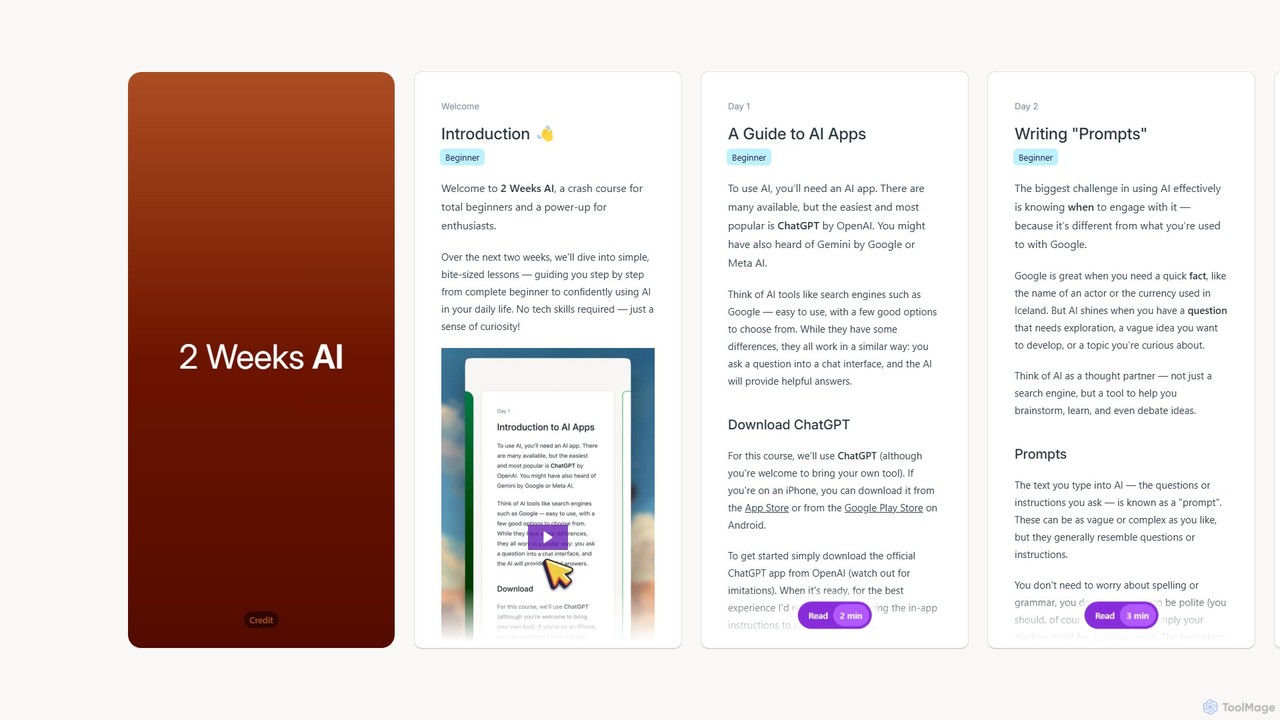
A free, 14-day online course designed to make artificial intelligence understandable and accessible to everyone. It uses a fun, non-technical approach with real-world examples, perfect for beginners, students, and professionals.

Ai Learning
Visits 5.2KFavorites 123Likes 117
ailamo
Free

ailamo

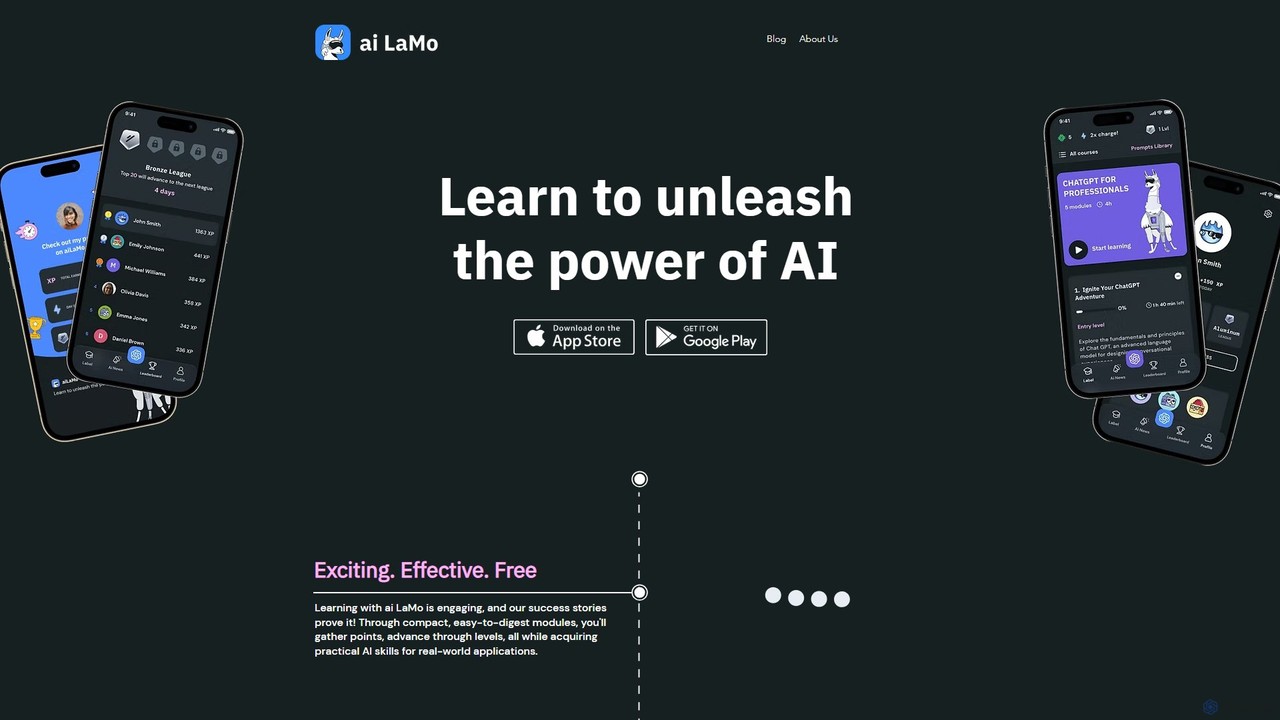
ailamo is a free, engaging AI learning platform designed to democratize AI education. Through gamified, bite-sized lessons, users can master practical AI skills, from basic understanding to advanced application and ethical considerations. The platform offers personalized learning paths curated by experts, making it easy for anyone to understand and harness the power of generative AI, regardless of their background. Learn at your own pace, anytime, anywhere, and stay motivated with interactive challenges and progress tracking.

E Learning Platform
Visits 4.9KFavorites 125Likes 131

About Courses

AI Courses are structured learning programs designed to teach various aspects of Artificial Intelligence. These programs leverage expert-led instruction and practical exercises to cover theoretical foundations, practical applications, and specific AI tools or techniques. Users can acquire new skills, advance their careers, or deepen their understanding of rapidly evolving AI technologies, offering guided learning paths from beginner to advanced levels.

Core Features

  • Structured Curriculum: Organized modules covering AI theory, algorithms, and practical skills, often with progressive difficulty.
  • Hands-on Projects: Practical exercises, coding assignments, and capstone projects to apply learned concepts in real-world scenarios.
  • Expert Instructors: Taught by industry professionals, researchers, or academic experts with deep knowledge in AI fields.
  • Certification & Accreditation: Official recognition upon completion, enhancing professional credentials and marketability.
  • Flexible Learning Options: Self-paced, live online, or blended learning formats to accommodate diverse schedules and preferences.

Applicable Scenarios

AI courses are crucial for professionals seeking to transition into AI roles, individuals aiming to upskill in specific AI techniques like machine learning or natural language processing, and students looking to complement their formal education with practical AI knowledge. They also serve companies wanting to train their workforce in AI applications for digital transformation.

How to Choose

When selecting an AI course, consider the curriculum's relevance to your learning goals and industry demands, the instructor's qualifications and experience, and the learning format that best suits your schedule. Evaluate the value and recognition of any offered certification, and assess the overall cost and time commitment required to ensure it aligns with your investment capacity.

Featured tool rankings

Courses use cases

1

Learning Machine Learning Fundamentals

Beginners aspiring to enter data science or AI fields can enroll in online machine learning courses to systematically learn core concepts like algorithm principles, data preprocessing, and model evaluation. Upon completion, they can independently build simple predictive models, laying a solid foundation for further advanced studies and practical applications.

2

Enhancing Natural Language Processing (NLP) Skills

Content creators or software engineers can take specialized AI courses focusing on NLP to master techniques like text analysis, sentiment recognition, and machine translation. This enables them to develop smarter text processing applications or optimize existing content generation and understanding tools, thereby improving work efficiency and content quality.

3

Mastering Deep Learning Framework Applications

Developers or researchers can take deep learning courses to learn how to use mainstream frameworks like TensorFlow or PyTorch. They can practice models such as Convolutional Neural Networks (CNNs) and Recurrent Neural Networks (RNNs), applying them to complex AI projects like image recognition or speech synthesis, thereby accelerating product development and research processes.

4

Transitioning to an AI Product Manager Role

Existing product managers aiming to transition into the AI domain can take AI product management courses to understand the AI project lifecycle, technical feasibility assessment, and ethical considerations. This helps them better communicate with AI engineers, formulate market-driven AI product strategies, and drive innovation in their organizations.

5

Corporate AI Skill Training for Employees

Companies aiming to enhance their team's overall AI literacy can enroll employees in customized AI courses. For example, marketing departments can learn about AI marketing tool applications, while customer service departments can study AI chatbot deployment. This helps enterprises achieve digital transformation internally and improve the intelligence level across various departments.

6

Preparing for AI-Related Certification Exams

Individuals or students preparing for professional certifications like Google TensorFlow Developer or Microsoft Certified: Azure AI Engineer Associate can choose specialized preparation courses. These courses offer targeted knowledge explanations, mock tests, and practical guidance, significantly increasing the pass rate and enhancing career competitiveness in the rapidly growing AI job market.

Courses FAQ

What are AI courses?

AI courses are structured learning programs designed to teach knowledge and skills related to Artificial Intelligence. They cover fields from basic theory to advanced applications, such as machine learning, deep learning, natural language processing, and computer vision. These courses are typically offered by industry experts or academic institutions, aiming to help learners master AI technologies and apply them to solve real-world problems.

How to choose the right AI course for me?

When choosing an AI course, you should consider your learning goals, existing foundation, and career plan. Evaluate whether the course content aligns with your interests and needs, and check the instructor's professional background and industry experience. Also, pay attention to the course's learning mode (self-paced or live), whether it includes practical projects, and the recognition of the completion certificate. Budget and time commitment are also important considerations.

What learning content do AI courses typically include?

AI courses typically include a wide range of learning content, such as: fundamental AI concepts, Python programming language (as a common tool for AI development), data science and statistics basics, machine learning algorithms (e.g., regression, classification, clustering), deep learning (neural networks, CNNs, RNNs), natural language processing (NLP), computer vision, reinforcement learning, and AI ethics and deployment. Many courses also include practical projects and case studies.

What is the difference between AI courses and AI tool resources?

AI courses are systematic learning paths designed to teach AI theoretical knowledge and practical skills, helping learners start from scratch or enhance existing abilities. In contrast, AI tool resources (like other categories on ToolMage) focus on providing readily usable AI software, platforms, or APIs, which are specific applications for solving particular problems. Courses empower individuals with knowledge and skills, while tools are the means to apply that knowledge.

What career development opportunities can AI courses bring?

Learning AI courses can pave the way for various career development opportunities, including but not limited to: data scientist, machine learning engineer, AI researcher, natural language processing engineer, computer vision engineer, AI product manager, and AI ethics specialist. Mastering AI skills can significantly enhance an individual's competitiveness in multiple industries such as technology, consulting, finance, healthcare, and education, and provide a foundation for innovation and entrepreneurship.