ToolMage
Sign in

Best 2 Curation AI tools for Resources

Popular Curation AI tools in Resources include Top50AI.tools and pheeds, helping you work more efficiently.

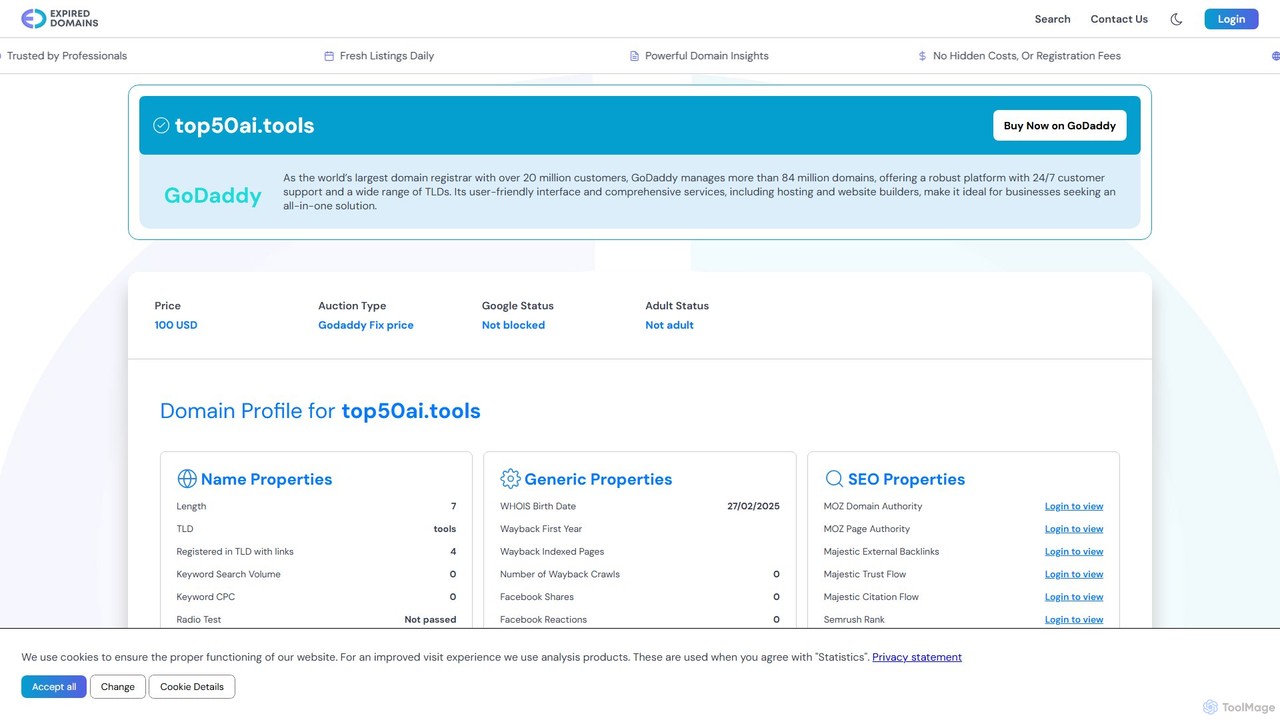
Top50AI.tools
Freemium

Top50AI.tools

A curated discovery platform that ranks and reviews the top 50 AI tools across various categories. It helps professionals, creators, and enthusiasts find the most effective and innovative AI solutions, saving time and effort in the search for the perfect tool.

Ai Directory
Visits 1.8MFavorites 121Likes 116
pheeds
Freemium

pheeds

Pheeds is a comprehensive toolkit and resource hub for AI-powered content creation. It offers extensive prompt libraries for Midjourney and ChatGPT, curated SEO tools, text processing utilities, and a vast collection of public domain resources to enhance creativity and productivity for marketers, writers, and artists.

Seo
Visits 4.4KFavorites 98Likes 93

About Curation

AI Curation tools are a class of software that automates the discovery, filtering, and organization of relevant information from diverse online sources. These tools utilize Natural Language Processing (NLP) and machine learning to analyze content, identify key themes, and eliminate irrelevant noise. This enables users to efficiently build specialized knowledge bases, create themed content collections, or monitor industry trends without extensive manual searching. Unlike simple aggregators, AI curation platforms often provide advanced features for summarization, annotation, and contextual organization.

Core Features

  • Automated Content Discovery: Actively scans the web, social media, and news feeds to find relevant articles, posts, and media based on user-defined topics.
  • Intelligent Filtering & Ranking: Uses AI to score content for relevance, quality, and sentiment, while removing duplicates and low-value information.
  • Summarization & Tagging: Automatically generates concise summaries of articles and applies relevant keywords or tags for easy categorization and search.
  • Collection & Organization: Allows users to group curated content into structured collections, digital magazines, or collaborative knowledge bases.
  • Publishing & Integration: Formats curated content into ready-to-publish newsletters, blog posts, or social media feeds, often integrating with other marketing tools.

Use Cases

AI Curation tools are valuable for content marketers, market researchers, corporate strategists, and educators. They are used to create engaging industry newsletters, build internal team knowledge hubs, monitor competitor activities and brand mentions, and compile comprehensive research materials for academic or business projects.

How to Choose

When selecting an AI Curation tool, consider the breadth of its source integration (news sites, blogs, social media, RSS). Evaluate the sophistication of its filtering and customization options. Check the available output formats (e.g., email, API, social media) to ensure they match your workflow. For team use, assess its collaboration features, such as shared collections and team annotations.

Featured tool rankings

Curation use cases

1

Creating an Automated Industry Newsletter

A content marketer needs to send a weekly roundup of the most important industry news to subscribers. Instead of spending hours manually searching for articles, they configure an AI Curation tool with relevant keywords and trusted sources. The tool automatically pulls in new content daily, filters it for relevance, and generates concise summaries. The marketer then spends just a few minutes reviewing the top-ranked articles, adding brief commentary, and scheduling the newsletter for distribution. This process transforms a time-consuming task into an efficient workflow, ensuring a consistent delivery of high-quality, relevant content to their audience.

2

Building a Team Knowledge Base

A project team needs a central, up-to-date repository of competitor analysis, market research, and industry best practices. A team lead sets up an AI Curation tool to monitor specific industry blogs, research portals, and news sites. As the tool discovers relevant content, it automatically tags and adds it to a shared team collection. Team members can access this living knowledge base anytime, add their own notes, and discuss findings directly within the platform. This creates a self-updating resource that keeps the entire team aligned and informed without the manual effort of finding and distributing articles.

3

Market and Competitor Intelligence Monitoring

A business strategist needs to track competitor product launches, marketing campaigns, and public sentiment in real-time. They use an AI Curation tool to set up feeds that monitor competitor websites, social media mentions, and press releases. The AI filters the vast amount of data for significant events, such as a new product announcement or a spike in negative sentiment. The strategist receives automated alerts for high-priority news, allowing them to provide timely, data-driven insights to leadership. This proactive approach to intelligence gathering enables faster and more informed strategic responses.

4

Academic Research and Literature Review

A researcher or graduate student is beginning a literature review for a new study. The task involves sifting through thousands of academic papers. They use an AI Curation tool, inputting their research topic and specific keywords. The tool scours academic databases like PubMed, arXiv, and Google Scholar, filtering results for relevance and citation impact. It automatically summarizes abstracts and groups related papers by theme or methodology. This significantly accelerates the initial phase of research, helping the user to quickly identify seminal works, understand the current state of the field, and uncover potential gaps in existing literature.

5

Personalized Learning and Skill Development

A professional wants to stay current in a rapidly evolving field, such as artificial intelligence or renewable energy. To combat information overload, they create a personal learning feed using an AI Curation tool. They specify topics of interest, preferred sources (like tech blogs and research journals), and even their expertise level. The tool delivers a daily or weekly digest of the most insightful articles, videos, and podcasts, filtered to match their learning goals. This creates a personalized and efficient learning experience, ensuring they receive high-signal, low-noise information to continuously advance their skills and knowledge.

6

Sourcing Content for Social Media

A social media manager is responsible for maintaining an active and engaging presence across multiple platforms. A key part of their strategy is sharing relevant third-party content. They use an AI Curation tool to discover a steady stream of high-quality articles, infographics, and videos related to their brand's niche. The tool can rank content by potential engagement or virality and integrates with scheduling platforms like Hootsuite or Buffer. This automates the discovery process, saving significant time and helping the manager to consistently share valuable content that resonates with their audience and reinforces their brand's authority.

Curation FAQ

What are AI Curation tools?

AI Curation tools are applications that use artificial intelligence, particularly Natural Language Processing (NLP), to automatically find, filter, organize, and sometimes summarize information from across the internet. Unlike manual bookmarking or simple news feeds, they intelligently analyze content for relevance and quality based on your specified topics. Their primary purpose is to help users manage information overload and discover valuable insights from a vast sea of data, making them useful for market research, content marketing, and personal learning.

How to choose the right AI Curation tool?

When selecting an AI Curation tool, consider these key factors:

  • Source Coverage: Ensure the tool can pull content from the sources you need, such as specific news sites, blogs, social media platforms, or RSS feeds.
  • Filtering Capabilities: Look for advanced filtering options beyond simple keywords, including sentiment analysis, language, location, and the ability to exclude irrelevant sources.
  • Output and Integration: Check if the tool can deliver curated content in your desired format, whether it's an email newsletter, a social media post, an API, or an embeddable feed.
  • Ease of Use and Collaboration: The interface should be intuitive. If you work in a team, look for features like shared collections, team annotations, and role-based access.
What's the difference between AI Curation and an RSS reader?

The key difference lies in intelligence and discovery. An RSS reader is a passive aggregator; it simply collects all content from a predefined list of sources and presents it chronologically. An AI Curation tool is an active discovery engine. It goes beyond your specified sources to find new, relevant content across the web. More importantly, it uses AI to analyze, rank, and filter that content for quality and relevance, removing noise and duplicates. In short, an RSS reader gives you a raw, unfiltered feed, while an AI Curation tool delivers a refined, intelligent collection of insights.

What key features should I look for in an AI Curation tool?

Beyond basic discovery, look for features that add intelligence and streamline your workflow. Key features include:

  • Smart Filtering: The ability to filter by more than just keywords, such as by author, publication, sentiment, or engagement metrics.
  • Automated Summarization: AI-powered summaries that give you the gist of an article without having to read it in full.
  • Duplicate Detection: An essential feature to keep your content feeds clean and avoid repetitive information.
  • Integration with Publishing Tools: Direct integration with email marketing platforms, social media schedulers, or team collaboration apps like Slack to easily share your findings.
Who can benefit from using AI Curation tools?

A wide range of professionals and individuals can benefit from AI Curation. This includes:

  • Content Marketers: To find relevant content to share on social media and create engaging newsletters.
  • Market Researchers & Analysts: To monitor industry trends, track competitors, and gather market intelligence.
  • Corporate Teams: To build internal knowledge bases and keep team members informed on specific topics.
  • Educators and Students: To compile research materials and stay updated on the latest academic literature.
  • Lifelong Learners: To create personalized learning feeds on any topic of interest, cutting through the noise of the internet.