ToolMage
Sign in

Best 1 Education AI tools for Resources

Popular Education AI tools in Resources include Website Planet, helping you work more efficiently.

Website Planet
Free

Website Planet

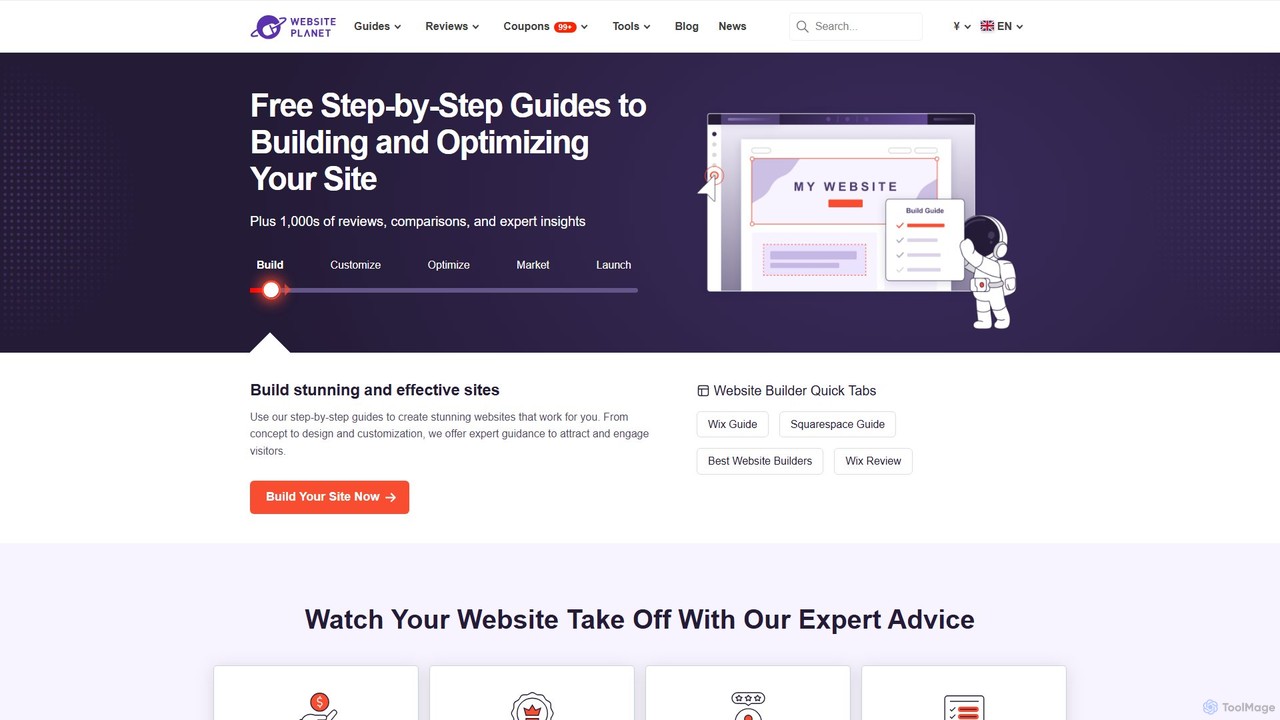
Website Planet is a comprehensive online resource offering free guides, expert reviews, and a suite of web tools to help users build, optimize, and market their websites. From in-depth tutorials on platforms like Wix and Squarespace to free utilities like an image compressor and responsive checker, it provides everything needed to establish a successful online presence. It's an ideal platform for beginners, small businesses, and anyone looking to enhance their website without a large budget, guided by a team of experienced web design and SEO professionals.

Web Design
Visits 746.6KFavorites 133Likes 128

About Education

AI Education tools are a specialized category of resources designed to enhance learning, teaching, and academic processes. They leverage machine learning and natural language processing to create personalized learning paths, automate administrative tasks like grading, and provide intelligent tutoring. This enables educators to design more engaging content and helps students learn more effectively through instant feedback and customized study materials. Unlike general resource platforms, these tools are specifically tailored to pedagogical principles and academic workflows.

Core Features

  • Personalized Learning Paths: Adapts curriculum content and difficulty based on individual student performance and learning pace.
  • Automated Grading & Feedback: Instantly evaluates assignments and quizzes, providing objective scores and constructive suggestions for improvement.
  • Intelligent Tutoring Systems: Offers 24/7 on-demand assistance, answering student questions and explaining complex concepts.
  • Educational Content Generation: Assists educators in creating lesson plans, presentations, practice questions, and other relevant study materials.
  • Research Assistance: Helps students and academics with literature reviews, data summarization, and citation management.

Use Cases

These tools are widely used by K-12 teachers, university professors, corporate trainers, and students at all levels. For instance, a language learning app can use AI to correct pronunciation in real-time, a platform can generate infinite practice problems for a math exam, and a university tool can help students check their papers for plagiarism and grammatical accuracy before submission.

How to Choose

When selecting an AI Education tool, consider the target audience (e.g., young children vs. university students), the specific subject matter it covers, and its ability to integrate with existing Learning Management Systems (LMS) like Canvas or Moodle. Crucially, evaluate the tool's data privacy policies to ensure it protects sensitive student information and complies with relevant regulations.

Education use cases

1

Personalized Math Tutoring for Students

A middle school student struggling with algebra can use an AI tutor application after school. The tool first conducts an assessment to identify specific weak areas, such as factoring polynomials. Based on this, it generates targeted practice problems, provides step-by-step hints when the student gets stuck, and offers short video explanations for core concepts. This allows the student to receive instant, non-judgmental feedback and focus their efforts, leading to improved confidence and better test scores.

2

Automating Essay Grading for Educators

A university professor teaching a large introductory course can use an AI grading tool to manage hundreds of essays. The professor sets up a rubric within the tool, defining criteria for argumentation, evidence, and clarity. After students submit their work, the AI analyzes each essay against the rubric, checking for grammar, structure, and plagiarism. It provides a preliminary score and detailed, constructive feedback for each student. This process can reduce the professor's grading time by over 70%, freeing them to focus on in-class teaching and providing higher-level conceptual guidance.

3

Creating Interactive Language Learning Modules

A corporate trainer developing a language course for employees can use an AI education platform to build engaging content. Instead of static text, the trainer uses the tool to generate interactive dialogues, vocabulary quizzes with adaptive difficulty, and pronunciation exercises that provide real-time feedback on phonetics. The AI can also create role-playing scenarios where employees practice conversations with an AI bot, simulating real-world business interactions. This makes the training more dynamic, effective, and scalable for a global workforce.

4

Assisting with Academic Literature Reviews

A PhD candidate beginning a research project can use an AI research assistant to navigate hundreds of academic papers. The user inputs their research topic, and the tool scans databases to find, summarize, and categorize relevant studies. It can identify key themes, methodologies, and research gaps across the literature. The tool can also generate a visual map of related studies and help organize citations in the required format (e.g., APA, MLA). This significantly accelerates the literature review process, allowing the researcher to focus on analysis and formulating their hypothesis.

5

Generating Differentiated Lesson Plans

A K-12 teacher preparing for the week can use an AI lesson planner to create materials for a class with diverse learning needs. The teacher inputs the topic (e.g., the water cycle), grade level, and specific learning objectives. The AI then generates a complete lesson plan, including an introduction, core activities, and an assessment. It can suggest different activities for visual, auditory, and kinesthetic learners, and create tiered assignments with varying levels of complexity. This saves the teacher hours of planning time and helps ensure that every student is appropriately challenged and engaged.

6

Developing Corporate Compliance Training

An HR manager in a large corporation needs to ensure all employees complete mandatory compliance training. They use an AI-powered learning platform to create micro-learning modules on topics like data security and workplace ethics. The platform personalizes the training path for each employee based on their role and prior knowledge. It uses gamification and interactive quizzes to increase engagement and knowledge retention. The AI also tracks completion rates in real-time and automatically sends reminders, simplifying administration and providing clear audit trails for the company.

Education FAQ

What are AI Education tools?

AI Education tools are software applications that use artificial intelligence to enhance and personalize the learning process. They go beyond simple content delivery by actively engaging with the user. Key features often include adapting content to a student's skill level, providing instant feedback on assignments, automating grading for educators, and offering on-demand tutoring. Examples range from language apps that correct pronunciation to platforms that help researchers analyze vast amounts of literature.

How do I choose the right AI Education tool?

To choose the right tool, consider these key factors:

  • Learning Objective: What specific skill or subject do you need to teach or learn? Look for tools specialized in that area.
  • Target Audience: Is the tool designed for K-12 students, university-level academics, or corporate professionals? The user interface and content complexity should match the user.
  • Integration Capabilities: Does it need to connect with an existing Learning Management System (LMS) like Canvas, Moodle, or Blackboard?
  • Data Privacy: How does the tool handle student data? Ensure it complies with relevant privacy regulations like FERPA or GDPR.
  • Pedagogical Approach: Does the tool's teaching methodology align with your educational philosophy? Some focus on gamification, while others prioritize direct instruction.
What is the difference between AI Education tools and a standard LMS?

A standard Learning Management System (LMS) is primarily a platform for content management and distribution. It acts like a digital filing cabinet to host courses, track completion, and manage enrollments. In contrast, AI Education tools are focused on actively enhancing the learning experience itself. They use AI to provide personalized instruction, generate new content, offer intelligent feedback, and adapt to the learner's needs in real-time. While an LMS manages the 'where' and 'what' of learning, AI tools improve the 'how'. Many modern AI tools are designed to integrate with an LMS to make it more intelligent.

Who can benefit from using AI Education tools?

A wide range of users can benefit from AI Education tools:

  • Students: Receive personalized tutoring, instant feedback on their work, and study plans tailored to their specific needs, helping them learn more efficiently.
  • Teachers and Professors: Save significant time on administrative tasks like grading and lesson planning, allowing them to focus more on student interaction and mentorship.
  • Academic Researchers: Accelerate literature reviews, data analysis, and the writing process, enabling them to produce research more quickly.
  • Corporate Trainers: Develop more engaging, effective, and scalable training programs for employees, improving skill acquisition and knowledge retention.
  • Lifelong Learners: Access personalized learning resources to acquire new skills or explore new subjects at their own pace.
How do AI tools ensure the quality of educational content?

AI education tools employ several methods to maintain content quality. Many generative models are trained on vast, curated datasets of academic textbooks, peer-reviewed journals, and reputable educational resources. This provides a strong foundation of factual accuracy. Additionally, many tools include features for human oversight, allowing educators to review, edit, and approve AI-generated content before it is shared with students. For assessment tools, AI relies on pre-defined rubrics and established grammatical rules, but best practice often involves a final review by a human educator for subjective or nuanced evaluations.