Saas Best in category 1 results Api Management AI Tool

Popular AI tools in the Api Management field of Saas include Billai, etc., helping you quickly improve efficiency.

Billai

Billai

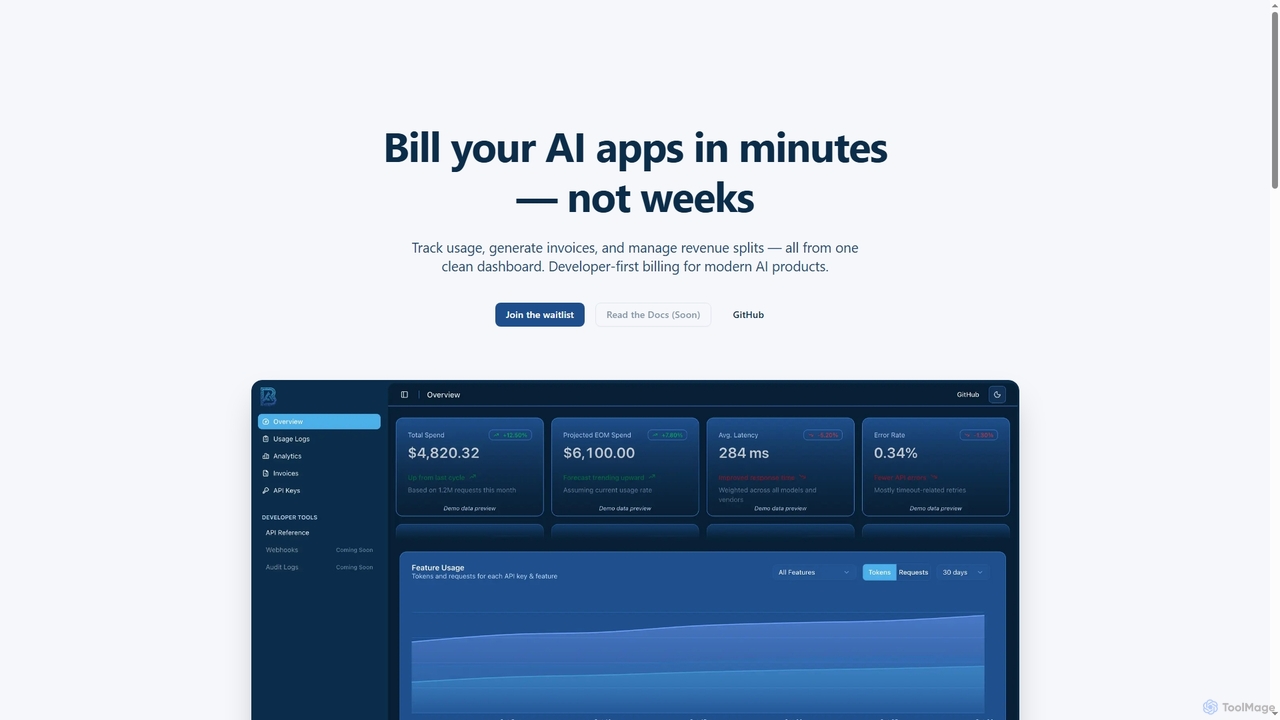
Billai is a developer-first billing and analytics platform for AI applications. It enables developers to track usage, automate …

2.2K

About Api Management

API Management tools are platforms for designing, publishing, monitoring, and securing Application Programming Interfaces (APIs) in a controlled environment. These tools act as a central control plane for the entire API lifecycle, from creation to retirement. They enable organizations to expose their digital services securely, track usage with detailed analytics, and foster a developer community. By providing features like an API gateway, developer portal, and robust security policies, they transform standalone services into a scalable and manageable ecosystem.

Core Features

  • API Gateway: Acts as a single entry point for all API requests, enforcing security policies, rate limiting, and routing traffic to the appropriate backend services.
  • Developer Portal: Offers a self-service hub for developers to discover APIs, access interactive documentation, generate API keys, and monitor their usage.
  • Analytics and Monitoring: Provides dashboards and reports on API performance, traffic patterns, error rates, and user engagement to inform business decisions.
  • Security and Access Control: Implements authentication (like OAuth 2.0, API Keys) and authorization to protect backend systems and data from unauthorized access.
  • Lifecycle Management: Manages the entire process of an API, including design, versioning, deployment, and eventual deprecation, ensuring smooth transitions.

Use Cases

API Management is crucial for companies implementing a microservices architecture, where it governs communication between services. It's also essential for businesses looking to build partner ecosystems, power mobile applications with a consistent backend, or monetize their data by offering it as a paid service. Enterprises use it for internal system integration and IT modernization.

How to Choose

When selecting an API Management tool, consider its scalability and performance under high traffic loads. Evaluate the comprehensiveness of its security features, including support for industry standards. Assess the quality of the developer portal and documentation tools, as this directly impacts developer adoption. Also, check its integration capabilities with your existing CI/CD pipelines and identity providers, and analyze the pricing model (e.g., per-call, tiered subscription).

Api ManagementUse Cases

1

Building a Public API Ecosystem for a SaaS Product

A SaaS company wants to transform its product into a platform by allowing third-party developers to build integrations. They use an API Management solution to publish their public APIs. The developer portal provides interactive documentation, code samples, and a self-service process for obtaining API keys. The API gateway secures the endpoints, enforces usage quotas for different subscription tiers (e.g., free, pro, enterprise), and provides detailed analytics on which endpoints are most popular. This strategy accelerates feature development through external partners and creates a valuable app marketplace around their core product.

2

Securing Internal Microservices Communication

An enterprise is migrating from a monolithic architecture to microservices. An IT administrator uses an API Management platform to govern the communication between hundreds of internal services. The API gateway acts as a central point for applying consistent security policies, such as mutual TLS (mTLS) authentication, across all services. It also handles service discovery, load balancing, and provides a centralized view for monitoring traffic and identifying performance bottlenecks between services. This approach simplifies the security model and improves the observability of the entire distributed system without requiring each microservice team to implement these features independently.

3

Monetizing Data through Tiered API Access

A financial data company offers real-time stock market data through an API. A product manager uses an API Management platform to create and manage different product tiers. For example: a 'Free' tier with a low rate limit for developers, a 'Pro' tier with higher limits and access to more data points for serious traders, and an 'Enterprise' tier with unlimited access and dedicated support. The platform automates billing by integrating with a payment processor and tracks usage against each plan. This allows the company to effectively monetize its data assets and cater to a wide range of customers with different needs and budgets.

4

Powering Mobile and Web Applications with a Unified Backend

A retail company develops a new mobile app and a modern e-commerce website. A development team uses an API Management platform to create a unified set of APIs that expose product catalogs, inventory, and order processing systems. The API gateway ensures that both the mobile app and the website receive data consistently and securely. It also allows the team to manage different versions of the API, enabling them to roll out new features to the mobile app first without breaking the existing website. The analytics dashboard helps them understand user behavior patterns across different platforms, such as which products are viewed most often on mobile versus web.

5

Modernizing Legacy Systems for Internal Integration

A large financial institution relies on decades-old mainframe systems that are difficult to integrate with modern applications. An IT architect uses an API Management platform to create a 'façade' layer. They build modern RESTful APIs that act as wrappers around the complex legacy systems. The API gateway handles the translation between modern JSON/REST requests and the older protocols (like SOAP or direct database queries). This allows new internal applications, such as a customer analytics dashboard, to securely access data from the mainframe without needing to understand its underlying complexity. This approach accelerates innovation and extends the life of critical legacy investments.

6

Managing Partner and B2B Integrations Securely

A logistics company needs to provide real-time shipment tracking data to its key retail partners. A business analyst uses an API Management platform to design and expose a secure API specifically for B2B partners. The developer portal is used to onboard new partners, providing them with specific documentation and credentials. The API gateway enforces strict access control, ensuring that each partner can only access data related to their own shipments. It also throttles requests to protect backend systems during peak hours. This provides a scalable and secure way to share data with partners, improving supply chain visibility and strengthening business relationships.

Api ManagementFrequently Asked Questions