Developer Tools Best in category 1 results Billing & Invoicing AI Tool

Popular AI tools in the Billing & Invoicing field of Developer Tools include Billai, etc., helping you quickly improve efficiency.

Billai

Billai

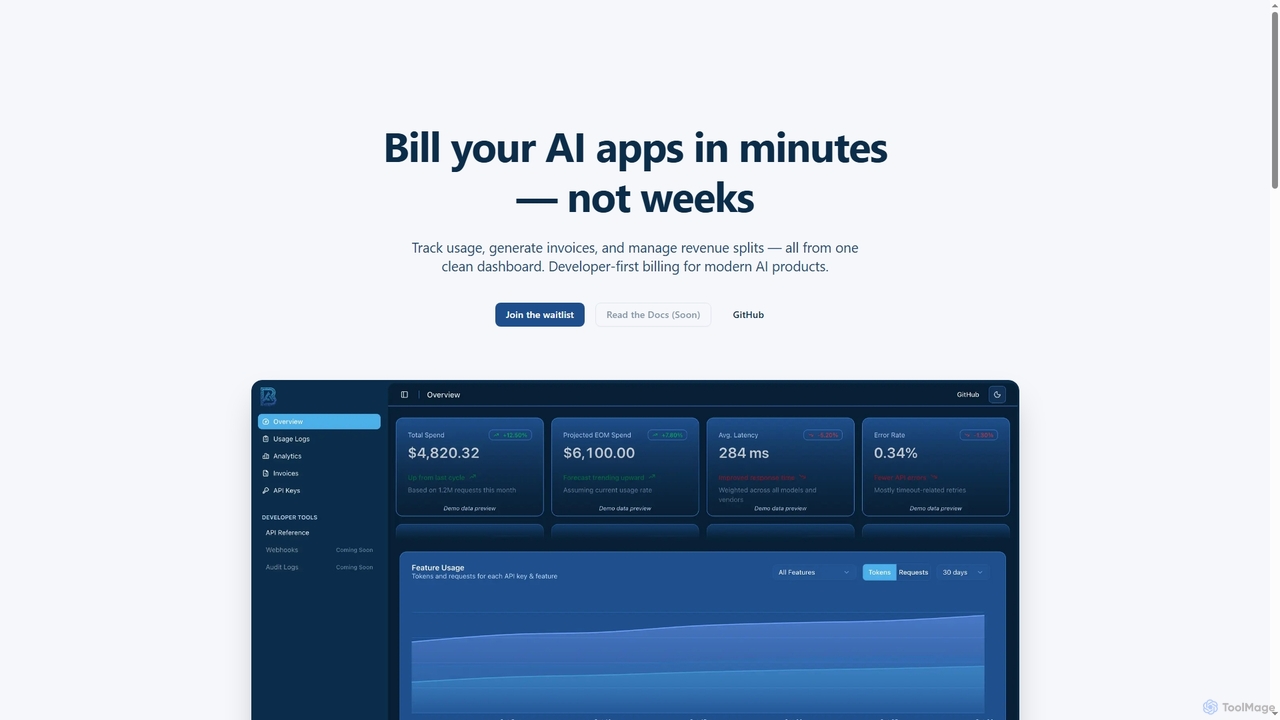
Billai is a developer-first billing and analytics platform for AI applications. It enables developers to track usage, automate …

2.6K

About Billing & Invoicing

AI Billing & Invoicing tools are a specialized category of developer utilities that automate and optimize the entire revenue lifecycle. These platforms use machine learning to manage complex subscription logic, predict payment failures, and automatically calculate region-specific taxes. For businesses, especially SaaS companies and digital service providers, they are essential for reducing manual data entry, minimizing billing errors, and accelerating the quote-to-cash process. Their deep integration capabilities with APIs, CRMs, and accounting systems make them a powerful hub for financial operations.

Core Features

  • Automated Recurring Billing: Automatically generates and sends invoices for various subscription models, including tiered, usage-based, and hybrid plans.
  • Intelligent Dunning Management: Uses AI to predict and manage failed payments, automatically retrying charges and sending customized reminders to reduce churn.
  • Dynamic Tax Calculation: Automatically applies correct sales tax, VAT, or GST based on customer location and product type, ensuring compliance.
  • Revenue Recognition & Analytics: Provides automated revenue recognition reports compliant with standards like ASC 606 and IFRS 15, along with predictive revenue forecasting.
  • API-First Integration: Offers robust APIs for seamless integration with product databases, CRMs, and other developer tools for a unified workflow.

Use Cases

These tools are primarily used by SaaS companies, subscription-based services, digital agencies, and e-commerce platforms. For instance, a software company can automate its entire billing cycle for thousands of subscribers on different plans. A freelance developer can use them to generate professional invoices with automated payment reminders and expense tracking.

How to Choose

When selecting an AI Billing & Invoicing tool, consider the complexity of your pricing model; the tool must support your subscription logic. Evaluate its integration capabilities with your existing tech stack, such as CRM and accounting software. Also, assess the sophistication of its dunning management and analytics features, and ensure its compliance with regional tax regulations and financial standards.

Billing & InvoicingUse Cases

1

Automating Subscription Billing for a SaaS Platform

A product manager at a growing SaaS company needs to manage thousands of customers across various pricing tiers (monthly, yearly, usage-based). By implementing an AI Billing & Invoicing tool, they automate the entire subscription lifecycle. The system automatically generates and sends invoices based on each customer's plan, handles prorated charges for upgrades or downgrades, and manages dunning for failed payments. This reduces revenue leakage by over 15% and frees up engineering resources from building and maintaining a complex internal billing system.

2

Streamlining Invoicing for Freelance Developers

A freelance web developer manages multiple projects with different billing structures (hourly, project-based). Using an AI invoicing tool, they can create and send professional, customized invoices in minutes. The tool automatically tracks billable hours from integrated project management apps, adds them to the invoice, and sends automated reminders for overdue payments. This ensures timely payments, reduces administrative overhead by up to 10 hours per month, and provides a clear financial overview of all projects in one dashboard.

3

Managing Usage-Based Billing for API Services

An API-as-a-Service provider offers tiered pricing based on the number of API calls. Manually tracking and invoicing this usage is complex and prone to errors. An AI billing platform integrates directly with their API gateway to meter usage in real-time. It automatically calculates charges based on consumption, applies overage fees, and generates detailed invoices for each client. This provides billing accuracy, enhances customer trust through transparent invoicing, and allows the provider to scale without increasing their finance team.

4

Automating Global Tax Compliance for E-commerce

An e-commerce store selling digital products globally struggles with calculating the correct sales tax, VAT, or GST for each transaction. An AI invoicing platform automatically identifies the customer's location and applies the correct, up-to-date tax rate in real-time at checkout. It also generates tax reports required for filing in different jurisdictions. This ensures global tax compliance, avoids potential fines, and simplifies the complex process of international sales for the business owner, saving dozens of hours during tax season.

5

Reducing Churn with Intelligent Dunning Management

A subscription box service experiences significant involuntary churn due to failed credit card payments. Their finance team manually follows up, which is inefficient. By adopting an AI billing tool, they automate the dunning process. The system uses machine learning to determine the optimal time to retry a failed charge and sends a series of customized, friendly email reminders to customers to update their payment information. This automated process recovers over 40% of failed payments, directly reducing churn and protecting recurring revenue.

6

Generating Revenue Recognition Reports for Investors

A startup preparing for a funding round needs to provide accurate financial reports compliant with ASC 606 standards. Manually creating these reports from raw transaction data is time-consuming and error-prone. Their AI billing system automatically generates compliant revenue recognition schedules. It correctly allocates revenue over the service period, manages deferred revenue, and produces audit-ready reports. This provides investors with trustworthy financial data, streamlines the due diligence process, and saves the finance lead weeks of manual accounting work.

Billing & InvoicingFrequently Asked Questions