
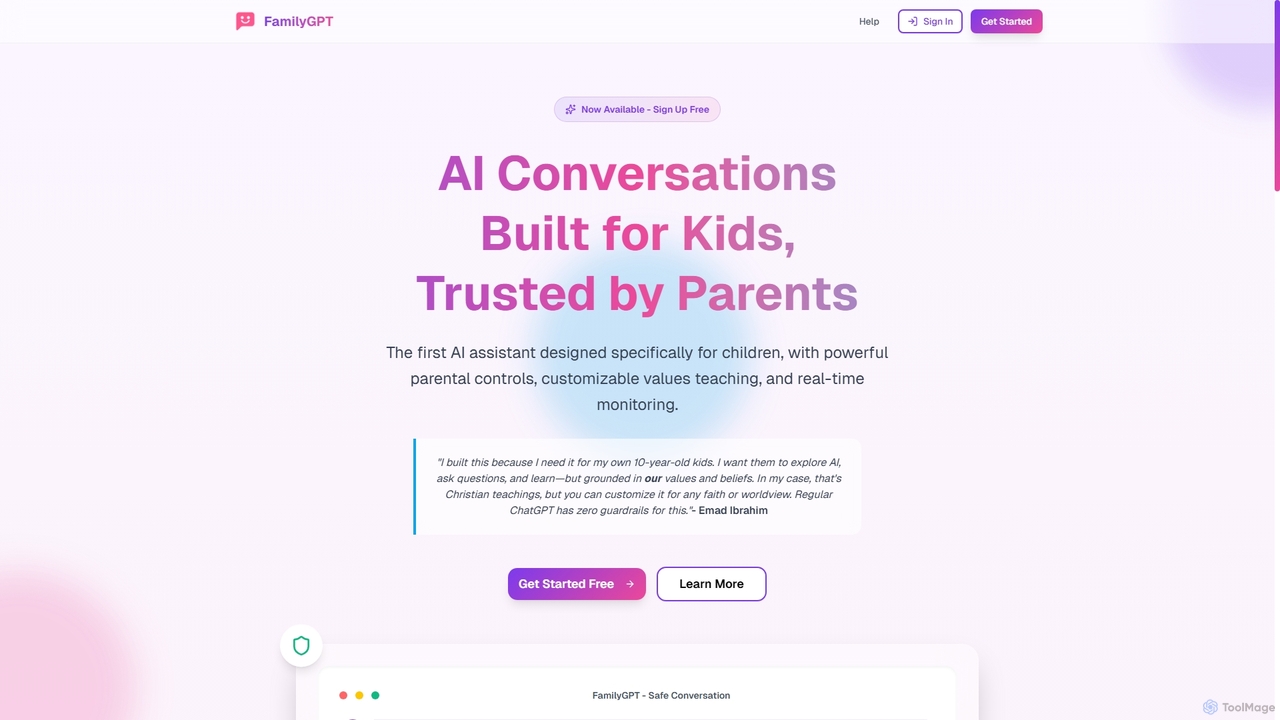
FamilyGPT
FamilyGPT is a safe AI chat assistant designed for children, featuring robust parental controls, customizable values teaching, and …
FamilyGPT is a safe AI chat assistant designed for children, featuring robust parental controls, customizable values teaching, and real-time activity monitoring. It allows kids to explore AI technology in a secure, age-appropriate environment aligned with family beliefs.
About Content Filtering
Content Filtering refers to AI-powered tools designed to automatically identify, categorize, and block or flag undesirable digital content. As a crucial component of digital safety, these tools leverage advanced machine learning and natural language processing to ensure online environments remain secure and compliant. They help organizations maintain brand reputation, protect users from harmful material, and adhere to regulatory standards across various platforms.
Core Features
- Automated Detection: Identifies and flags various forms of inappropriate content, including text, images, audio, and video, using AI models.
- Real-time Moderation: Processes and filters content instantly as it is generated or uploaded, preventing harmful material from going live.
- Customizable Rules & Policies: Allows users to define specific keywords, phrases, image types, and behavioral patterns for filtering based on their unique needs and compliance requirements.
- Sentiment Analysis: Evaluates the emotional tone of text content to detect potential harassment, abuse, or negative brand mentions.
- Multi-language Support: Filters content effectively across a wide range of languages, catering to global platforms and user bases.
Applicable Scenarios
Social media platforms use content filtering to moderate user-generated content, preventing hate speech and spam. E-commerce sites employ it to ensure product reviews and listings are free from offensive language or fraudulent claims. Educational institutions utilize these tools to protect students from inappropriate material online and maintain a safe learning environment.
How to Choose
When selecting an AI content filtering tool, consider its accuracy in detecting false positives/negatives, the speed of real-time processing, and its ability to integrate with existing platforms. Evaluate the level of customization for filtering rules, the breadth of content types supported (text, image, video), and its compliance with relevant industry regulations.
Content FilteringUse Cases
Moderating User-Generated Content on Social Platforms
Social media managers use AI content filtering to automatically scan millions of daily posts, comments, and direct messages for hate speech, harassment, and explicit imagery. This proactive moderation helps maintain a positive user experience, reduces manual review workload, and ensures compliance with community guidelines, preventing brand reputation damage.
Social Media Platform Moderation
Social media managers utilize AI content filtering to automatically scan millions of user-generated posts, comments, and direct messages for hate speech, cyberbullying, spam, and graphic content. This proactive approach ensures a safer online environment, reduces the burden on human moderators, and helps platforms comply with community guidelines and legal requirements, improving user retention and platform reputation.
Moderating User-Generated Content on Social Platforms
Social media managers deploy AI content filtering to automatically scan and moderate millions of user posts, comments, and images daily. The tools identify and flag hate speech, spam, graphic content, and misinformation in real-time, significantly reducing manual moderation workload and ensuring a safer community environment.
Protecting Children in Online Educational Environments
Educational institutions deploy content filtering to monitor student interactions on learning platforms, identifying instances of cyberbullying, inappropriate language, or sharing of explicit material. This creates a safer digital space for students, allowing educators to focus on teaching while the AI handles the initial layer of content safety.
Brand Safety for Advertisers
Marketing teams and advertisers employ content filtering to ensure their advertisements are not displayed alongside inappropriate, controversial, or brand-damaging content on third-party websites or video platforms. By automatically identifying and blocking placements on unsafe content, brands protect their image, maintain consumer trust, and optimize ad spend by avoiding association with undesirable material.
Ensuring Brand Safety in Advertising Campaigns
Marketing teams use content filtering to prevent their ads from appearing alongside inappropriate or brand-damaging content on third-party websites and video platforms. AI algorithms analyze page content and context, ensuring brand reputation is protected and advertising spend is not wasted on unsafe placements.
Filtering Spam and Fraudulent Listings on E-commerce Sites
E-commerce platform administrators leverage content filtering to automatically detect and remove spam product reviews, fraudulent listings, or items violating sales policies. This ensures a trustworthy marketplace for buyers and sellers, protects against scams, and maintains the integrity of product catalogs, enhancing customer confidence.
Online Gaming Community Management
Game developers and community managers use content filtering to monitor in-game chat, user profiles, and forum discussions for toxic language, harassment, cheating discussions, or inappropriate imagery. This helps foster a positive gaming experience, enforce fair play, and prevent the spread of harmful content, contributing to a healthier and more inclusive player community.
Filtering Inappropriate Content in Educational Settings
School IT administrators implement AI content filtering solutions to block access to websites, videos, and images containing violence, pornography, or other harmful material across school networks and devices. This creates a secure digital learning environment for students and helps schools comply with child protection regulations.
Ensuring Brand Safety in Advertising and Marketing Campaigns
Marketing teams use content filtering to ensure their ads are not displayed alongside inappropriate or harmful content on third-party websites and ad networks. By filtering out unsafe environments, brands protect their image, prevent association with controversial topics, and ensure their messaging reaches audiences in a positive context.
Educational Content Review
Educational institutions and e-learning platforms deploy content filtering tools to automatically review uploaded assignments, forum discussions, and shared resources for plagiarism, age-inappropriate material, or offensive language. This ensures academic integrity, protects students from harmful content, and maintains a professional learning environment, especially in remote or blended learning settings.
Detecting Fraudulent or Offensive E-commerce Reviews
E-commerce platforms leverage content filtering to automatically scan product reviews and seller feedback for fraudulent claims, offensive language, or spam. This ensures the integrity of customer feedback, builds trust with buyers, and maintains a high-quality shopping experience.
Compliance Monitoring for Regulated Industries
Financial services or healthcare companies utilize content filtering to monitor internal and external communications for compliance with industry regulations (e.g., HIPAA, GDPR, FINRA). The tools automatically flag sensitive data, confidential information, or non-compliant language, reducing legal risks and ensuring data privacy.
Enterprise Internal Communication Security
Corporate IT and security teams leverage content filtering to monitor internal communication channels (e.g., Slack, Teams, email) for sensitive data leakage, compliance violations (e.g., GDPR, HIPAA), or workplace harassment. This helps prevent data breaches, ensures regulatory adherence, and maintains a respectful and secure internal working environment, safeguarding company assets and employee well-being.
Maintaining Compliance in Corporate Communications
Enterprises utilize content filtering to monitor internal communication channels (e.g., Slack, Teams) for sensitive data leakage, harassment, or non-compliant language. This helps enforce company policies, prevent data breaches, and meet regulatory requirements like GDPR or HIPAA, enhancing overall corporate safety.
Managing Inappropriate Content in Online Gaming Communities
Game developers and community managers employ content filtering to moderate in-game chat, user profiles, and shared content for toxic language, threats, or explicit material. This fosters a healthier gaming environment, reduces player churn due to harassment, and ensures a positive experience for all participants.
E-commerce Product Review Moderation
E-commerce platforms use content filtering to automatically scan customer product reviews and Q&A sections for spam, fake reviews, offensive language, or competitor mentions. This ensures the authenticity and quality of customer feedback, helps maintain trust with shoppers, and prevents the manipulation of product ratings, leading to a more reliable shopping experience.
Automating Spam and Phishing Detection in Email
IT security teams deploy AI content filtering within email systems to automatically identify and quarantine spam, phishing attempts, and malicious attachments. These tools analyze email content, sender reputation, and links, drastically reducing the risk of cyberattacks and protecting employees from harmful content.