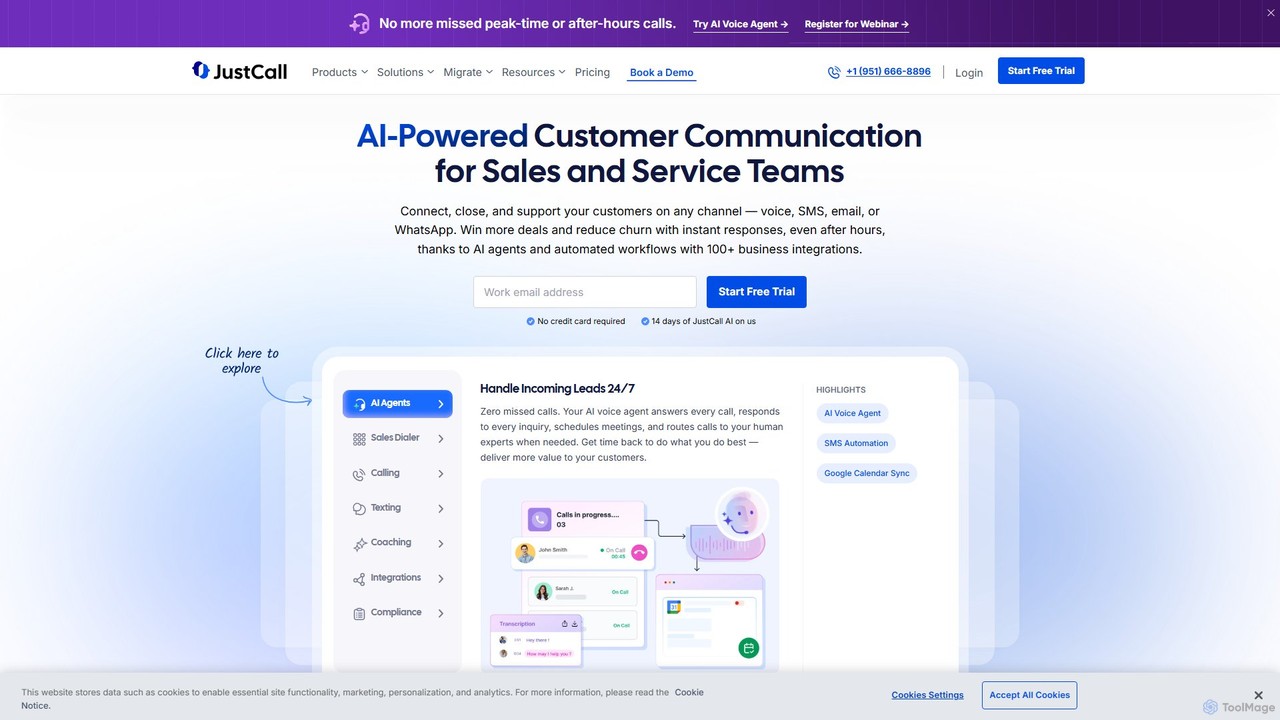
Customer Communication AI tools are specialized platforms that leverage artificial intelligence to enhance and automate interactions between businesses and their customers. These tools utilize natural language processing (NLP), machine learning, and data analytics to understand customer inquiries, provide instant support, and personalize engagement across various channels. They aim to streamline customer service operations, improve satisfaction, and foster stronger customer relationships within the broader sales ecosystem.
Core Features
- AI Chatbots & Virtual Assistants: Automate responses to common queries, provide 24/7 support, and guide customers through processes.
- Sentiment Analysis: Analyze customer feedback and conversations to gauge mood and prioritize urgent or negative interactions.
- Personalized Messaging: Deliver tailored content, offers, and recommendations based on customer data and behavior.
- Automated Email & Ticketing: Generate draft responses, categorize support tickets, and route them to the appropriate agents.
- Omnichannel Integration: Unify customer interactions across email, chat, social media, and phone for a consistent experience.
Applicable Scenarios
Businesses across e-commerce, SaaS, and financial services utilize these tools to manage high volumes of customer interactions. They are crucial for scaling support operations, handling inquiries outside business hours, and ensuring consistent brand messaging. For instance, an online retailer might use an AI chatbot to answer product questions and track orders, freeing up human agents for complex issues.
How to Choose
When selecting Customer Communication AI tools, consider the depth of NLP capabilities for understanding complex queries, the ease of integration with existing CRM and support systems, and the level of customization available for branding and specific workflows. Evaluate the tool's ability to scale with your customer base and its data privacy compliance. Also, assess the reporting and analytics features to measure performance and identify areas for improvement.