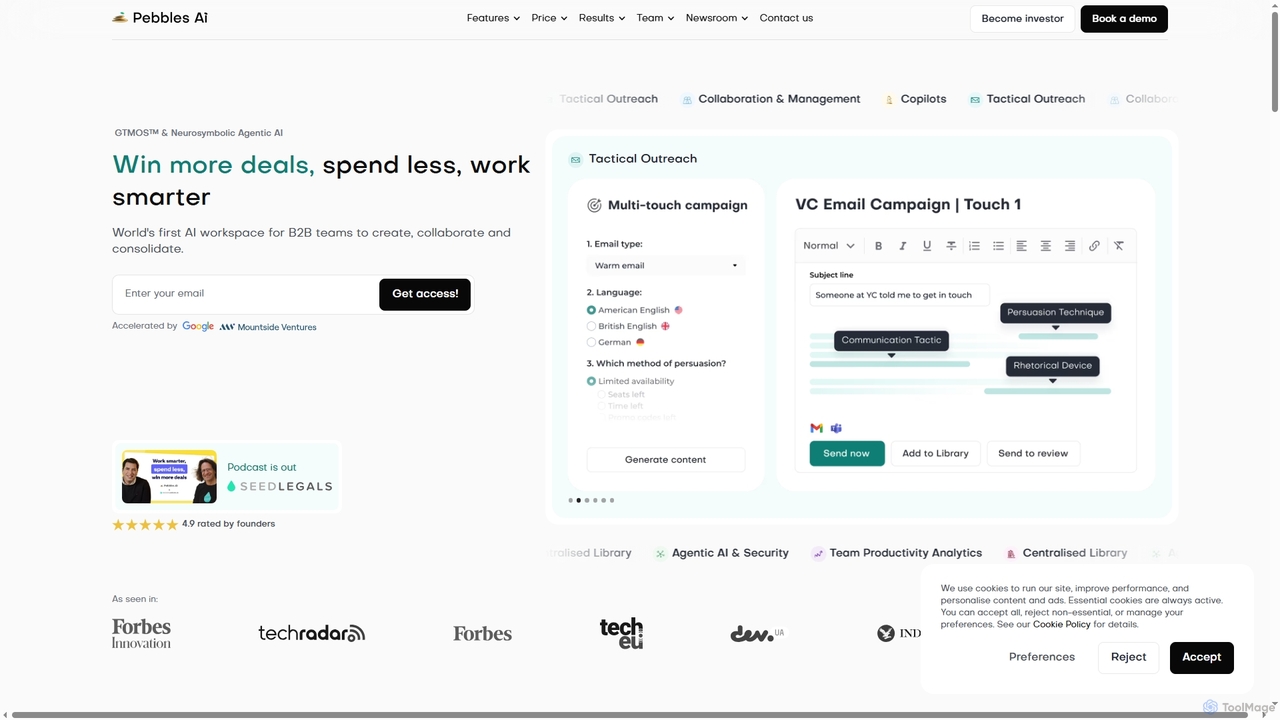
Go To Market Strategy AI tools are specialized platforms that leverage artificial intelligence to optimize the planning, execution, and analysis of product launches or market entries. These tools utilize advanced algorithms to process vast amounts of market data, identify target audiences, and predict market reception. They empower businesses to develop data-driven launch strategies, refine messaging, and select the most effective channels, significantly enhancing the likelihood of successful market penetration and growth.
Core Features
- Market Intelligence & Analysis: Gathers and analyzes market trends, competitor activities, and customer insights to inform strategic decisions.
- Target Audience Segmentation: Uses AI to identify and segment ideal customer profiles based on behavior, demographics, and psychographics.
- Messaging & Positioning Optimization: Analyzes market feedback and performance data to refine product messaging and unique value propositions.
- Channel Strategy Recommendation: Suggests optimal sales and marketing channels based on target audience and product characteristics.
- Launch Planning & Execution Support: Provides frameworks, timelines, and task management features to streamline the launch process.
Applicable Scenarios
These tools are crucial for companies introducing new products or services, expanding into new geographical markets, or repositioning existing offerings. They support product managers, marketing teams, and business development professionals in making informed decisions from concept validation to post-launch optimization, ensuring a cohesive and impactful market entry.
How to Choose
When selecting a Go To Market Strategy AI tool, consider its data integration capabilities with existing CRM/ERP systems, the depth and breadth of its market intelligence, the flexibility of its strategic frameworks, and its predictive analytics accuracy. Evaluate the level of customization offered for different product types and market dynamics, along with user-friendliness and support for cross-functional collaboration.